CO2 emissions
EU breaks ground on its first net-positive emissions building in Seville


The European Commission begins construction of its first net-positive emissions building in Seville, Spain, this summer. A symbol of sustainability and innovation, the new Seville site of the Commission's Joint Research Centre (JRC) will be the first building fully embodying the New European Bauhaus principles.
President von der Leyen is set to speak at the opening ceremony, marking a significant step in the EU's sustainable architecture efforts.
The project aims to go beyond carbon neutrality by offsetting CO₂ from the atmosphere, primarily through generating solar energy that far exceeds its own operational needs. Inspired by Seville's traditional architecture, it will be the first EU institutional building of this scale to achieve net-positive emissions. The construction is expected to last two years.
Commissioner for Startups, Research and Innovation, Ekaterina Zaharieva, Commissioner for Environment, Water Resilience and a Competitive Circular Economy, Jessika Roswall, and representatives of the Spanish government will also take part in the event, which will be streamed online from 12:00 CEST.
Startups, Research and Innovation Commissioner Ekaterina Zaharieva (pictured) said: "Thanks to an amazing interinstitutional collaboration, this is the Commission's first visible example of the New European Bauhaus, an initiative that is giving us the opportunity to transform society - from small businesses to disadvantaged neighbourhoods - making it more sustainable and improving European's way of living. We can see today what the real path to innovation looks like."
The JRC site was inaugurated in Seville in 1994 and hosts more than 400 international workers, providing technical information and data in support of key European policies like innovation, economic modelling, fiscal policy, digitalisation and artificial intelligence.
Share this article:
EU Reporter publishes articles from a variety of outside sources which express a wide range of viewpoints. The positions taken in these articles are not necessarily those of EU Reporter. Please see EU Reporter’s full Terms and Conditions of publication for more information EU Reporter embraces artificial intelligence as a tool to enhance journalistic quality, efficiency, and accessibility, while maintaining strict human editorial oversight, ethical standards, and transparency in all AI-assisted content. Please see EU Reporter’s full A.I. Policy for more information.



EU foreign ministers to discuss options for restricting trade with Israeli communities in Judea and Samaria

European operation dismantles €10 million illicit cigarette network in Spain

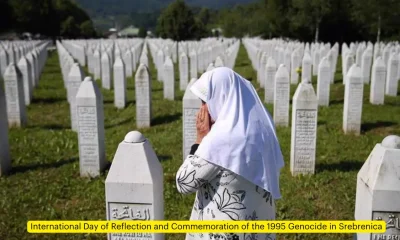
Srebrenica's lesson is prevention. Why isn't the world applying It to Kashmir?

AIFC to host Astana Finance Days 2026 in September

ALROSA Re-elects Supervisory Board with Minimal Changes

Energy Union Task Force takes stock of oil and gas security of supply in the EU

Joint statement by High Representative/Vice-President Kallas and Commissioner Kos on the 31st anniversary of the Srebrenica genocide

EU launches a Team Gaza Initiative to support early recovery in Gaza with an initial amount of nearly €900 million

EU steps up international support for Palestinians with major initiative for Gaza's early recovery and stronger international coordination

Kurmuk gold project highlights Africa’s changing investment landscape

Falling in love with the Maldives

Britain’s leadership crisis is a symptom, not the disease

Chinese “leadership and coordination”

Shared commitment to advance EOSC through new EOSC Nodes and EOSC projects

Why young jobseekers struggle to find roles abroad that fit their expertise

Farmers, fair markets and consumers: new report highlights the role of EU competition rules in agriculture

Kazakhstan reforms under scrutiny at Brussels Press Club round table

Japan should face up to history and contribute more to regional peace

Ambassador calls for 'speeding up' of co-operation between EU and Kazakhstan

Timur Turlov at Smart Moves Summit 2025: How chess can transform global education

Shevtsova’s case: Out-of-court sanctions dismantling trust in Ukrainian cause

The future of European transport

Trump Vs Trueman

US 'no longer' an 'unconditional ally' for Europe - MEP
-
 Israel4 days ago
EU foreign ministers to discuss options for restricting trade with Israeli communities in Judea and Samaria
-
 Cigarettes3 days ago
European operation dismantles €10 million illicit cigarette network in Spain
-
 Kashmir3 days ago
Srebrenica's lesson is prevention. Why isn't the world applying It to Kashmir?
-
 Kazakhstan2 days ago
AIFC to host Astana Finance Days 2026 in September