Maritime
NESBp: Strengthening maritime spatial planning across the North Sea and Baltic Sea

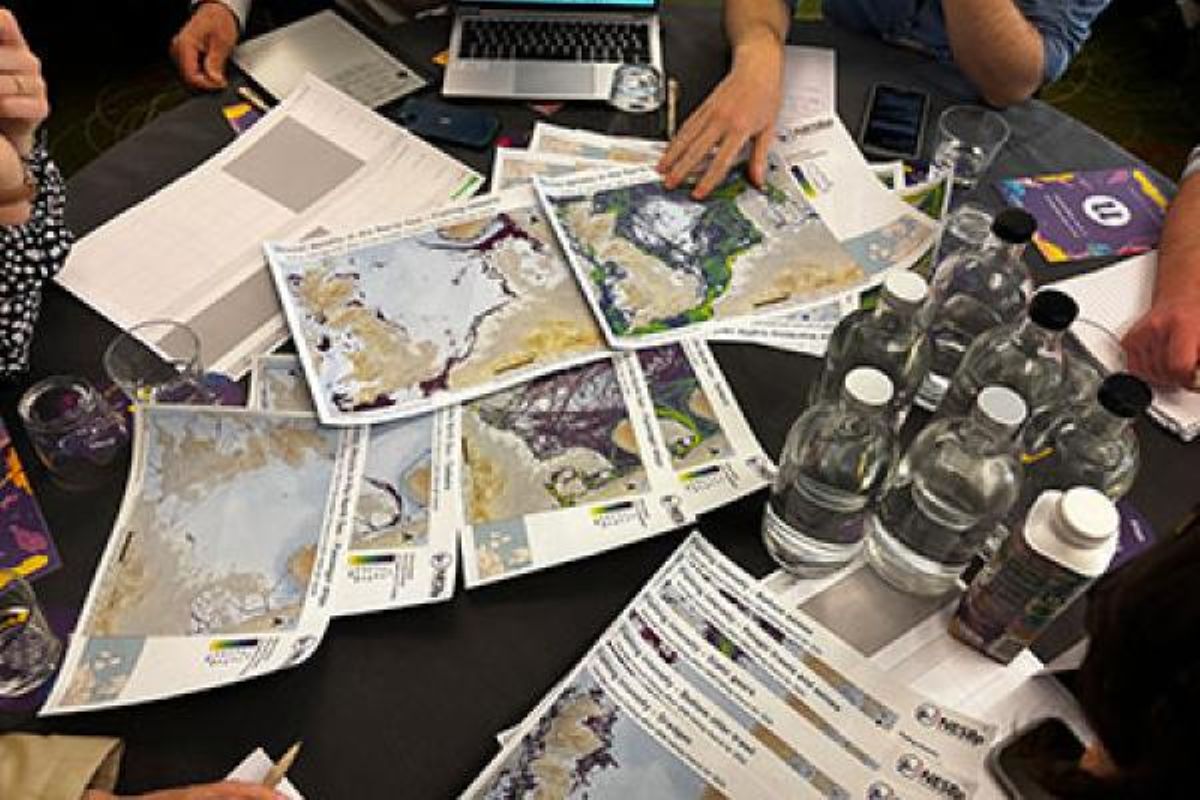
Today, Europe’s northern seas face growing pressure. The energy transition, climate change, biodiversity loss and increasing geopolitical tensions are reshaping how countries plan and manage their maritime space. Offshore wind, fisheries, shipping and nature protection all compete for space at sea, and no single country can address these challenges alone.
To respond to this, the Greater North Sea Basin Initiative (GNSBI) was established in 2023 to foster cross-border cooperation on maritime spatial planning (MSP) among North Sea countries. The Northern European Sea Basin project (NESBp), co-funded by the EU trough the European Maritime, Fisheries and Aquaculture Fund (EMFAF), supports the Greater North Sea Basin Initiative. By connecting it with the HELCOM-VASAB MSP Working Group, the project extends this co=operation to the Baltic Sea.
Building on the results of the earlier eMSP NBSR project, NESBp helps countries around both sea basins to move from isolated national plans towards coordinated sea-basin approach.
Connecting two sea basins, sharing one challenge
Let by the Ministry of Economic Affairs/Netherlands Enterprise Agency (RVO), and bringing together partners from Belgium, Finland, France, Germany, the Netherlands, Poland and Sweden, NESBp evaluates maritime spatial plans across key themes, strengthens networks between maritime spatial planning authorities and researchers, and develops practical tools that combine an ecosystem-based approach with a sustainable blue economy.
The project has already delivered concrete results:
- a visual guide and checklist to help integrate an ecosystem-based approach into maritime spatial planning;
- a policy brief on the progress of transboundary cooperation in the Greater North Sea;
- a shared glossary of terms on the energy transition and biodiversity;
- a summary report mapping ongoing Cumulative Impact Assessment (CIA) work across the North and Baltic Seas.
NESBp has also laid the methodological groundwork for "Mariparks", designated zones at sea where multiple activities, such as energy production, aquaculture and nature restoration, can take place side by side under clear and shared agreements. By giving companies more investment certainty while keeping the ecosystem’s needs in view, Mariparks offer a practical way to make better use of increasingly limited maritime space.
Through workshops such as the European Maritime Day session and the Baltic MSP Week, and by building a community of practice on cumulative impact assessment, the project has strengthened cooperation between the North Sea and Baltic Sea regions, while exchanging knowledge with related EU projects such as ReMAP and MEDIGREEN.
As Marjoleine Nascimento da Silva, NESBp’ project coordinator, explains:
"The project helps creating opportunities to exchange knowledge and experiences in the North Sea and Baltic Sea region. Hence, contributing to moving from national maritime spatial planning to a more sea-basin approach."
Maritime spatial planning as a driving force behind the priorities of the European Ocean Pact
NESBp directly supports the objectives of the Maritime Spatial Planning Directive and the Marine Strategy Framework Directive, and contributes to the European Ocean Pact by demonstrating how maritime spatial planning can serve as a practical tool for a sea-basin approach to ocean governance.
By strengthening cross-border cooperation between EU Member States and building lasting links between the North Sea and Baltic Sea regions, the project lays the foundations for a more coherent, ecosystem-based and sustainable management of the seas of northern Europe.
For further information and updated news on the project, check the project website and follow NESBp on LinkedIn and BlueSky.Reference
Project locations
Belgium
Finland
France
Germany
Netherlands
Poland
Sweden
Overall budget
€3,083,140
EU contribution
€2,466,512
80% of the overall budget
Project website
Stakeholders
Coordinators
Ministry of Economic Affairs / Netherlands Enterprise Agency (RVO), Netherlands
Website https://www.government.nl/ministries/ministry-of-economic-affairs-and-climate
Participants
Ministry of Infrastructure and Water Management, Netherlands
Website https://www.government.nl/ministries/ministry-of-infrastructure-and-water-manag…
Blue Cluster, Belgium
Website https://www.bluecluster.be/
The Federal Maritime and Hydrographic Agency (BSH), Germany
Website https://www.bsh.de/EN/Home/home_node.html
Centre for Studies and Expertise on Risks, the Environment, Mobility and Urban Planning (Cerema), France
Website https://www.cerema.fr/en
Seascape Belgium, Belgium
Website https://www.seascapebelgium.be/
Maritime Institute of Maritime University in Gdynia, Poland
Website https://umg.edu.pl/en/gmu-0
International Marine and Dredging Consultants (IMDC), Belgium
Website https://imdc.be/en
Mantis Consulting, Belgium
Website https://www.mantisconsulting.be/
ORG Urbanism & Architecture BV, Belgium
Website https://www.weareorg.com/
Service Hydrographique et Océanographique de la Marine (SHOM), France
Website https://www.shom.fr/
Swedish Agency for Marine and Water Management, Sweden
Website https://www.havochvatten.se/en/start.html
University of Gothenburg / Swedish Institute for the Marine Environment, Sweden
Website https://www.havsmiljoinstitutet.se/en
University of Groningen, Netherlands
Website https://www.rug.nl/
SUBMARINER Network for Blue Growth, Germany
Website https://submariner-network.eu/
Nordic Centre for Spatial Development (Nordregio), Sweden
Website https://nordregio.org/
Baltic Marine Environment Protection Commission (HELCOM), Finland
Website https://helcom.fi/
Vision and Strategies around the Baltic Sea (VASAB), Sweden
Website https://vasab.org/
Share this article:
EU Reporter publishes articles from a variety of outside sources which express a wide range of viewpoints. The positions taken in these articles are not necessarily those of EU Reporter. Please see EU Reporter’s full Terms and Conditions of publication for more information EU Reporter embraces artificial intelligence as a tool to enhance journalistic quality, efficiency, and accessibility, while maintaining strict human editorial oversight, ethical standards, and transparency in all AI-assisted content. Please see EU Reporter’s full A.I. Policy for more information.



Kashmir's 9,765 missing women and girls demand international attention

EU foreign ministers to discuss options for restricting trade with Israeli communities in Judea and Samaria

New EU strategy must help farmers move toward a more humane food system

Srebrenica's lesson is prevention. Why isn't the world applying It to Kashmir?

European operation dismantles €10 million illicit cigarette network in Spain

Europe's Cloud moment: The DMA must now deliver

EU-Mexico: While others build walls, Europe builds bridges

Survey of city economic experts: Cities are driving Draghi’s competitiveness agenda, but need EU recognition to scale action

ALROSA Re-elects Supervisory Board with Minimal Changes

Public consultation on Joint Undertakings, Art. 185 initiatives, and thematic priorities for European Partnerships under Horizon Europe 28-34

Poland sees new research and changes to policies on migrant integration

EU launches a Team Gaza Initiative to support early recovery in Gaza with an initial amount of nearly €900 million

NESBp: Strengthening maritime spatial planning across the North Sea and Baltic Sea

Energy Union Task Force takes stock of oil and gas security of supply in the EU

AIFC to host Astana Finance Days 2026 in September

EU clarifies rules to allow continued waste recovery shipments to Switzerland

Kazakhstan reforms under scrutiny at Brussels Press Club round table

Japan should face up to history and contribute more to regional peace

Ambassador calls for 'speeding up' of co-operation between EU and Kazakhstan

Timur Turlov at Smart Moves Summit 2025: How chess can transform global education

Shevtsova’s case: Out-of-court sanctions dismantling trust in Ukrainian cause

The future of European transport

Trump Vs Trueman

US 'no longer' an 'unconditional ally' for Europe - MEP
-
 Kashmir4 days ago
Kashmir's 9,765 missing women and girls demand international attention
-
 Israel2 days ago
EU foreign ministers to discuss options for restricting trade with Israeli communities in Judea and Samaria
-
 Animal welfare4 days ago
New EU strategy must help farmers move toward a more humane food system
-
 Kashmir1 day ago
Srebrenica's lesson is prevention. Why isn't the world applying It to Kashmir?