Environment
Commission adopts new measures to stop the destruction of unsold clothes and shoes


The European Commission has adopted new measures under the Ecodesign for Sustainable Products Regulation (ESPR) to prevent the destruction of unsold apparel, clothing accessories and footwear. By promoting reuse and recycling, these measures will help cut waste, reduce environmental damage and create a level playing field for companies. And as a result, the textile sector can move faster towards more circular practices and is another step in promoting a circular economy throughout the EU.
The new measures will support businesses in complying with the requirements regarding the destruction of unsold textiles under the ESPR. They clarify under which circumstances the destruction will be permitted – for instance, due to safety reasons or product damage. They also introduce a standardized format for businesses to disclose the volumes of unsold consumer goods they discard, in the simplest possible way without adding extra administrative burden.
Every year in Europe, an estimated 4-9% of unsold textiles are destroyed before ever being worn. This waste generates around 5.6 million tonnes of CO2 emissions, which is almost equal to Sweden's total net emissions in 2021. The ESPR, which entered into force in July 2024, aims to significantly improve the sustainability of products placed on the EU market by improving their circularity, energy performance, recyclability and durability. It requires companies to disclose information on the unsold consumer products they discard as waste. It also introduces a ban on the destruction of unsold apparel, clothing accessories and footwear. This responds to consumers' growing concerns about textile waste due to the environmental and social impacts of fast fashion.
The ban on destruction will apply to large companies from 19 July 2026 and medium-sized companies are expected to follow in July 2030. The rules on disclosure under ESPR already apply to large companies and will also apply to medium-sized companies in 2030.
Environment, Water Resilience and a Competitive Circular Economy Commissioner Jessika Roswall (pictured) said: "The textile sector is leading the way in the transition to sustainability but there are still challenges. The numbers on waste show the need to act. With these new measures the textile sector will be empowered to move towards sustainable and circular practices, and we can boost our competitiveness and reduce our dependencies.”
You can find more information online.
Share this article:
EU Reporter publishes articles from a variety of outside sources which express a wide range of viewpoints. The positions taken in these articles are not necessarily those of EU Reporter. Please see EU Reporter’s full Terms and Conditions of publication for more information EU Reporter embraces artificial intelligence as a tool to enhance journalistic quality, efficiency, and accessibility, while maintaining strict human editorial oversight, ethical standards, and transparency in all AI-assisted content. Please see EU Reporter’s full A.I. Policy for more information.



Protect children from online sexual abuse: Call for urgent negotiations and permanent solution

Astana's congress of world religions: A global platform for dialogue in an age of division

Solana company partners with Kazakhstan on $6B Alatau Crypto Megacity

Will the Gulf monarchies rise above internecine disputes in the interest of collective security?

Europe must double down on nuclear progress to achieve its long-term ambitions

International Plastic Bag Free Day – from single use to reuse

Study: Europe's defense runs on American servers

MEPs supportive of draft Biotech report, but divisions over incentives remain

Quarterly reports show a surge in solar energy and e-vehicles, with record highs in 2025

EU deploys wildfire support to face multiple fires across Portugal and France

New EU plan to address the risks and opportunities of advanced AI for cybersecurity

Portugal achieves major milestone with permit for offshore aquaculture facility

Setting sustainable livestock farming on a strong footing

Competition policy: Enforce without fear

Friedman Institute and Trends Group at the Italian parliament: Countering the Muslim brotherhood

How hair extensions can transform your look naturally

Kazakhstan reforms under scrutiny at Brussels Press Club round table

Japan should face up to history and contribute more to regional peace

Ambassador calls for 'speeding up' of co-operation between EU and Kazakhstan

Timur Turlov at Smart Moves Summit 2025: How chess can transform global education

Shevtsova’s case: Out-of-court sanctions dismantling trust in Ukrainian cause

The future of European transport

Trump Vs Trueman

US 'no longer' an 'unconditional ally' for Europe - MEP
-
 Child sexual abuse3 days ago
Protect children from online sexual abuse: Call for urgent negotiations and permanent solution
-
 Kazakhstan3 days ago
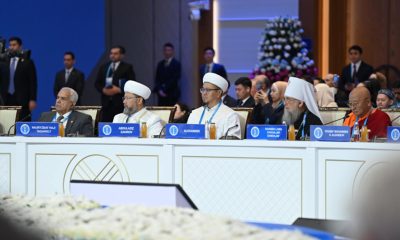
Astana's congress of world religions: A global platform for dialogue in an age of division
-
 Kazakhstan3 days ago
Solana company partners with Kazakhstan on $6B Alatau Crypto Megacity
-
 Iran3 days ago
Will the Gulf monarchies rise above internecine disputes in the interest of collective security?