Belarus
EU reaches deal on Belarus economic sanctions, according to Austria, diplomats

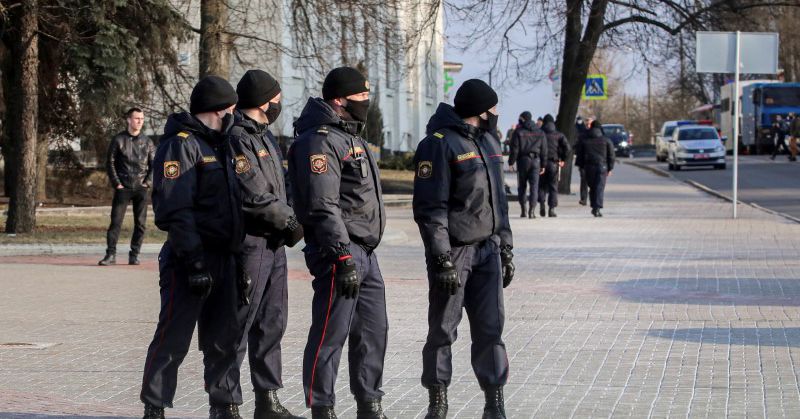
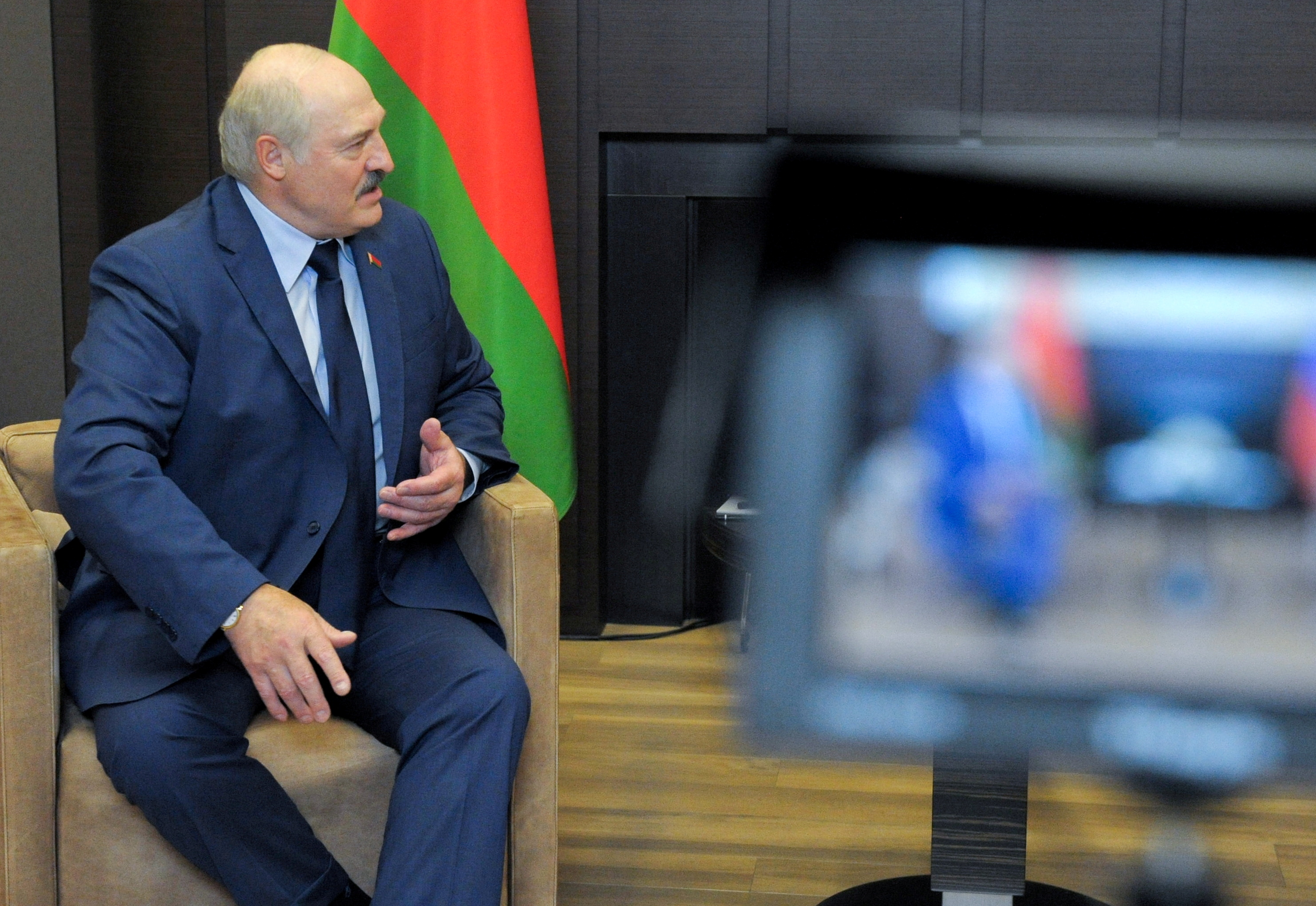

The European Union is set to ban new loans to Belarus after reaching a deal on Friday for economic sanctions on Minsk as punishment for forcing down a flight to arrest a journalist, the Austrian foreign ministry and three diplomats said, write Francois Murphy Sabine Siebold and Robin Emmott.
Broad economic sanctions would be the EU's strongest response yet to the forced landing of a Ryanair flight in May by Belarusian authorities to arrest an exiled dissident, a move the bloc's leaders have called state piracy.
Restrictions on the Belarusian financial sector, if agreed by EU governments at a political level, will include: a ban on new loans, a ban on EU investors from trading securities or buying short-term bonds and a ban on EU banks from providing investment services. EU export credits will also end.
Friday's agreement overcame objections from Austria, whose Raiffeisen Bank International (RBIV.VI) is a big player in Belarus through its Priorbank subsidiary.
EU leaders meet next Thursday for a scheduled summit. It was not yet clear if they will approve the deal agreed by expert officials.
"With this agreement the EU is sending a clear and targeted signal against the Belarusian regime's unbearable acts of repression," the Austrian foreign ministry said in a statement.
President Alexander Lukashenko, in power since 1994, has argued that the journalist pulled off the plane on May 23, Roman Protasevich, had been plotting a rebellion, and he has accused the West of waging a hybrid war against him.
The EU, NATO, Britain, Canada and the United States have expressed outrage that a flight between EU members Greece and Lithuania was pressed to land in Minsk and authorities then arrested the 26-year-old exiled dissident with his 23-year-old girlfriend.
POTASH, TOBACCO, OIL
EU experts tasked with drawing up sanctions agreed on a ban of exports from the bloc of any communications equipment that could be used for spying, and a tighter arms embargo to include hunting rifles.
They also agreed restrictions on EU purchases from Belarus of tobacco products, as well as oil and oil-related products, and a ban on importing potash, a major Belarusian export.
There will be exemptions in the financial sanctions for humanitarian purposes, while private savings of Belarusian citizens will not be affected, one of the diplomats said.
Closely allied to Russia, which sees Belarus as a buffer country against NATO expansion, Lukashenko has been impervious to foreign pressure since disputed elections last August, which the opposition and the West say were rigged. Massive street protests have had little impact on his grip on power.
The EU has already imposed three rounds of sanctions on individuals, including Lukashenko, since last year, freezing their assets in the EU and banning travel. On Monday, foreign ministers will approve another round, with 78 people and eight entities to be blacklisted, diplomats said.
EU governments now want to hit sectors that are central to the Belarus economy, to inflict real punishment on Lukashenko.
Exports of potash - a potassium-rich salt used in fertilizer - are a major source of foreign currency for Belarus, and state firm Belaruskali says it produces 20% of the world's supply.
The EU statistics agency said the bloc imported 1.2 billion euros ($1.5 billion) worth of chemicals including potash from Belarus last year, as well as more than 1 billion euros worth of crude oil and related products such as fuel and lubricants.
Germany has said sanctions should continue until Belarus holds free elections and releases political prisoners.
Share this article:
EU Reporter publishes articles from a variety of outside sources which express a wide range of viewpoints. The positions taken in these articles are not necessarily those of EU Reporter. Please see EU Reporter’s full Terms and Conditions of publication for more information EU Reporter embraces artificial intelligence as a tool to enhance journalistic quality, efficiency, and accessibility, while maintaining strict human editorial oversight, ethical standards, and transparency in all AI-assisted content. Please see EU Reporter’s full A.I. Policy for more information.



EU foreign ministers to discuss options for restricting trade with Israeli communities in Judea and Samaria

European operation dismantles €10 million illicit cigarette network in Spain

Srebrenica's lesson is prevention. Why isn't the world applying It to Kashmir?

AIFC to host Astana Finance Days 2026 in September

ALROSA Re-elects Supervisory Board with Minimal Changes

Energy Union Task Force takes stock of oil and gas security of supply in the EU

Joint statement by High Representative/Vice-President Kallas and Commissioner Kos on the 31st anniversary of the Srebrenica genocide

European Commission’s Annual Tax Report (ART) provides latest insights into the revenue mix

Britain’s leadership crisis is a symptom, not the disease

Chinese “leadership and coordination”

Shared commitment to advance EOSC through new EOSC Nodes and EOSC projects

Why young jobseekers struggle to find roles abroad that fit their expertise

Farmers, fair markets and consumers: new report highlights the role of EU competition rules in agriculture

EU and South Africa kick off intergovernmental dialogue on Clean Trade and Investment Partnership

Seveso - 50 years on: EU strengthens its commitment to industrial safety in a changing landscape of risk

Commission opens formal investigation into possible gun jumping in XXXLutz's acquisition of Porta

Kazakhstan reforms under scrutiny at Brussels Press Club round table

Japan should face up to history and contribute more to regional peace

Ambassador calls for 'speeding up' of co-operation between EU and Kazakhstan

Timur Turlov at Smart Moves Summit 2025: How chess can transform global education

Shevtsova’s case: Out-of-court sanctions dismantling trust in Ukrainian cause

The future of European transport

Trump Vs Trueman

US 'no longer' an 'unconditional ally' for Europe - MEP
-
 Israel3 days ago
EU foreign ministers to discuss options for restricting trade with Israeli communities in Judea and Samaria
-
 Cigarettes2 days ago
European operation dismantles €10 million illicit cigarette network in Spain
-
 Kashmir2 days ago
Srebrenica's lesson is prevention. Why isn't the world applying It to Kashmir?
-
 Kazakhstan1 day ago
AIFC to host Astana Finance Days 2026 in September