Employment
Employment: Commission proposes €2.3 million from Globalisation Fund for former workers of First Solar in Germany


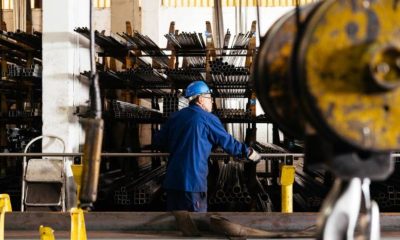
The European Commission has proposed to provide Germany with €2.3m from the European Globalisation Adjustment Fund (EGF) to help 875 workers made redundant by the solar modules manufacturer First Solar Manufacturing GmbH. The funds requested by the German authorities would help the workers with their re-integration into employment. The proposal now goes to the European Parliament and the EU's Council of Ministers for their approval.
Employment, Social Affairs and Inclusion Commissioner László Andor said: "Redundancies like these are major shocks to regional economies. EU solidarity is helping dismissed workers upgrade their skills and prepare for new opportunities. This proposal for 2.3 million euros from Europe's Globalisation Fund would help ease the workers' transition to new jobs."
Germany applied for support from the EGF following the dismissal of 1,244 workers of First Solar Manufacturing GmbH. Of the total number of redundant workers, 875 are expected to participate in the EGF co-funded measures. These include support services and job search, training courses leading to new qualifications, training management, workshops and peer groups, follow-up and aftercare, in-depth business creation advice, activation grant and subsistence allowance.
The total estimated cost of the package is €4.6 million, of which the EGF would provide 50%.
Background
First Solar Manufacturing GmbH is only one of many European solar enterprises that have become insolvent, quit the solar business, shut down production wholly or partially, or sold out to Chinese investors over the past couple of years (2010 to 2012). The Photovoltaic Sustainable Growth Index for 2011 concludes that "the total revenue pool of all 33 PV companies in the study increased by 79% from $21bn to $36bn in a market where installations grew by 129%. Chinese and Taiwanese companies were able to grow revenue faster than German and US companies. Market share of German companies continued to slide. US companies gave up market share after four years of gains." Thus, between 2005 and 2011, the revenue share of China increased from 11% to 45%, while that of Germany fell from 64% to 21%. The only other EU Member State with a production significant enough to be listed is Spain with 1%.
The redundancies in First Solar (1,244 persons) have led to an immediate increase of the rate of unemployment by 4 percentage points in the wider Frankfurt (Oder) area, which was already suffering from an above-average rate of unemployment (11.3% compared with a national average of 7.4% in February 2013). The unemployment rate in the city of Frankfurt (Oder) is even higher, at 14.1% (December 2012). Furthermore, there are few alternative job options within 200 km of the city.
More open trade with the rest of the world leads to overall benefits for growth and employment, but it can also cost some jobs, particularly in vulnerable sectors and affecting lower-skilled workers. This is why Commission President Barroso first proposed setting up a fund to help those adjusting to the consequences of globalisation. Since the start of its operations in 2007, the EGF has received 110 applications. Some €471.2 million has been requested to help more than 100,000 workers. EGF applications are being presented to help in a growing number of sectors, and by an increasing number of Member States.
In June 2009, the EGF rules were revised to strengthen the role of the EGF as an early intervention instrument forming part of Europe's response to the financial and economic crisis. The revised EGF Regulation entered into force on 2 July 2009 and the crisis criterion applied to all applications received from 1 May 2009 to 30 December 2011.
Building on this experience and the value added by the EGF for the assisted workers and affected regions, the Commission has proposed to maintain the Fund also during the 2014-2020 multiannual financial framework, while further improving its functioning. Provisional agreement between the co-legislators on the new regulation has recently been reached.
For more information, click here.
Share this article:
EU Reporter publishes articles from a variety of outside sources which express a wide range of viewpoints. The positions taken in these articles are not necessarily those of EU Reporter. Please see EU Reporter’s full Terms and Conditions of publication for more information EU Reporter embraces artificial intelligence as a tool to enhance journalistic quality, efficiency, and accessibility, while maintaining strict human editorial oversight, ethical standards, and transparency in all AI-assisted content. Please see EU Reporter’s full A.I. Policy for more information.



EU foreign ministers to discuss options for restricting trade with Israeli communities in Judea and Samaria

European operation dismantles €10 million illicit cigarette network in Spain

Srebrenica's lesson is prevention. Why isn't the world applying It to Kashmir?

Energy Union Task Force takes stock of oil and gas security of supply in the EU

ALROSA Re-elects Supervisory Board with Minimal Changes

AIFC to host Astana Finance Days 2026 in September

Joint statement by High Representative/Vice-President Kallas and Commissioner Kos on the 31st anniversary of the Srebrenica genocide

EU launches a Team Gaza Initiative to support early recovery in Gaza with an initial amount of nearly €900 million

Shusha Global Media Forum: Azerbaijan’s Answer to Disinformation

Commission approves French state aid to support offshore wind energy

Natura 2000 Network offers opportunities for sustainable tourism across Europe

Commission adds exemptions to rules on removability of portable batteries

EU steps up international support for Palestinians with major initiative for Gaza's early recovery and stronger international coordination

Kurmuk gold project highlights Africa’s changing investment landscape

Falling in love with the Maldives

Britain’s leadership crisis is a symptom, not the disease

Kazakhstan reforms under scrutiny at Brussels Press Club round table

Japan should face up to history and contribute more to regional peace

Ambassador calls for 'speeding up' of co-operation between EU and Kazakhstan

Timur Turlov at Smart Moves Summit 2025: How chess can transform global education

Shevtsova’s case: Out-of-court sanctions dismantling trust in Ukrainian cause

The future of European transport

Trump Vs Trueman

US 'no longer' an 'unconditional ally' for Europe - MEP
-
 Israel4 days ago
EU foreign ministers to discuss options for restricting trade with Israeli communities in Judea and Samaria
-
 Cigarettes4 days ago
European operation dismantles €10 million illicit cigarette network in Spain
-
 Kashmir4 days ago
Srebrenica's lesson is prevention. Why isn't the world applying It to Kashmir?
-
 Energy market3 days ago
Energy Union Task Force takes stock of oil and gas security of supply in the EU