EU
#PostingofWorkers: ALDE drives compromise ahead of key European Parliament vote

|
||
|
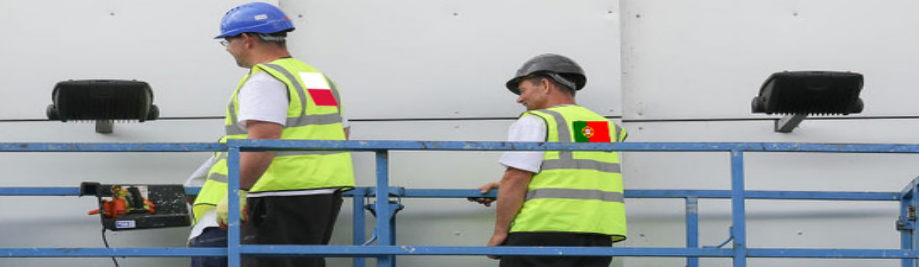
MEPs on the Employment and Social Affairs Committee will this evening (16 October) vote to adopt their position on the revision of the Posting of Workers Directive, which puts in place a legal framework regulating the posting of employees by companies to work temporarily in another EU member state.
The revision aims to change three main areas: making the pay of posted workers equal to that of local workers, by introducing the concept of remuneration, changing the rules on long-term posting and applying the principle of equal treatment between temporary agency workers and comparable permanent workers. Posted workers account for just 0.7 percent of the labour force in Europe, but have been at the heart of a long-standing political controversy between EU Member States. ALDE shadow rapporteur, Martina Dlabajová MEP, commented today ahead of the vote: “Liberals and Democrats have played a prominent role in working to secure a compromise on a number of the core issues relating to this complex legislation.” “As the European Parliament, our priority must be to deliver a cohesive European approach in the interests of both businesses and workers that will keep our internal market functioning and competitive. We must renounce the temptation to indulge in geographic polarisation and prejudices and the pursuit of solely national interests. Our aim should be to put the European collective interest first and find a workable compromise that respects the cohesion of the European internal market and ensures a good balance between the preservation of the free movement of services and the protection of worker’s rights.” “Further work will be necessary in the trilogue negotiations ahead of us in order to lower administrative burdens and ensure legal certainty, which is a priority for Liberals and Democrats. We are happy that finally the duration of posting period has been agreed as 24 months within the Parliament, with the possibility to extend. This time period is in line with other relevant EU legislation, for example the social security coordination regulation. Coherence and consistency of rules is crucial for EU law framework and must be guaranteed. “ “I am delighted we have also improved the proposed text to ensure that companies cannot be held liable for the incorrect application of remuneration or collective agreements, if the information relating to these is not provided or is incorrectly provided on the single official website linked to this legislation. These measures should contribute to increase legal certainty and transparency.“ “Furthermore, it is important for me that the transport sector will be dealt with separately, outside of the posting of workers legislation. The highly mobile sector requires specific solutions, and as a rapporteur for the opinion on the posting of drivers file, I look forward to working on developing a bespoke solution that will preserve cross border operations and the competitive environment on the Single Market for a sector, which delivers for workers, citizens and employers.” |
||
Share this article:
EU Reporter publishes articles from a variety of outside sources which express a wide range of viewpoints. The positions taken in these articles are not necessarily those of EU Reporter. Please see EU Reporter’s full Terms and Conditions of publication for more information EU Reporter embraces artificial intelligence as a tool to enhance journalistic quality, efficiency, and accessibility, while maintaining strict human editorial oversight, ethical standards, and transparency in all AI-assisted content. Please see EU Reporter’s full A.I. Policy for more information.



Astana's congress of world religions: A global platform for dialogue in an age of division

Protect children from online sexual abuse: Call for urgent negotiations and permanent solution

Solana company partners with Kazakhstan on $6B Alatau Crypto Megacity

Will the Gulf monarchies rise above internecine disputes in the interest of collective security?

Europe must double down on nuclear progress to achieve its long-term ambitions

International Plastic Bag Free Day – from single use to reuse

Study: Europe's defense runs on American servers

Commission proposes five joint defence projects to strengthen Europe's industrial capabilities

Safer cars, safer roads: New rules take effect

Survey of city economic experts: Cities are driving Draghi’s competitiveness agenda, but need EU recognition to scale action

Europe's Cloud moment: The DMA must now deliver

EU-Mexico: While others build walls, Europe builds bridges

New EU strategy must help farmers move toward a more humane food system

Kashmir's 9,765 missing women and girls demand international attention

Quarterly reports show a surge in solar energy and e-vehicles, with record highs in 2025

EU deploys wildfire support to face multiple fires across Portugal and France

Kazakhstan reforms under scrutiny at Brussels Press Club round table

Japan should face up to history and contribute more to regional peace

Ambassador calls for 'speeding up' of co-operation between EU and Kazakhstan

Timur Turlov at Smart Moves Summit 2025: How chess can transform global education

Shevtsova’s case: Out-of-court sanctions dismantling trust in Ukrainian cause

The future of European transport

Trump Vs Trueman

US 'no longer' an 'unconditional ally' for Europe - MEP
-
 Kazakhstan4 days ago
Astana's congress of world religions: A global platform for dialogue in an age of division
-
 Child sexual abuse4 days ago
Protect children from online sexual abuse: Call for urgent negotiations and permanent solution
-
 Kazakhstan4 days ago
Solana company partners with Kazakhstan on $6B Alatau Crypto Megacity
-
 Iran4 days ago
Will the Gulf monarchies rise above internecine disputes in the interest of collective security?