EU
#EESC hosts launch of a Commission toolkit advising member states on EU funding for migrant integration


On 24 January, the European Economic and Social Committee (EESC) and the European Commission jointly organized the launch of the Commission's new toolkit to help member states to strengthen the integration of people with a migrant background by making more efficient and coordinated use of available EU funding instruments.
The Commission’s toolkit, or handbook, contains guidelines and practical recommendations for national and regional funding authorities, which should implement integration strategies and projects by tapping into various EU funds accessible under the current 2014-2020 budget period and combining them in a way that avoids overlaps and double financing and ensures synergies between multiple instruments.
In his opening remarks at the launch event, EESC President Georges Dassis said: "A true democracy must allow civil society to express itself. The resources of the Asylum, Migration and Integration Fund (AMIF) and of the European Social Fund (ESF) should be increased, especially in member states where the number of refugees has exceeded the planned quota. This should be done to ensure better joint funding of integration measures intended for refugees."
The improved and enhanced use of funds should in turn foster the inclusion of over 20 million third-country nationals who legally reside in the European Union and account for 4.1% of the entire EU population, but who continue to face a plethora of challenges and discrimination when looking for a job or housing, or when trying to access education and basic services, such as healthcare or legal advice.
As many as 40% of third-country nationals are at risk of poverty, while 18% are unemployed and 19% leave school early, which is almost double the EU average, it was revealed at the launch event.
"The EU has to show humanism and solidarity. Citizens must be aware that the EU is working for their prosperity and liberty. Migrants aren't to be seen as a burden. If they are properly integrated, they will be a great boon, not only to our economies but to our society as a whole," said Dassis.
Regional Policy Commissioner Corina Crețu said that Europe, which is facing unprecedented demographic challenges because of its rapidly ageing population, should recognize the potential of migrants and view their successful integration as an opportunity for its future.
"Migration is part of our history. Europe is built on migration and European societies will need migrants to address demographic decline and labour market shortages," warned Crețu. "Integration can only happen if it takes place on the ground, and local needs must be recognised. This is why the role of civil society is so important in this area," she maintained.
In a video message shown at the launch, Employment, Social Affairs, Skills and Labour Mobility Commissioner Marianne Thyssen said the current situation must change urgently: "Optimal use of funds plays an important role in supporting the integration of people with a migrant background."
The Commission's toolkit suggests action in five priority areas – or scenarios – for the sake of efficient long-term integration strategies tailored to meet the individual needs of beneficiaries, in line with national strategic policy frameworks. These areas are reception, education, employment, housing and access to public services.
Each scenario describes typical challenges facing migrants, identifies the objective of EU funds, and proposes specific measures that may be taken, matching them with one or more suitable EU funds.
There is currently a wide range of EU funds which member states and regions may use to finance projects relating to the integration of migrants; so far, however, this has only been done to a limited extent and with inadequate co-ordination.
These funds, among others, include the European Regional Development Fund (ERDF), the European Social Fund (ESF), the Fund for European Aid to the Most Deprived (FEAD), the Asylum, Migration and Integration Fund (AMIF), and the European Union Programme for Employment and Social Innovation (EASI).
Share this article:
EU Reporter publishes articles from a variety of outside sources which express a wide range of viewpoints. The positions taken in these articles are not necessarily those of EU Reporter. Please see EU Reporter’s full Terms and Conditions of publication for more information EU Reporter embraces artificial intelligence as a tool to enhance journalistic quality, efficiency, and accessibility, while maintaining strict human editorial oversight, ethical standards, and transparency in all AI-assisted content. Please see EU Reporter’s full A.I. Policy for more information.



Protect children from online sexual abuse: Call for urgent negotiations and permanent solution

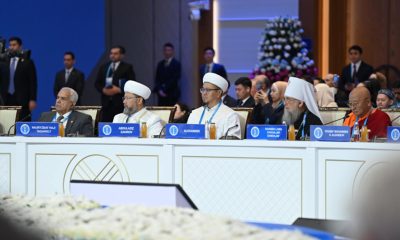
Astana's congress of world religions: A global platform for dialogue in an age of division

Solana company partners with Kazakhstan on $6B Alatau Crypto Megacity

Will the Gulf monarchies rise above internecine disputes in the interest of collective security?

Europe must double down on nuclear progress to achieve its long-term ambitions

International Plastic Bag Free Day – from single use to reuse

Study: Europe's defense runs on American servers

MEPs supportive of draft Biotech report, but divisions over incentives remain

Quarterly reports show a surge in solar energy and e-vehicles, with record highs in 2025

EU deploys wildfire support to face multiple fires across Portugal and France

New EU plan to address the risks and opportunities of advanced AI for cybersecurity

Portugal achieves major milestone with permit for offshore aquaculture facility

Setting sustainable livestock farming on a strong footing

Competition policy: Enforce without fear

Friedman Institute and Trends Group at the Italian parliament: Countering the Muslim brotherhood

How hair extensions can transform your look naturally

Kazakhstan reforms under scrutiny at Brussels Press Club round table

Japan should face up to history and contribute more to regional peace

Ambassador calls for 'speeding up' of co-operation between EU and Kazakhstan

Timur Turlov at Smart Moves Summit 2025: How chess can transform global education

Shevtsova’s case: Out-of-court sanctions dismantling trust in Ukrainian cause

The future of European transport

Trump Vs Trueman

US 'no longer' an 'unconditional ally' for Europe - MEP
-
 Child sexual abuse4 days ago
Protect children from online sexual abuse: Call for urgent negotiations and permanent solution
-
 Kazakhstan4 days ago
Astana's congress of world religions: A global platform for dialogue in an age of division
-
 Kazakhstan4 days ago
Solana company partners with Kazakhstan on $6B Alatau Crypto Megacity
-
 Iran4 days ago
Will the Gulf monarchies rise above internecine disputes in the interest of collective security?