EU
#Myanmar signs ceasefire with two rebel groups amid decades of conflict


Two ethnic armed groups in Myanmar signed a ceasefire with the government on Tuesday, as leader Aung San Suu Kyi (pictured) seeks to revive a stuttering peace process to end decades of conflict, writes Antoni Slodkowski.
Ending near-perpetual civil war has been Suu Kyi’s stated top priority, but the Buddhist-majority country has seen the worst fighting with rebels in years since she took office almost two years ago.
The peace process, which has been eclipsed in media coverage by the plight of hundreds of thousands of Muslim Rohingya refugees fleeing to neighbouring Bangladesh from violence in the northwest, is key to unlocking the resource-rich country’s potential and guaranteeing development for its more than 50 million people.
New Mon State Party and the Lahu Democratic Union signed the National Ceasefire Agreement (NCA) after meeting Suu Kyi and the military’s commander-in-chief, Senior General Min Aung Hlaing, in the capital Naypyitaw last month.
Speaking at a signing ceremony in Naypyitaw, Suu Kyi said the next step was to cement the ceasefire with groups that have already signed, and bring the remaining armed groups into the agreement through dialogue.
The latest two signatories have not engaged in active fighting with the military in recent years, but analysts said it marks a positive move for negotiations with other armed groups.
At least 10 rebel groups have not joined the NCA, an accord negotiated by the previous quasi-civilian administration. Suu Kyi has opened a new round of talks with some of the groups since last May.
The Nobel Peace Prize winner had been criticized overseas for not standing up for the largely stateless Rohingya in the western state of Rakhine, where an army crackdown forced more than 688,000 to flee to Bangladesh since 25 August last year.
The United Nations described Myanmar’s crackdown as ethnic cleansing of the Rohingya, a charge Myanmar denies.
Share this article:

EU Reporter publishes articles from a variety of outside sources which express a wide range of viewpoints. The positions taken in these articles are not necessarily those of EU Reporter. Please see EU Reporter’s full Terms and Conditions of publication for more information EU Reporter embraces artificial intelligence as a tool to enhance journalistic quality, efficiency, and accessibility, while maintaining strict human editorial oversight, ethical standards, and transparency in all AI-assisted content. Please see EU Reporter’s full A.I. Policy for more information.



Astana's congress of world religions: A global platform for dialogue in an age of division

Protect children from online sexual abuse: Call for urgent negotiations and permanent solution

Solana company partners with Kazakhstan on $6B Alatau Crypto Megacity

Will the Gulf monarchies rise above internecine disputes in the interest of collective security?

Europe must double down on nuclear progress to achieve its long-term ambitions

International Plastic Bag Free Day – from single use to reuse

Study: Europe's defense runs on American servers

Commission proposes five joint defence projects to strengthen Europe's industrial capabilities

Safer cars, safer roads: New rules take effect

Survey of city economic experts: Cities are driving Draghi’s competitiveness agenda, but need EU recognition to scale action

Europe's Cloud moment: The DMA must now deliver

EU-Mexico: While others build walls, Europe builds bridges

New EU strategy must help farmers move toward a more humane food system

Kashmir's 9,765 missing women and girls demand international attention

Quarterly reports show a surge in solar energy and e-vehicles, with record highs in 2025

EU deploys wildfire support to face multiple fires across Portugal and France

Kazakhstan reforms under scrutiny at Brussels Press Club round table

Japan should face up to history and contribute more to regional peace

Ambassador calls for 'speeding up' of co-operation between EU and Kazakhstan

Timur Turlov at Smart Moves Summit 2025: How chess can transform global education

Shevtsova’s case: Out-of-court sanctions dismantling trust in Ukrainian cause

The future of European transport

Trump Vs Trueman

US 'no longer' an 'unconditional ally' for Europe - MEP
-
 Kazakhstan5 days ago
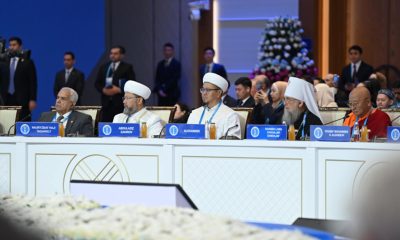
Astana's congress of world religions: A global platform for dialogue in an age of division
-
 Child sexual abuse5 days ago
Protect children from online sexual abuse: Call for urgent negotiations and permanent solution
-
 Kazakhstan5 days ago
Solana company partners with Kazakhstan on $6B Alatau Crypto Megacity
-
 Iran5 days ago
Will the Gulf monarchies rise above internecine disputes in the interest of collective security?