The Conference of Peripheral Maritime Regions (CPMR) was established in 1973. It is an independent network of over 150 European Regions from both within and outside the European Union representing peripheral maritime regions. The network operates to bring these regions together for discussion and debate on areas that are of common concern (agriculture, fisheries, transport, sustainable development, competition and EU regional policy) and ensures that these interests are acknowledged at a European level. It operates both as a think tank and as a lobby for regions. The network is divided into six Geographical Commissions, one of which is the North Sea Commission (NSC).
The North Sea Commission’s highest decision making body is their Annual Business Meeting which this year met in Frederikstad, Norway. The assembled delegates were requested to consider the possibility of a formal cooperation agreement between the NSC and KIMO. As explained in the NSC’s ABM 2018 meeting papers:
The North Sea Commission has over the past year become increasingly involved in the issue of marine litter. The issue was raised at a meeting of the Marine Resources Group (MRG) in September 2017, and thanks to the initiative of NSC it has become a topic for the work of the CPMR, who will adopt a marine litter manifesto the upcoming Political Bureau meeting in June.
In order to learn more about the issue, and to develop the understanding of what can be done in transnational cooperation, the Marine Resources Group has invited representatives of KIMO to its past two meetings in Aalborg and Lelystad. KIMO is an environmental organization for municipalities in the wider North Sea region, and it has been much involved in the plastics issue for several years. KIMO’s Secretariat has asked for a formalized cooperation with the North Sea Commission
The Charter of the North Sea Commission (article 12) states that ”The North Sea Commission shall seek to work in partnership with the other organizations or institutions whose aims are complementary to the objectives of the North Sea Commission. To this end the North Sea Commission and its Thematic Groups may enter into co-operation agreements with relevant local agencies, organizations or institutions”.
After consultation with the NSC Presidency, the NSC secretariat has developed the enclosed draft agreement together with KIMO’s secretariat. If approved by the NSC Annual Business Meeting and by KIMO’s Annual Meeting in October, the agreement can enter into force and govern the relations between the two organizations.
We are very pleased to report that the draft proposal for a Memorandum of Understanding was approved at the ABM. The final step in the process is formalising the agreement at the KIMO AGM in Aalborg in October 2018. In an interview with de Jutter newspaper, KIMO president, Robert te Beest, explains why this co-operation spells good news for everyone who cares about the North Sea region:
The co-operation with the North Sea Commission gives both our organizations an excellent opportunity to improve the linkages between the coastal regions and the European municipalities. Together we can tackle important issues such as marine pollution, the plastic soup and paraffin pollution in a joined-up manner.
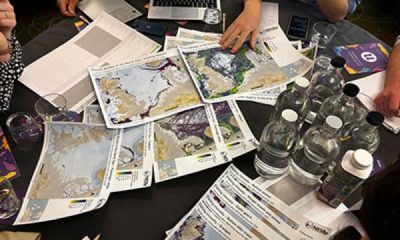
The KIMO Secretariat has already been working with the Marine Resources Group to develop a Marine Litter Resolution for the NSC which was also approved at their ABM. The ABM formed part of the North Sea Conference, during which KIMO representatives took part in a beach clean on the Isle of Saueholmen together with the Marine Resources Group (MRG), the Hope Cathedral project, Ren Kystlinje and Oslofjordens Friluftsråd. KIMO, also delivered a presentation at one of the conference workshops and assisted Rhona Fairgrieve, of the Scottish Government, to facilitate the Maritime Spacial Planning Board Game challenge during which workshop participants have to juggle competing priorities to collaboratively develop a maritime spatial plan for 3 fictional regions. It is the first time the board game was played with a marine litter component and during the game participants came up with some good proposals for ways in which marine litter could be reduced. These proposals were reported back to the final plenary session at the conference.
Going forward, we look forward to working with the North Sea Commission to the benefit of the North Sea region and all its coastal communities.