Blindness
#Blind and #VisuallyImpaired EU citizens gain easier access to books across EU borders


Books, magazines and other printed material are now more easily available in accessible formats for all blind and visually impaired persons and across the EU. This follows the ratification of the Marrakesh Treaty by the EU, which was finalized on 1 October 2018. As part of the Digital Single Market Strategy, the new rules create a mandatory and EU-wide exception to copyright rules. Digital Single Market Vice President Andrus Ansip said: “This Treaty is a real step to improve social inclusion, access to culture and entertainment, of people who are blind, visually impaired, or otherwise print-disabled. They will allow special formats of print material - such as braille or daisy - to be made and disseminated for people with print disabilities.” Digital Economy and Society Commissioner Mariya Gabriel said: “Today marks an important breakthrough for more inclusiveness for blind and visually impaired in the EU. Finally, they not only gain easier access to books and other published works necessary for work or pleasure, but can also exchange them across the EU. Without the prior authorization of rights holders, fast access to more and more diverse content will be guaranteed.” The Marrakesh Treaty itself was adopted at the World Intellectual Property Organisation (WIPO) in 2013. The EU legislation on the Marrakesh Treaty was proposed by the Commission as part as the ongoing modernization of the EU copyright legislation.
Share this article:
EU Reporter publishes articles from a variety of outside sources which express a wide range of viewpoints. The positions taken in these articles are not necessarily those of EU Reporter. Please see EU Reporter’s full Terms and Conditions of publication for more information EU Reporter embraces artificial intelligence as a tool to enhance journalistic quality, efficiency, and accessibility, while maintaining strict human editorial oversight, ethical standards, and transparency in all AI-assisted content. Please see EU Reporter’s full A.I. Policy for more information.




European operation dismantles €10 million illicit cigarette network in Spain

EU foreign ministers to discuss options for restricting trade with Israeli communities in Judea and Samaria

Srebrenica's lesson is prevention. Why isn't the world applying It to Kashmir?

AIFC to host Astana Finance Days 2026 in September

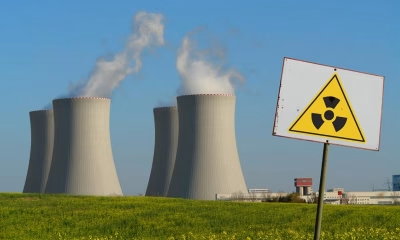
Energy Union Task Force takes stock of oil and gas security of supply in the EU

ALROSA Re-elects Supervisory Board with Minimal Changes

Joint statement by High Representative/Vice-President Kallas and Commissioner Kos on the 31st anniversary of the Srebrenica genocide

EU clarifies rules to allow continued waste recovery shipments to Switzerland

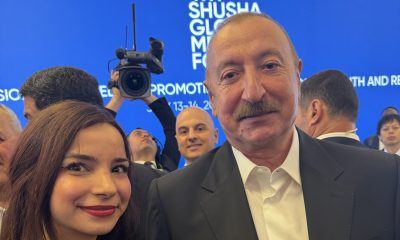
Shusha Global Media Forum: Azerbaijan’s Answer to Disinformation

Commission approves French state aid to support offshore wind energy

Natura 2000 Network offers opportunities for sustainable tourism across Europe

Commission adds exemptions to rules on removability of portable batteries

EU steps up international support for Palestinians with major initiative for Gaza's early recovery and stronger international coordination

Kurmuk gold project highlights Africa’s changing investment landscape

Falling in love with the Maldives

Britain’s leadership crisis is a symptom, not the disease

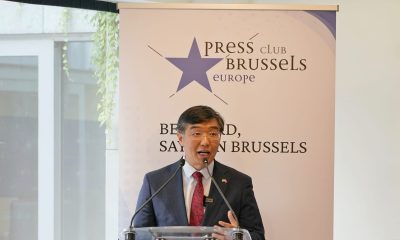
Kazakhstan reforms under scrutiny at Brussels Press Club round table

Japan should face up to history and contribute more to regional peace

Ambassador calls for 'speeding up' of co-operation between EU and Kazakhstan

Timur Turlov at Smart Moves Summit 2025: How chess can transform global education

Shevtsova’s case: Out-of-court sanctions dismantling trust in Ukrainian cause

The future of European transport

Trump Vs Trueman

US 'no longer' an 'unconditional ally' for Europe - MEP
-
 Cigarettes3 days ago
European operation dismantles €10 million illicit cigarette network in Spain
-
 Israel4 days ago
EU foreign ministers to discuss options for restricting trade with Israeli communities in Judea and Samaria
-
 Kashmir3 days ago
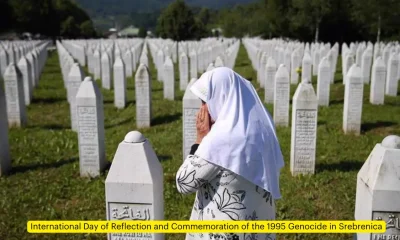
Srebrenica's lesson is prevention. Why isn't the world applying It to Kashmir?
-
 Kazakhstan2 days ago
AIFC to host Astana Finance Days 2026 in September