EU
Commission welcomes progress made in adopting new rules for safer and modern #Cars

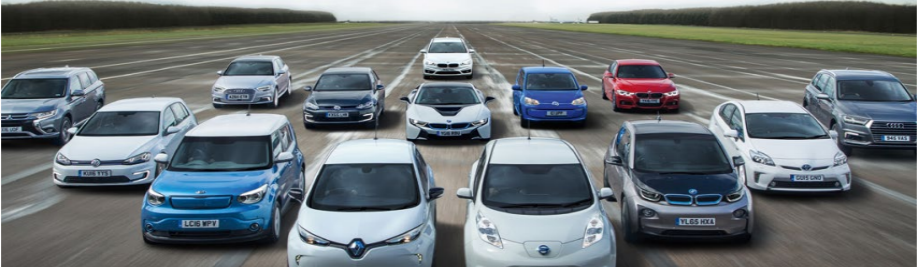
The Commission welcomes the general approach reached by the Council on the most ambitious legislation yet for the safety of vehicles on our roads.
In May this year, as part of the 3rd Mobility Package, the Commission proposed that cars, trucks and buses be equipped with new and advanced safety features, such as emergency braking, intelligent speed assistance and enhanced pedestrian and cyclist protection (see full list here).
Internal Market, Industry, Entrepreneurship and SMEs Commissioner Elżbieta Bieńkowska said: "I welcome the determination of the Council to agree on these new rules already now. The General Safety Regulation is crucial to improve road safety. Every year, roughly 25,000 people die on roads in the EU, which is unacceptable. These new advanced safety features are also the enablers of automated mobility, promising EU industry leadership in this important new area. We now call on the European Parliament to give priority to work on this file in order to reach a rapid agreement. There is no time to lose."
While road fatalities have more than halved since 2001, 25,300 people still lost their lives on EU roads in 2017 and another 135,000 were seriously injured. The Commission is therefore taking measures with strong EU added-value to contribute to safe roads and to a Europe that protects. Once the new Regulation is adopted, the new safety measures will become mandatory within three years.
As part of the 3rd Mobility Package, the Commission will also help member states to systematically identify dangerous road sections and to better target investment. Overall this could save thousands of lives thereby contributing to the EU's long-term goal of moving close to zero fatalities and serious injuries by 2050 ('Vision Zero').
Share this article:
EU Reporter publishes articles from a variety of outside sources which express a wide range of viewpoints. The positions taken in these articles are not necessarily those of EU Reporter. Please see EU Reporter’s full Terms and Conditions of publication for more information EU Reporter embraces artificial intelligence as a tool to enhance journalistic quality, efficiency, and accessibility, while maintaining strict human editorial oversight, ethical standards, and transparency in all AI-assisted content. Please see EU Reporter’s full A.I. Policy for more information.



Azerbaijan’ s foreign policy as a middle power and its role in promoting regional peace

Support for EU accession remains high across enlargement partners, latest surveys show

Philip Morris urges von der Leyen to include tobacco sector in EU competitiveness debate

Rotary : Another brick in the wall against plastic waste

Kazakhstan and the European Union: Building the next chapter of a strategic partnership

CEF Transport: €1.1 billion available for infrastructure projects across the EU

Take a splash: European bathing waters remain clean

President von der Leyen participates in G7 Summit in Evian to address global economic imbalances and ongoing crises

'Ukraine does not need investment out of sympathy': Seyar Kurshutov on the rational case for early entry

Russia’s Gulf pivot: How Oman Is emerging as a strategic partner for Moscow’s post-sanctions economy

North Sea storm: The tempest buffeting an Italian oil man's ambition

Commission opens disparagement investigation into Sanofi

UK building long-term economic strategy in Kyrgyzstan

EQAVET Peer Review on stakeholder engagement in VET in Portugal

Commission proposes new measures to better tackle cross-border crime and terrorism

Commission simplifies and makes energy and tyre labelling rules more accessible to European consumers

Kazakhstan reforms under scrutiny at Brussels Press Club round table

Japan should face up to history and contribute more to regional peace

Ambassador calls for 'speeding up' of co-operation between EU and Kazakhstan

Timur Turlov at Smart Moves Summit 2025: How chess can transform global education

Shevtsova’s case: Out-of-court sanctions dismantling trust in Ukrainian cause
The future of European transport

Trump Vs Trueman

US 'no longer' an 'unconditional ally' for Europe - MEP
-
 Azerbaijan5 days ago
Azerbaijan’ s foreign policy as a middle power and its role in promoting regional peace
-
 Accession5 days ago
Support for EU accession remains high across enlargement partners, latest surveys show
-
 European Commission5 days ago
Philip Morris urges von der Leyen to include tobacco sector in EU competitiveness debate
-
 Environment5 days ago
Rotary : Another brick in the wall against plastic waste