Kazakhstan
Energy synergy: How the Kazakhstan-EU strategic partnership Is evolving

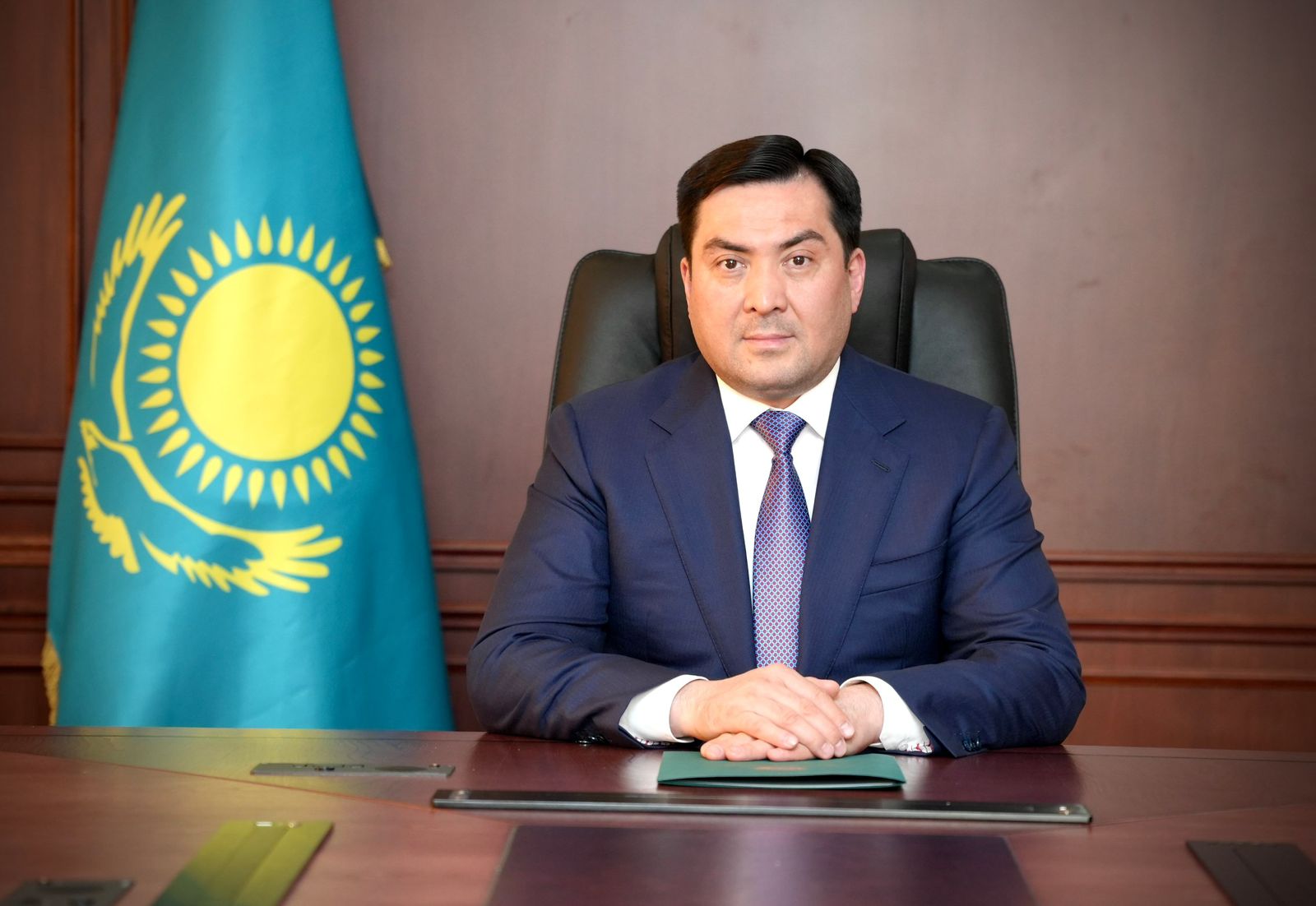
As global energy supply chains undergo a far-reaching transformation, predictability in partnerships has become one of the world’s most valuable currencies, writes Yerlan Akkenzhenov (pictured), Minister of Energy Kazakhstan.
For the European Union, the search for reliable energy sources and the green transition are no longer separate priorities; they are part of the same strategic agenda. It is within this context that the energy dialogue between Brussels and Astana is taking shape today: a relationship tested over decades and now entering a new phase of structural transformation.
The traditional foundation of our cooperation is clear. For many years, Kazakhstan has been a key and reliable supplier of hydrocarbons to European consumers. Today, around 80 percent of Kazakhstan’s oil exports go to EU member states. In 2025 alone, Kazakhstan supplied more than 60 million tonnes of oil to European markets.
These results have been made possible by consistent efforts to develop energy infrastructure and strengthen transport routes. The position of the Ministry of Energy of the Republic of Kazakhstan is pragmatic and clear: we will continue to enhance transport connectivity.
To preserve macroeconomic stability across regions, it is critically important that Kazakhstan’s oil exports remain protected from any disruption linked to the current global sanctions environment. Transparent and predictable rules for transportation are our shared safeguard against energy crises. Alongside exports through the Caspian Pipeline Consortium, Kazakhstan is also developing the Trans-Caspian route via Baku-Tbilisi-Ceyhan.
Kazakhstan is a reliable energy bridge between Asia and Europe. We have provided the European Union with a solid foundation in the traditional oil and gas sector, where European companies such as Eni, TotalEnergies and Shell have operated successfully for decades. Building on this foundation, we now invite Brussels to join us in shaping a sustainable architecture for clean energy.
Kazakhstan shares the European Union’s ambitious climate goals and supports global efforts to reduce methane emissions.
At the same time, we believe that new regulatory measures must be balanced, pragmatic and evidence-based, so that they do not create additional risks for energy security, supply stability or market competitiveness at a time of significant economic and geopolitical uncertainty.
In this regard, Kazakhstan is ready to engage in constructive dialogue with the European Union on possible adjustments to the implementation of the EU Methane Regulation. This includes transitional provisions, simplified reporting requirements, the preservation of existing contractual mechanisms and a proportionate approach to penalties. We are also committed to deepening practical cooperation with the EU on the deployment of modern technologies to monitor, measure and reduce methane emissions.
The future of our partnership is clear: it is being shaped in the field of the low-carbon economy and climate action. In this area, Kazakhstan is taking steps unprecedented for the region. Our national strategy aims to achieve carbon neutrality by 2060. By 2030, the country plans to increase the share of renewable energy in total power generation to 15 percent.
Kazakhstan is open to European technology and investment. One of the most significant examples of this new phase of cooperation is the large-scale wind power project being implemented in Kazakhstan with the support of the French company TotalEnergies. With a capacity of one gigawatt and large-scale industrial energy storage systems, the project is set to become a flagship of renewable energy generation in Central Asia.
Green hydrogen remains one of our most ambitious priorities. We welcome joint efforts to establish strategic green hydrogen production facilities, supported by up to 40 gigawatts of renewable generation capacity. This approach is fully aligned with the EU’s vision of clean, secure and resilient technology value chains.
Today, Kazakhstan’s ambitions extend far beyond individual projects. We seek to connect the green energy resources of Central Asia with Europe. A key infrastructure initiative is the Green Energy Corridor involving Kazakhstan, Uzbekistan and Azerbaijan. It is designed to enable the transmission of green electricity through subsea cables across the Caspian Sea and onward to European markets. Given the strategic importance of this route, its alignment with the priorities of the EU’s Global Gateway initiative appears both logical and promising.
The transition to a green economy requires substantial investment. This is why Kazakhstan is actively developing the QaJET Just Energy Transition Platform. The initiative is expected to mobilize approximately USD 20 billion in international investment for infrastructure networks and the development of green industrial clusters.
As the European Union reassesses the strategic role of nuclear energy in ensuring energy security and achieving climate goals, Kazakhstan has strengthened its position as a long-term and reliable partner in the peaceful use of nuclear energy. With the world’s largest proven uranium reserves and more than 40 percent of global uranium production, Kazakhstan has for decades been a vital part of both the European and global nuclear energy markets.
In this context, there is significant potential to expand cooperation with the European Union through long-term uranium supplies, the development of a complete nuclear fuel cycle in Kazakhstan, workforce training, stronger scientific and research cooperation, and the expansion of industrial capabilities in the nuclear sector.
In an era of global transformation, Brussels faces the important task of ensuring strategic autonomy in resource security across critical sectors. Kazakhstan is making a significant contribution to the EU’s energy security and invites European partners to invest in technology transfer, expertise and innovation in support of our shared priorities. Joint participation in major projects based on mutual national interests creates effective economic synergy – long-term, predictable and pragmatic for both sides.
Share this article:

EU Reporter publishes articles from a variety of outside sources which express a wide range of viewpoints. The positions taken in these articles are not necessarily those of EU Reporter. Please see EU Reporter’s full Terms and Conditions of publication for more information EU Reporter embraces artificial intelligence as a tool to enhance journalistic quality, efficiency, and accessibility, while maintaining strict human editorial oversight, ethical standards, and transparency in all AI-assisted content. Please see EU Reporter’s full A.I. Policy for more information.






Kashmir's 9,765 missing women and girls demand international attention

New EU strategy must help farmers move toward a more humane food system

EU foreign ministers to discuss options for restricting trade with Israeli communities in Judea and Samaria

EU-Mexico: While others build walls, Europe builds bridges

Europe's Cloud moment: The DMA must now deliver

Srebrenica's lesson is prevention. Why isn't the world applying It to Kashmir?

European operation dismantles €10 million illicit cigarette network in Spain

Survey of city economic experts: Cities are driving Draghi’s competitiveness agenda, but need EU recognition to scale action

EU weighs age-13 limit for 'social media plus'

ALROSA Re-elects Supervisory Board with Minimal Changes

Public consultation on Joint Undertakings, Art. 185 initiatives, and thematic priorities for European Partnerships under Horizon Europe 28-34

Poland sees new research and changes to policies on migrant integration

EU launches a Team Gaza Initiative to support early recovery in Gaza with an initial amount of nearly €900 million

NESBp: Strengthening maritime spatial planning across the North Sea and Baltic Sea

Energy Union Task Force takes stock of oil and gas security of supply in the EU

AIFC to host Astana Finance Days 2026 in September

Kazakhstan reforms under scrutiny at Brussels Press Club round table

Japan should face up to history and contribute more to regional peace

Ambassador calls for 'speeding up' of co-operation between EU and Kazakhstan

Timur Turlov at Smart Moves Summit 2025: How chess can transform global education

Shevtsova’s case: Out-of-court sanctions dismantling trust in Ukrainian cause

The future of European transport

Trump Vs Trueman

US 'no longer' an 'unconditional ally' for Europe - MEP
-
 Kashmir4 days ago
Kashmir's 9,765 missing women and girls demand international attention
-
 Animal welfare4 days ago
New EU strategy must help farmers move toward a more humane food system
-
 Israel2 days ago
EU foreign ministers to discuss options for restricting trade with Israeli communities in Judea and Samaria
-
 Mexico4 days ago
EU-Mexico: While others build walls, Europe builds bridges