European Alliance for Personalised Medicine
EAPM: Paris - such a beautiful horizon to tackle cancer - Register now!


Coming up pretty quickly, on 17 September in fact, is the prestigious ESMO Congress in Paris albeit virtually at which, for the ninth time, the Alliance will be hosting a roundtable meeting during these events, writes European Alliance for Personalised Medicine (EAPM) Executive Director, Denis Horgan.
To perfectly match the less-than-perfect times we find ourselves in, the conference is entitled. “The need for change – and how to make it happen: Defining the healthcare ecosystem to determine value” . Registration is still open for this ‘virtual’ event, which will start at 8h30 CET until 16h CET.
Here is the link to register and here is the link to the agenda.
Despite us not being able to meet face-to-face, events such as this still allow the pulling together of leading experts in the arena of personalised medicine drawn from patient groups, payers, healthcare professionals plus industry, science, academic and research representatives.
A key role of a conference is to bring together experts to agree policies by consensus and take our conclusions to policy makers. And this time, we go even further into the realm of expertise, given the huge crisis that we are all facing.
It’s fair to say that, in certain quarters at least, ‘experts’ have had a hard time with it. It’s a little like critics determined to hammer a stage play, or a football pundit picking on a player - quite often it says more about the critic than the expert.
Right now, with a pandemic on our hands, and with lives literally depending on the next moves by governments and health bosses, we absolutely need experts from all kinds of arenas and trying to ignore them, contradict them or even tear them down can, at the very least, be counter-productive and, worse, deadly.
With this in mind, EAPM’s latest conference will bring together many core experts who will work together with the rest of our stakeholders to call attention to actions that are required now, as well as necessary as we move forward.
So, what are among the topics on the table?
The current COVID-19 crisis has thrown many European, and indeed global, healthcare issues into sharp relief. It has also raised important questions, not necessarily new ones, but ones that have shifted more into focus during the pandemic.
One such question is whether the EU should have a bigger role in public health – and particularly in the provision of health technology. This, of course, would impinge upon the closely guarded Member State competence in healthcare so, if this were to happen, how would that be?
Another question is how can the now very evident gaps be bridged in order to better protect Europe’s health ahead of another crisis? What are the priorities? The broader question, as mentioned above, is whether it’s time to give the EU a bigger role in Europe’s health protection.
Meanwhile, at the heart of personalised medicine, is the hugely expanding use of health data. This is a sensitive topic. There’s certainly a need for the health-science community to talk more openly about using personal health data in research to enhance human health and eradicate diseases such as cancer and the public has to be at the centre of any and all discussion.
Many national and international initiatives rely on comprehensive data analytics to drive evidence-based solutions to improve health outcomes.
This means, of course, that personal health data is an extremely valuable commodity for research and should only ever be used in a responsible, ethical and secure way that is in the interest of society.
Transparency on why and how we use data is vital if Europe is to maintain the social licence for data-driven research. Trust is paramount.
On top of this, Europe’s digital infrastructure needs strengthening in general, and in order to deal with the impact of COVID-19 in particular. And then there are future public health crises to be considered…
Better integration of Artificial Intelligence into the public health response should be a priority; Analysis of big data relating to citizens' movement, disease transmission patterns and health monitoring could be used to aid prevention measures.
Sessions include:
- Session I: Winning Stakeholders' Trust In Genomic Data Sharing and the use of Real World Evidence/Data
- Session II: Bringing Molecular Diagnostics into health-care Systems
- Session III Regulating the future - Balance of patient safety and facilitating innovation – IVDR
- Session IV: Saving lives through Health Data collection and usage
The above are just an example of the huge topics, among many up for discussion on the day. So be sure to join us on 17 September!
Here is the link to register and here is the link to the agenda.
Share this article:
EU Reporter publishes articles from a variety of outside sources which express a wide range of viewpoints. The positions taken in these articles are not necessarily those of EU Reporter. Please see EU Reporter’s full Terms and Conditions of publication for more information EU Reporter embraces artificial intelligence as a tool to enhance journalistic quality, efficiency, and accessibility, while maintaining strict human editorial oversight, ethical standards, and transparency in all AI-assisted content. Please see EU Reporter’s full A.I. Policy for more information.





More EU financial aid for war-torn Ukraine

Kassym-Jomart Tokayev visit to Brussels 'important milestone'

Commission imposes anti-dumping duties on imports of BDO from three countries

Commission simplifies and makes energy and tyre labelling rules more accessible to European consumers

UK building long-term economic strategy in Kyrgyzstan

Commission proposes new measures to better tackle cross-border crime and terrorism

Major survey of European mayors: Democracy is under serious threat, and cities are fighting back

'Millit Project' aims to tackle agriculture challenge

What the latest data reveals about labour market imbalances across Europe

Commission approves €402 million Spanish state aid for road transport companies facing increased fuel prices

Ensuring fairness and safety: €3 customs duty for low-value parcels

Bangladeshis waking up to reality of Yunus government

Copernicus: Europe’s air quality improves despite persistent pollution episodes

From imitation to leadership: The production-based rise of Japan and China

EMA recommends three new medicines and an orphan treatment for rare Rett Syndrome

The Commission takes stock of situation on oil markets amid developments in the Middle East

Kazakhstan reforms under scrutiny at Brussels Press Club round table

Japan should face up to history and contribute more to regional peace

Ambassador calls for 'speeding up' of co-operation between EU and Kazakhstan

Timur Turlov at Smart Moves Summit 2025: How chess can transform global education

Shevtsova’s case: Out-of-court sanctions dismantling trust in Ukrainian cause

The future of European transport

Trump Vs Trueman

US 'no longer' an 'unconditional ally' for Europe - MEP
-
 Ukraine5 days ago
More EU financial aid for war-torn Ukraine
-
 Kazakhstan5 days ago
Kassym-Jomart Tokayev visit to Brussels 'important milestone'
-
 European Commission5 days ago
Commission imposes anti-dumping duties on imports of BDO from three countries
-
 Energy5 days ago
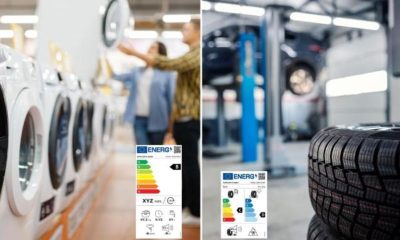
Commission simplifies and makes energy and tyre labelling rules more accessible to European consumers