History
Napoleon and Wellington return to 'combat'

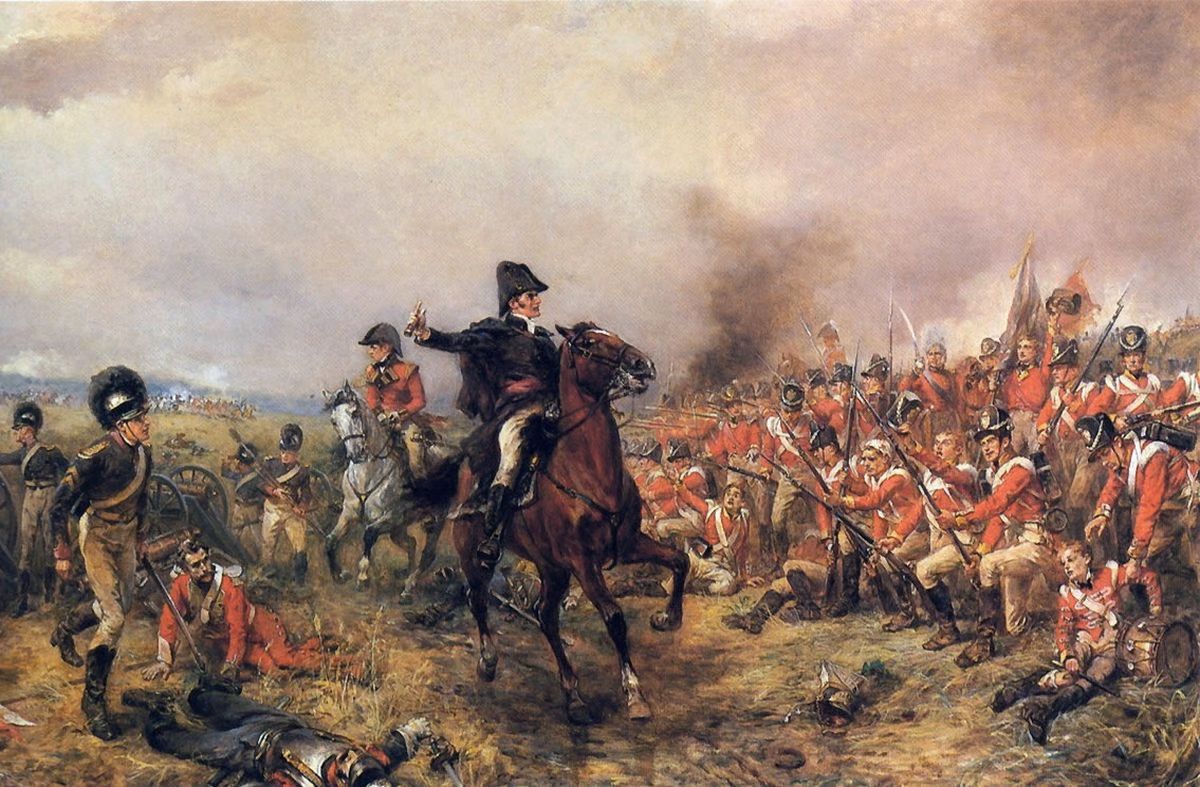
Battle-lines will be drawn at the weekend (28-9 June) when Napoleon and the Duke of Wellington again go head to head on the fields of Belgium.
This time, though, no blood will be shed and the combatants are more likely to get together at the finale to give each other a pat on the back over a refreshing Belgian beer.
Throughout the weekend, more than 2,000 re-enactor troops will camp in bivouacs at Napoleon’s last headquarters at Hougoumont Farm, on the Braine l’Alleud-Waterloo border.
Various activities, both civilian and military, will be offered to entertain families and hundreds of visitors expected to converge on this famous site.
The colourful battle re-enactment will take place on Saturday evening, from 7.30pm until 9.15pm and Sunday morning, from 10.30am until 12.15pm and fierce (if, this time, friendly) combat between French and allied troops will transfix the crowds who will come far and wide.
This is the 210th anniversary of the battle and it will also feature 100 horses and 25 canons, all overseen by French presenter Stephane Bern who will narrate the event for the thousands of spectators.
The anniversary marks the date when British and Prussian forces, under the command of Duke of Wellington, halted the advance of French Army in Belgium.
The bloody battle claimed the lives of 65,000 of the 200,000 men that took part, and saw the defeat of Napoleon.
Some have questioned whether the Battle of Waterloo was ever necessary in the first place and, with attention currently very much focused on events in the Middle East, it would be easy to forget the significance of events of 1815.
The Battle of Waterloo marked the final defeat of Napoleon. On June 22, 1815, four days after losing the conflict, Napoleon abdicated as emperor of France for the second and last time and was later exiled to the remote island of St. Helena. The defeat brought an end to the Napoleonic Wars a series of conflicts that had resulted in two decades of bitter warfare between France and other European powers.
The battle was Napoleon’s first defeat and is often considered one of history's most important battles: it ushered in a new political era known as the Concert of Europe.
Stephane Bern said, "I am happy to come to Domaine (of the Battle of Waterloo) and will try to convey a faithful account of what are very historic events.”
Over the weekend an ever popular civilian village will be populated by craftspeople such as clog makers while historic bivouacs, also popular, will be hosted by French and Allied troops. On Saturday the bivouacs close at 6pm and at 5pm on Sunday.
The annual anniversary of the famous Battle of Waterloo is a timely chance also to showcase the aptly named Waterloo Brewery at Ferme de Mont-Saint-Jean which was created by the order of the Templars and is a 1,000-year-old site located right at the heart of the once-bloody Waterloo battlefield.
The microbrewery where the hugely popular and successful Waterloo Beer is brewed is located within the walls of Mont-Saint-Jean Farm, continuing a brewing activity here that dates back to the early 15th century.
Back then, the two Brabants (Flemish and Walloon) were renowned for their vast hop fields and the historic farm reminds us that beer production was an essential activity often carried out by farmers. This strong link with the past is one of the values still dear to the Waterloo brewery and its modern-day owners.
So, as can be seen, there is plenty to keep visitors busy and entertained while the forces of Napoleon and his adversary, the Duke of Wellington go head to head on the fields of Brabant Walloon.
Further info via: bataillewaterloo.be
Share this article:
EU Reporter publishes articles from a variety of outside sources which express a wide range of viewpoints. The positions taken in these articles are not necessarily those of EU Reporter. Please see EU Reporter’s full Terms and Conditions of publication for more information EU Reporter embraces artificial intelligence as a tool to enhance journalistic quality, efficiency, and accessibility, while maintaining strict human editorial oversight, ethical standards, and transparency in all AI-assisted content. Please see EU Reporter’s full A.I. Policy for more information.



France reports first case of Ebola and WHO launches its first trials

More EU financial aid for war-torn Ukraine

MEPs adopt cardiovascular strategy, prioritising early detection and risk reduction

New cultural programme to celebrate Ireland's incoming EU presidency

Top airline offers soaraway summer specials

UK building long-term economic strategy in Kyrgyzstan

Commission imposes anti-dumping duties on imports of BDO from three countries

Kassym-Jomart Tokayev visit to Brussels 'important milestone'

EMA recommends three new medicines and an orphan treatment for rare Rett Syndrome

The Commission takes stock of situation on oil markets amid developments in the Middle East

Better enforcement of passenger rights: New EU agreement strengthens protection across all modes of transport

EU steps up support for Ukraine's defence, recovery and reconstruction at the Ukraine Recovery Conference 2026

EU deploys emergency assistance to Venezuela following earthquakes

Dismantling 'high walls' for a shared European-Asian future

Security realignment inevitable in Middle East after Netanyahu-Trump's war

Shen Yun - The Abuses and Human Rights Violations

Kazakhstan reforms under scrutiny at Brussels Press Club round table

Japan should face up to history and contribute more to regional peace

Ambassador calls for 'speeding up' of co-operation between EU and Kazakhstan

Timur Turlov at Smart Moves Summit 2025: How chess can transform global education

Shevtsova’s case: Out-of-court sanctions dismantling trust in Ukrainian cause

The future of European transport

Trump Vs Trueman

US 'no longer' an 'unconditional ally' for Europe - MEP
-
 Ebola5 days ago
France reports first case of Ebola and WHO launches its first trials
-
 Ukraine4 days ago
More EU financial aid for war-torn Ukraine
-
 Health5 days ago
MEPs adopt cardiovascular strategy, prioritising early detection and risk reduction
-
 EU Presidency5 days ago
New cultural programme to celebrate Ireland's incoming EU presidency