Kazakhstan
Kazakhstan’s amnesty law praised by European parliamentarians as model for Central Asia


In a July 10 declaration submitted to the Parliamentary Assembly of the Council of Europe (PACE), a group of European parliamentarians expressed support for Kazakhstan’s newly adopted amnesty law, Editor’s Picks, International.
The declaration, titled Amnesty law in Kazakhstan marking 30 years of the Constitution, highlights a legal initiative signed into effect by President Kassym-Jomart Tokayev on June 23, benefiting more than 15,000 convicted individuals across the country. Of those, approximately 2,000 are expected to be released, while others will have their sentences reduced.
“The amnesty applies to those convicted of low- to medium-severity offences, particularly from vulnerable groups, including women with children, minors, and the elderly. It excludes those convicted of crimes posing a serious threat to public or state security. Eligibility is based on non-violent offences, cases with no or compensated damages, or social vulnerability. We commend Kazakhstan’s continued efforts in advancing democratic reforms, protecting human rights, and liberalising the justice system. The adoption of this amnesty law reflects a constructive step and may serve as a model for the wider Central Asian region,” the declaration reads.
The signatories noted that the amnesty, adopted in connection with the 30th anniversary of Kazakhstan’s Constitution, reflects the country’s shift toward a more rights-based legal framework and encouraged continued progress on democratic reforms.
Share this article:

EU Reporter publishes articles from a variety of outside sources which express a wide range of viewpoints. The positions taken in these articles are not necessarily those of EU Reporter. Please see EU Reporter’s full Terms and Conditions of publication for more information EU Reporter embraces artificial intelligence as a tool to enhance journalistic quality, efficiency, and accessibility, while maintaining strict human editorial oversight, ethical standards, and transparency in all AI-assisted content. Please see EU Reporter’s full A.I. Policy for more information.





Protect children from online sexual abuse: Call for urgent negotiations and permanent solution

Astana's congress of world religions: A global platform for dialogue in an age of division

Solana company partners with Kazakhstan on $6B Alatau Crypto Megacity

Will the Gulf monarchies rise above internecine disputes in the interest of collective security?

Europe must double down on nuclear progress to achieve its long-term ambitions

International Plastic Bag Free Day – from single use to reuse

Study: Europe's defense runs on American servers

MEPs supportive of draft Biotech report, but divisions over incentives remain

Quarterly reports show a surge in solar energy and e-vehicles, with record highs in 2025

EU deploys wildfire support to face multiple fires across Portugal and France

New EU plan to address the risks and opportunities of advanced AI for cybersecurity

Portugal achieves major milestone with permit for offshore aquaculture facility

Setting sustainable livestock farming on a strong footing

Competition policy: Enforce without fear

Friedman Institute and Trends Group at the Italian parliament: Countering the Muslim brotherhood

How hair extensions can transform your look naturally

Kazakhstan reforms under scrutiny at Brussels Press Club round table

Japan should face up to history and contribute more to regional peace

Ambassador calls for 'speeding up' of co-operation between EU and Kazakhstan

Timur Turlov at Smart Moves Summit 2025: How chess can transform global education

Shevtsova’s case: Out-of-court sanctions dismantling trust in Ukrainian cause

The future of European transport

Trump Vs Trueman

US 'no longer' an 'unconditional ally' for Europe - MEP
-
 Child sexual abuse3 days ago
Protect children from online sexual abuse: Call for urgent negotiations and permanent solution
-
 Kazakhstan3 days ago
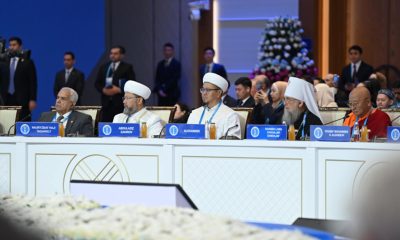
Astana's congress of world religions: A global platform for dialogue in an age of division
-
 Kazakhstan3 days ago
Solana company partners with Kazakhstan on $6B Alatau Crypto Megacity
-
 Iran3 days ago
Will the Gulf monarchies rise above internecine disputes in the interest of collective security?