Kazakhstan
Kazakhstan steps up soft-power push in Brussels to open EU ties through culture and diplomacy


Kazakhstan has been stepping up its engagement with the European Union through a combination of cultural initiatives, diplomatic outreach and ongoing political dialogue in Brussels.
Recent activities organised by the Kazakh Embassy in Belgium illustrate a broader effort to raise the country’s profile among EU institutions, policymakers and the wider international community.
Cultural engagement as a starting point
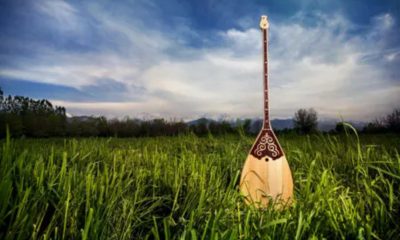
A number of events held in Brussels have focused on presenting Kazakhstan’s cultural heritage, including traditional music, customs and national rituals. These gatherings have attracted a wide audience, including members of the diplomatic corps, EU officials and the public.
Such initiatives are intended to build familiarity and encourage people-to-people contacts, offering a more accessible entry point for engagement with European partners.
Developing a clearer presence in Brussels
Alongside cultural outreach, Kazakhstan has sought to strengthen its visibility in Brussels as a platform for dialogue with European institutions.
Public diplomacy efforts have aimed to present the country as open to cooperation and engaged in international discussions. This reflects a broader intention to ensure that Kazakhstan is part of ongoing conversations in Europe on political and economic issues.
High-level dialogue and economic cooperation
At the same time, engagement has continued at a more formal level.
Kazakhstan and the EU maintain regular dialogue under the Enhanced Partnership and Cooperation Agreement (EPCA), which provides a framework for cooperation across a wide range of sectors, including trade, energy, transport and governance.
Recent high-level contacts have also underlined the importance of the relationship. European Council President Antonio Costa’s visit to Kazakhstan in December highlighted shared interests in strengthening economic ties and maintaining political dialogue at a time of wider geopolitical uncertainty.
The EU remains Kazakhstan’s largest trading partner, and cooperation has become increasingly relevant in areas such as energy supply, critical raw materials and transport connectivity, particularly in the context of efforts to diversify routes and partners.
A structured approach to engagement
Taken together, these activities point to a consistent approach:
- Cultural initiatives help to build awareness and understanding
- Public diplomacy supports Kazakhstan’s presence in Brussels
- Institutional dialogue provides a framework for long-term cooperation
This combination allows engagement to take place at multiple levels, from public interaction to formal policy discussions.
Regional context
Kazakhstan is not alone in seeking closer ties with the European Union. Similar efforts by other Central Asian countries reflect a wider regional interest in strengthening political and economic links with Europe.
For the EU, this growing engagement with Central Asia is part of a broader strategy to diversify partnerships and deepen cooperation beyond its immediate neighbourhood.
Outlook
Kazakhstan’s recent activities in Brussels suggest a steady and pragmatic approach to its relationship with the EU. By combining cultural engagement with ongoing political dialogue, the country is continuing to develop its role as a partner in EU–Central Asia relations.
«Shanyraq Fest Brussels» was organised with the valued support of Ahlers Logistics, Corsendonk Hotels, Turkish Airlines, Zhaina Agro, Artex Holding, the Municipality of Saint-Gilles, the Honorary Consulate of Kazakhstan in the Province of Walloon Brabant, the Akimat of Astana City, the Akimat of Karagandy Region, and the Astana Philharmonic
Share this article:
EU Reporter publishes articles from a variety of outside sources which express a wide range of viewpoints. The positions taken in these articles are not necessarily those of EU Reporter. Please see EU Reporter’s full Terms and Conditions of publication for more information EU Reporter embraces artificial intelligence as a tool to enhance journalistic quality, efficiency, and accessibility, while maintaining strict human editorial oversight, ethical standards, and transparency in all AI-assisted content. Please see EU Reporter’s full A.I. Policy for more information.



Astana's congress of world religions: A global platform for dialogue in an age of division

Protect children from online sexual abuse: Call for urgent negotiations and permanent solution

Solana company partners with Kazakhstan on $6B Alatau Crypto Megacity

Will the Gulf monarchies rise above internecine disputes in the interest of collective security?

Europe must double down on nuclear progress to achieve its long-term ambitions

International Plastic Bag Free Day – from single use to reuse

Study: Europe's defense runs on American servers

Commission proposes five joint defence projects to strengthen Europe's industrial capabilities

Safer cars, safer roads: New rules take effect

Survey of city economic experts: Cities are driving Draghi’s competitiveness agenda, but need EU recognition to scale action

Europe's Cloud moment: The DMA must now deliver

EU-Mexico: While others build walls, Europe builds bridges

New EU strategy must help farmers move toward a more humane food system

Kashmir's 9,765 missing women and girls demand international attention

Quarterly reports show a surge in solar energy and e-vehicles, with record highs in 2025

EU deploys wildfire support to face multiple fires across Portugal and France

Kazakhstan reforms under scrutiny at Brussels Press Club round table

Japan should face up to history and contribute more to regional peace

Ambassador calls for 'speeding up' of co-operation between EU and Kazakhstan

Timur Turlov at Smart Moves Summit 2025: How chess can transform global education

Shevtsova’s case: Out-of-court sanctions dismantling trust in Ukrainian cause

The future of European transport

Trump Vs Trueman

US 'no longer' an 'unconditional ally' for Europe - MEP
-
 Kazakhstan4 days ago
Astana's congress of world religions: A global platform for dialogue in an age of division
-
 Child sexual abuse4 days ago
Protect children from online sexual abuse: Call for urgent negotiations and permanent solution
-
 Kazakhstan4 days ago
Solana company partners with Kazakhstan on $6B Alatau Crypto Megacity
-
 Iran4 days ago
Will the Gulf monarchies rise above internecine disputes in the interest of collective security?