European Commission
Commission welcomes political agreement on new rules on substances of human origin

The Commission welcomes the political agreement reached on 14 December between the European Parliament and the Council to further increase the safety and quality of substances of human origin (SoHO). As proposed by the Commission in July 2022 and as part of the actions to build a strong European Health Union, the new rules will ensure that citizens are better protected when donating or receiving substances such as blood, tissues, cells, breast milk or microbiota.
The new rules include a range of measures that fill regulatory gaps, in order to support the functioning of this essential healthcare sector. In addition, they aim at facilitating the cross-border circulation of SoHO and promote greater cooperation between national public health authorities. Furthermore, the Regulation now tackles concerns regarding sufficiency of supply, highlighted by the COVID-19 pandemic.
The European Parliament and the Council will now have to formally adopt the new Regulation, which will start to apply 3 years after its adoption. Once adopted and implemented in all Member States, the Regulation will replace the rules for safety and quality set out in two Directives (2002/98/EC, for blood and blood components, and 2004/23/EC, for tissues and cells), and their implementing acts.
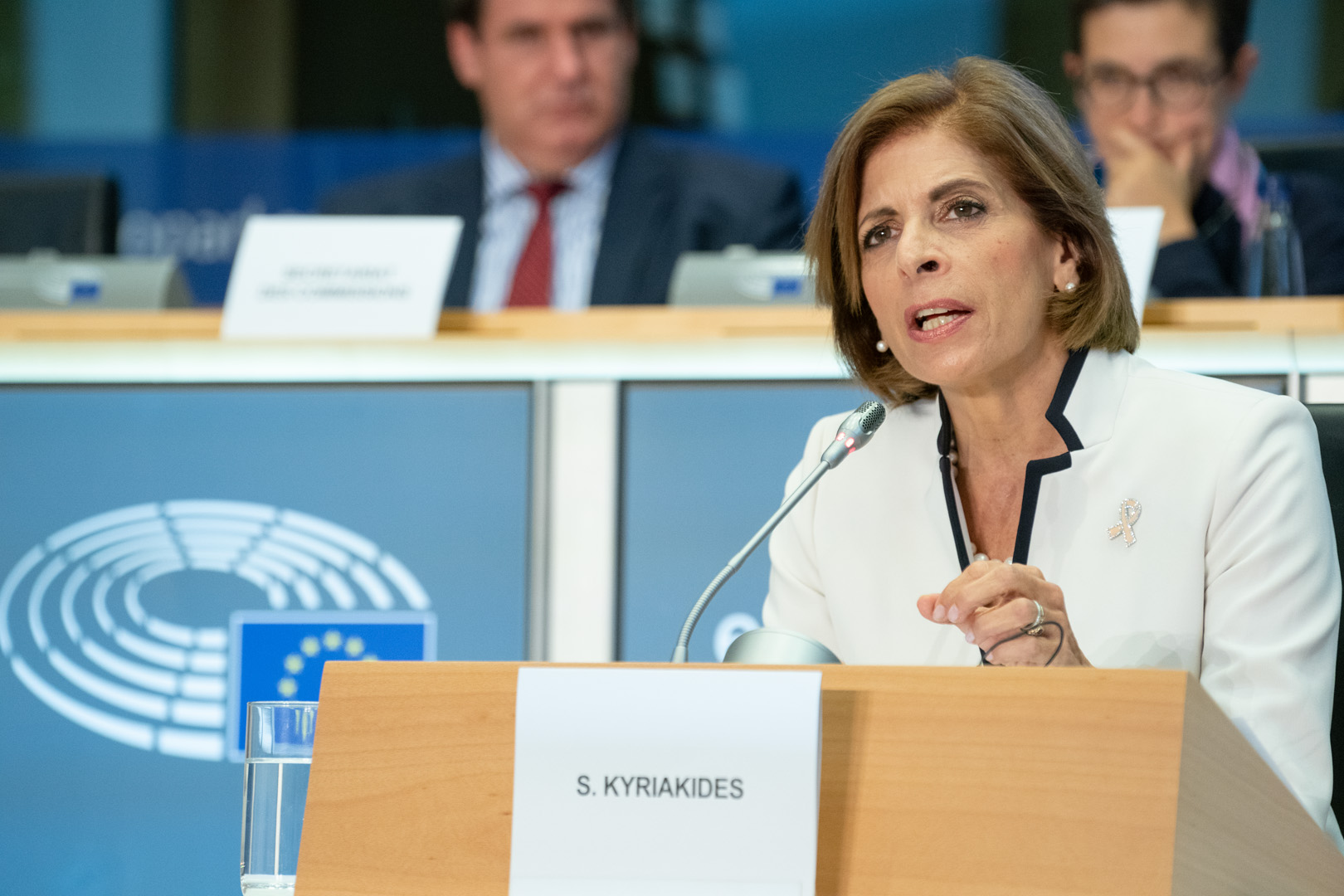
Health and Food Safety Commissioner Stella Kyriakides (pictured) said: “I warmly welcome yesterday's agreement, which will bring direct benefits to millions of patients across the EU and will add another important pillar to our European Health Union. Healthcare depends on substances of human origin for a wide range of interventions – from blood transfusions and bone-marrow transplants to In Vitro Fertilisation, to name just a few. The new rules will ensure that these products respect high safety and quality standards, while tackling the risk of shortages and promoting greater innovation in the sector.”
More information available in the press release and factsheet.
Share this article:
EU Reporter publishes articles from a variety of outside sources which express a wide range of viewpoints. The positions taken in these articles are not necessarily those of EU Reporter. Please see EU Reporter’s full Terms and Conditions of publication for more information EU Reporter embraces artificial intelligence as a tool to enhance journalistic quality, efficiency, and accessibility, while maintaining strict human editorial oversight, ethical standards, and transparency in all AI-assisted content. Please see EU Reporter’s full A.I. Policy for more information.



Can digital sovereignty survive an open trading system?

Friedman Institute and Trends Group at the Italian parliament: Countering the Muslim brotherhood

From a remote island to shelves around the world: The story of Azorean canned fish

EU deploys wildfire support to face multiple fires across Portugal and France

Europe’s job market is shifting, and EURES is ready to lead the way into 2030

EU agricultural markets remain robust despite uncertainties and rising input costs

Commission report highlights achievements of EU rules on animal health

Deposits to Swiss banks from Bangladeshi nationals nearly tops all time peak

EU foreign ministers to discuss options for restricting trade with Israeli communities in Judea and Samaria

Safer cars, safer roads: New rules take effect

Survey of city economic experts: Cities are driving Draghi’s competitiveness agenda, but need EU recognition to scale action

Europe's Cloud moment: The DMA must now deliver

EU-Mexico: While others build walls, Europe builds bridges

New EU strategy must help farmers move toward a more humane food system

Kashmir's 9,765 missing women and girls demand international attention

Quarterly reports show a surge in solar energy and e-vehicles, with record highs in 2025

Kazakhstan reforms under scrutiny at Brussels Press Club round table

Japan should face up to history and contribute more to regional peace

Ambassador calls for 'speeding up' of co-operation between EU and Kazakhstan

Timur Turlov at Smart Moves Summit 2025: How chess can transform global education

Shevtsova’s case: Out-of-court sanctions dismantling trust in Ukrainian cause

The future of European transport

Trump Vs Trueman

US 'no longer' an 'unconditional ally' for Europe - MEP
-
 Digital economy4 days ago
Can digital sovereignty survive an open trading system?
-
 Islam4 days ago
Friedman Institute and Trends Group at the Italian parliament: Countering the Muslim brotherhood
-
 Maritime4 days ago
From a remote island to shelves around the world: The story of Azorean canned fish
-
 Wildfires4 days ago
EU deploys wildfire support to face multiple fires across Portugal and France