European Parliament
Migration situation on the Canary Islands: Committee debate

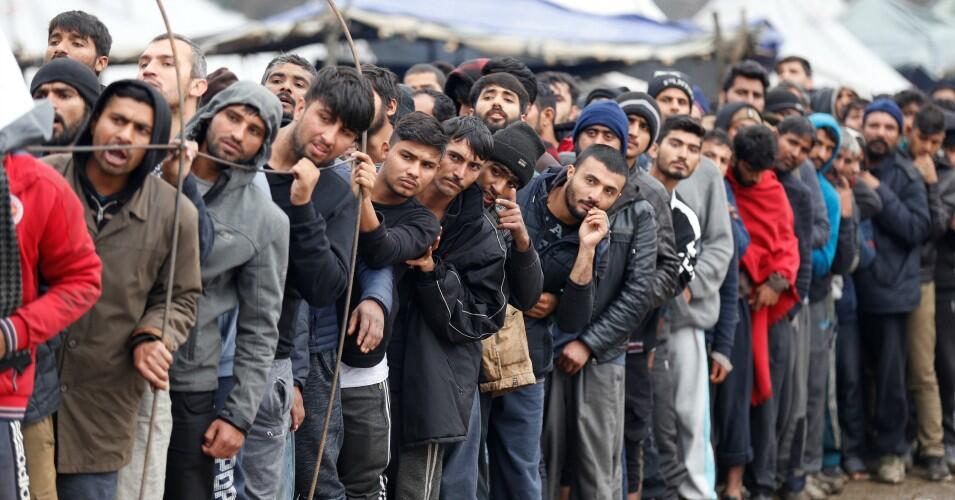
Today (1 March), MEPs will assess the situation on the Canary Islands, following the surge in migrants’ arrivals in the last months and the limited reception capacity.
The Civil Liberties Committee will discuss the latest developments with Commissioner Ylva Johansson, President of the Canary Islands Ángel Víctor Torres and a representative of the NGO Spanish Commission for Refugees (CEAR).
According to the Spanish Government, 23 023 migrants and asylum-seekers landed on the archipelago last year irregularly from Africa by boat (compared with 2 687 in 2019). Most of them arrived in the last few months of 2020, leaving reception centres overwhelmed. Combined with the public health restrictions due to the COVID-19 pandemic, this led to the rapid deterioration of the humanitarian situation and sparked some protests among the local population.
When: Monday, 1 March, from 16h50 to 18h20
Where: European Parliament in Brussels, József Antall building, room 4Q2 & via remote participation.
You can follow the meeting live.
Background
According to UNHCR data, up to 81% of migrants arriving by boat on the Canary Islands are men, mostly from Morocco, Mali, Guinea, Côte d’Ivoire and Senegal. The sea crossing from the African coast can be as short as around 100 km, but the strong currents make it a perilous journey. According to Missing Migrants, in November 2020 alone, the month with most arrivals, over 500 people lost their lives trying to make it to the Canary Islands.
National and regional authorities are speeding up the construction of emergency accommodation, but in the meantime, people are being housed between makeshift camps and tourism resorts, mostly empty because of the pandemic.
More information
- Committee on Civil Liberties, Justice and Home Affairs
- Migration: New EU financial assistance to address the situation on the Canary Islands (European Commission, 10.12.2020)
- Free photos, videos and audio material
Share this article:
EU Reporter publishes articles from a variety of outside sources which express a wide range of viewpoints. The positions taken in these articles are not necessarily those of EU Reporter. Please see EU Reporter’s full Terms and Conditions of publication for more information EU Reporter embraces artificial intelligence as a tool to enhance journalistic quality, efficiency, and accessibility, while maintaining strict human editorial oversight, ethical standards, and transparency in all AI-assisted content. Please see EU Reporter’s full A.I. Policy for more information.




EU foreign ministers to discuss options for restricting trade with Israeli communities in Judea and Samaria

European operation dismantles €10 million illicit cigarette network in Spain

Srebrenica's lesson is prevention. Why isn't the world applying It to Kashmir?

ALROSA Re-elects Supervisory Board with Minimal Changes

AIFC to host Astana Finance Days 2026 in September

Energy Union Task Force takes stock of oil and gas security of supply in the EU

Joint statement by High Representative/Vice-President Kallas and Commissioner Kos on the 31st anniversary of the Srebrenica genocide

NESBp: Strengthening maritime spatial planning across the North Sea and Baltic Sea

Britain’s leadership crisis is a symptom, not the disease

Chinese “leadership and coordination”

Shared commitment to advance EOSC through new EOSC Nodes and EOSC projects

Why young jobseekers struggle to find roles abroad that fit their expertise

Farmers, fair markets and consumers: new report highlights the role of EU competition rules in agriculture

EU and South Africa kick off intergovernmental dialogue on Clean Trade and Investment Partnership

Seveso - 50 years on: EU strengthens its commitment to industrial safety in a changing landscape of risk

Commission opens formal investigation into possible gun jumping in XXXLutz's acquisition of Porta

Kazakhstan reforms under scrutiny at Brussels Press Club round table

Japan should face up to history and contribute more to regional peace

Ambassador calls for 'speeding up' of co-operation between EU and Kazakhstan

Timur Turlov at Smart Moves Summit 2025: How chess can transform global education

Shevtsova’s case: Out-of-court sanctions dismantling trust in Ukrainian cause

The future of European transport

Trump Vs Trueman

US 'no longer' an 'unconditional ally' for Europe - MEP
-
 Israel3 days ago
EU foreign ministers to discuss options for restricting trade with Israeli communities in Judea and Samaria
-
 Cigarettes2 days ago
European operation dismantles €10 million illicit cigarette network in Spain
-
 Kashmir2 days ago
Srebrenica's lesson is prevention. Why isn't the world applying It to Kashmir?
-
 Economy1 day ago
ALROSA Re-elects Supervisory Board with Minimal Changes