Schengen
Bulgaria and Romania join the Schengen Area

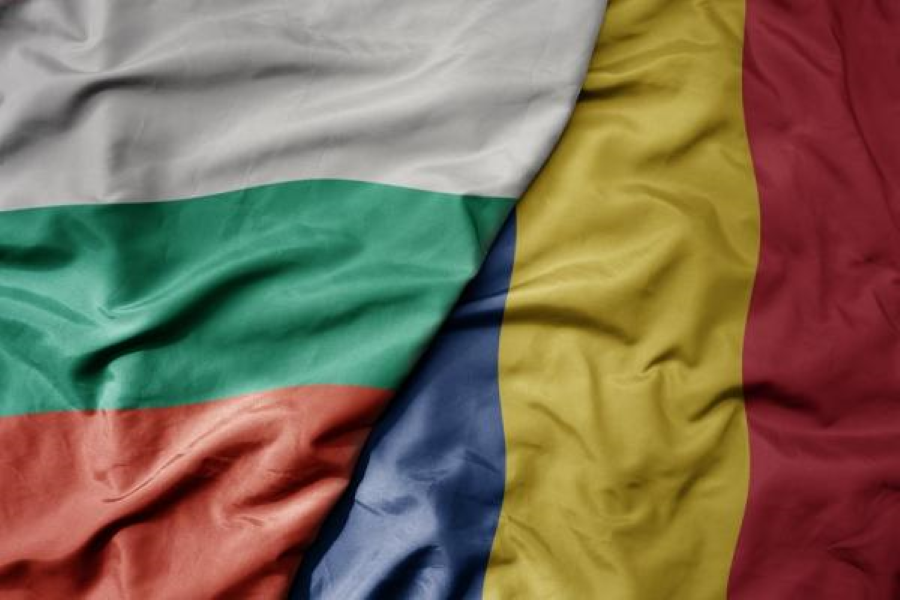
On 1 January, Romania and Bulgaria became full members of the Schengen Area after the checks on persons at the internal land borders were lifted.
The internal air and sea border controls between Bulgaria and Romania and the countries of the Schengen area were already lifted since 31 March 2024. Welcoming both member states into the Schengen area will boost travel, trade and tourism and contribute to strengthening the internal market.
Background
The Commission first confirmed that both Bulgaria and Romania were ready to become part of the Schengen area in 2011. Since then, Bulgaria and Romania have continued to demonstrate that they fulfil the conditions for becoming Schengen members.
Schengen Area
Schengen stands for the world’s largest area of freedom, security and justice without internal frontiers. It guarantees free movement to more than 450 million EU citizens, along with non-EU nationals living in the EU or visiting the EU as tourists, exchange students or for business purposes (anyone legally present in the EU).
The Schengen started in 14 June 1985 when the Schengen Agreement was signed on a river boat: the Princesse Marie-Astrid on the Moselle. In Luxembourg, Germany and in France. The agreement was signed by the governments of Belgium, France, Germany, Luxembourg and the Netherlands.
The European Union project brought Schengen to its next level. By establishing the right to freedom of movement in 1992, the foundation was laid for a shared European space. The Union framework absorbed all the Schengen rules in 1997 and achieved a further milestone in 2007, enacting the commitment to create an ‘area of freedom, security and justice without internal frontiers’. The Schengen area is the only region in the world where mutual trust between neighbouring countries is so firmly established, and the value of free movement so fundamental, that its Members took the step to abolish border checks, committing to share both the benefits and the responsibilities of this unparalleled integration.
Today, the Union has 27 member states and authorizes 26 of them – all except Ireland – to engage in close cooperation in all areas covered by the Schengen rules. 4 non-EU countries are associated in this work: Iceland, Norway, Switzerland and Liechtenstein.
Schengen is about much more than borderless travel. It calls for coordination both within the Schengen area and with third countries. Schengen States work closely on security and migration through a common visa policy, joint police operations, and real-time information exchanges between law enforcement agencies as well as harmonised procedures to return those with no legal right to stay in the Schengen area. Cutting-edge IT systems, like the Schengen Information System (SIS), help identify threats and manage borders while safeguarding fundamental rights, including data protection.
Share this article:
EU Reporter publishes articles from a variety of outside sources which express a wide range of viewpoints. The positions taken in these articles are not necessarily those of EU Reporter. Please see EU Reporter’s full Terms and Conditions of publication for more information EU Reporter embraces artificial intelligence as a tool to enhance journalistic quality, efficiency, and accessibility, while maintaining strict human editorial oversight, ethical standards, and transparency in all AI-assisted content. Please see EU Reporter’s full A.I. Policy for more information.



EU foreign ministers to discuss options for restricting trade with Israeli communities in Judea and Samaria

European operation dismantles €10 million illicit cigarette network in Spain

Srebrenica's lesson is prevention. Why isn't the world applying It to Kashmir?

ALROSA Re-elects Supervisory Board with Minimal Changes

Energy Union Task Force takes stock of oil and gas security of supply in the EU

AIFC to host Astana Finance Days 2026 in September

EU launches a Team Gaza Initiative to support early recovery in Gaza with an initial amount of nearly €900 million

Joint statement by High Representative/Vice-President Kallas and Commissioner Kos on the 31st anniversary of the Srebrenica genocide

Shusha Global Media Forum: Azerbaijan’s Answer to Disinformation

Commission approves French state aid to support offshore wind energy

Natura 2000 Network offers opportunities for sustainable tourism across Europe

Commission adds exemptions to rules on removability of portable batteries

EU steps up international support for Palestinians with major initiative for Gaza's early recovery and stronger international coordination

Kurmuk gold project highlights Africa’s changing investment landscape

Falling in love with the Maldives

Britain’s leadership crisis is a symptom, not the disease

Kazakhstan reforms under scrutiny at Brussels Press Club round table

Japan should face up to history and contribute more to regional peace

Ambassador calls for 'speeding up' of co-operation between EU and Kazakhstan

Timur Turlov at Smart Moves Summit 2025: How chess can transform global education

Shevtsova’s case: Out-of-court sanctions dismantling trust in Ukrainian cause

The future of European transport

Trump Vs Trueman

US 'no longer' an 'unconditional ally' for Europe - MEP
-
 Israel4 days ago
EU foreign ministers to discuss options for restricting trade with Israeli communities in Judea and Samaria
-
 Cigarettes3 days ago
European operation dismantles €10 million illicit cigarette network in Spain
-
 Kashmir3 days ago
Srebrenica's lesson is prevention. Why isn't the world applying It to Kashmir?
-
 Economy2 days ago
ALROSA Re-elects Supervisory Board with Minimal Changes