Conflicts
Criticism of European Parliament's recent decisions on sourcing conflict minerals

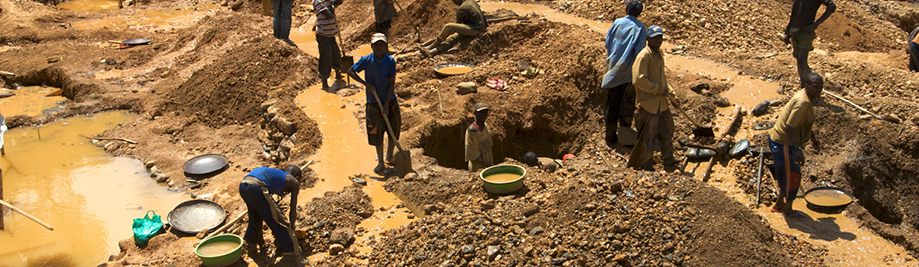
The International Cooperation for Development and Solidarity (CIDSE) has criticized the recent decisions made by the European Parliament on the sourcing of Conflict Minerals.
The CIDSE has launched a stinging attack on the law passed by the EP’s Committee on International Trade. Through a public statement posted on their website, they said: “Today the European Parliament's Committee on International Trade (INTA) wasted a ground-breaking opportunity to tackle the deadly trade in conflict minerals. The Committee voted in favour of a weak and ineffective law that, if passed, would undermine global attempts to clean up the trade.”
The proposal for a regulation of the European Parliament and of the Council setting up a Union system for supply chain due diligence self-certification of responsible importers of tin, tantalum and tungsten, their ores, and gold originating in conflict-affected and high-risk areas, included 627 amendments and was approved on 14 April 2015 by INTA.
Although the Development organization, an international alliance of 17 Catholic agencies, applauds the efforts of a mandatory approach, they also lament the narrow scope of the new legislation, arguing that it will fail to “make any meaningful and lasting impact on a trade that fuels conflict and Human Rights abuses.”
Conflict minerals are known as columbite-tantalite, or coltan (from which tantalum is derived); cassiterite (tin); gold; wolframite (tungsten); or their derivatives. They are considered raw materials coming from a particular part of the world where conflict is happening.
In his 2013 acceptance speech of the Sakharov Prize, Dr. Denis Mukwege pointed at the importance of conflict minerals when referring to the East Congo conflict: “In reality, this conflict is not about ethnicity, but it is a territorial conflict about mineral resources.”
The CIDSE said: “Under this proposal, responsible sourcing by importers of tin, tantalum, tungsten and gold would be entirely optional. The Commission's proposed voluntary self-certification scheme would be open to approximately 300-400 companies—just 0.05% of companies using and trading these minerals in the EU, and would have virtually no impact on companies' sourcing behaviour.”
They demanded a reassessment of their new legislation, suggesting a legal requirement for responsible sourcing, which would force companies who place minerals on the EU market into sourcing their minerals transparently.
According to the CIDSE: “This would put the European Union at the forefront of global efforts to create more transparent, responsible and sustainable business practices. It would also better align Europe with existing international standards on responsible sourcing, and complement mandatory requirements in the US and in twelve African countries.”
Share this article:
EU Reporter publishes articles from a variety of outside sources which express a wide range of viewpoints. The positions taken in these articles are not necessarily those of EU Reporter. Please see EU Reporter’s full Terms and Conditions of publication for more information EU Reporter embraces artificial intelligence as a tool to enhance journalistic quality, efficiency, and accessibility, while maintaining strict human editorial oversight, ethical standards, and transparency in all AI-assisted content. Please see EU Reporter’s full A.I. Policy for more information.






Russia’s Gulf pivot: How Oman Is emerging as a strategic partner for Moscow’s post-sanctions economy

Security realignment inevitable in Middle East after Netanyahu-Trump's war

'Ukraine does not need investment out of sympathy': Seyar Kurshutov on the rational case for early entry

The Third International Maqom Art Forum and the New Uzbekistan

Better enforcement of passenger rights: New EU agreement strengthens protection across all modes of transport

Shen Yun - The Abuses and Human Rights Violations

EU deploys emergency assistance to Venezuela following earthquakes

Dismantling 'high walls' for a shared European-Asian future

Region Trade Bank strengthens international governance as Iraq's banking sector deepens global engagement

Commissioner Brunner participates in youth policy dialogue in Austria

Executive Vice President Virkkunen presents awards to projects boosting digital skills

High Representative Kallas with Commissioners Kos and Brunner in Türkiye to advance bilateral cooperation

President von der Leyen travels to Azerbaijan and Armenia

Commission approves new geographical indication from Slovakia

EU delivers emergency aid and organises a humanitarian flight in response to earthquakes in Venezuela

What the latest data reveals about labour market imbalances across Europe

Kazakhstan reforms under scrutiny at Brussels Press Club round table

Japan should face up to history and contribute more to regional peace

Ambassador calls for 'speeding up' of co-operation between EU and Kazakhstan

Timur Turlov at Smart Moves Summit 2025: How chess can transform global education

Shevtsova’s case: Out-of-court sanctions dismantling trust in Ukrainian cause

The future of European transport

Trump Vs Trueman

US 'no longer' an 'unconditional ally' for Europe - MEP
-
 Oman5 days ago
Russia’s Gulf pivot: How Oman Is emerging as a strategic partner for Moscow’s post-sanctions economy
-
 Middle East3 days ago
Security realignment inevitable in Middle East after Netanyahu-Trump's war
-
 Ukraine5 days ago
'Ukraine does not need investment out of sympathy': Seyar Kurshutov on the rational case for early entry
-
 Uzbekistan3 days ago
The Third International Maqom Art Forum and the New Uzbekistan