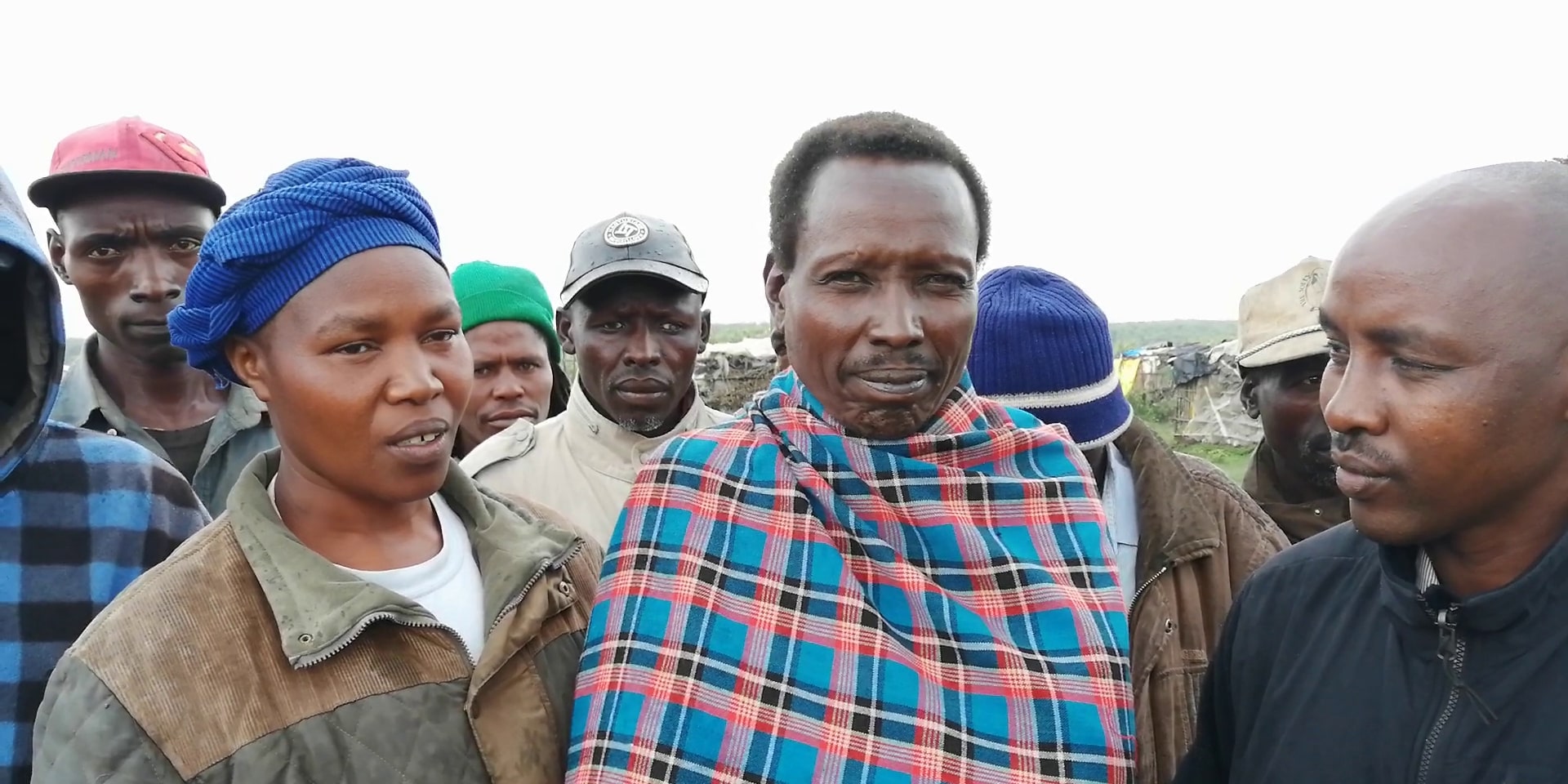
 Left to right in the foreground: Lilian Wanjiru and Daniel Lepariyo, leaders of the Lorropil village
The project is currently under the EIB’s appraisal, awaiting a €155 million loan that would constitute a good half of the project cost. According to the EIB website, a complementary ESIA for the steam-field, power plant and transmission line is under way. The money comes with conditions – the bank’s Stakeholders Engagement Standard requires open, transparent and accountable dialogue of the project promoter with all relevant stakeholders at the local level – but in practice this seems to be hardly respected. The exploratory works started back in 2012 without any proper consultation with the community.
The Lorropil village is home to 47 families – one of the most vulnerable groups in the area. The villagers are not formally recognized by the state despite residing there for decades. The living conditions are extreme: there is no longer free access to water, and their makeshift homes offer minimal protection and comfort. But these are their only homes and they have nowhere else to go.
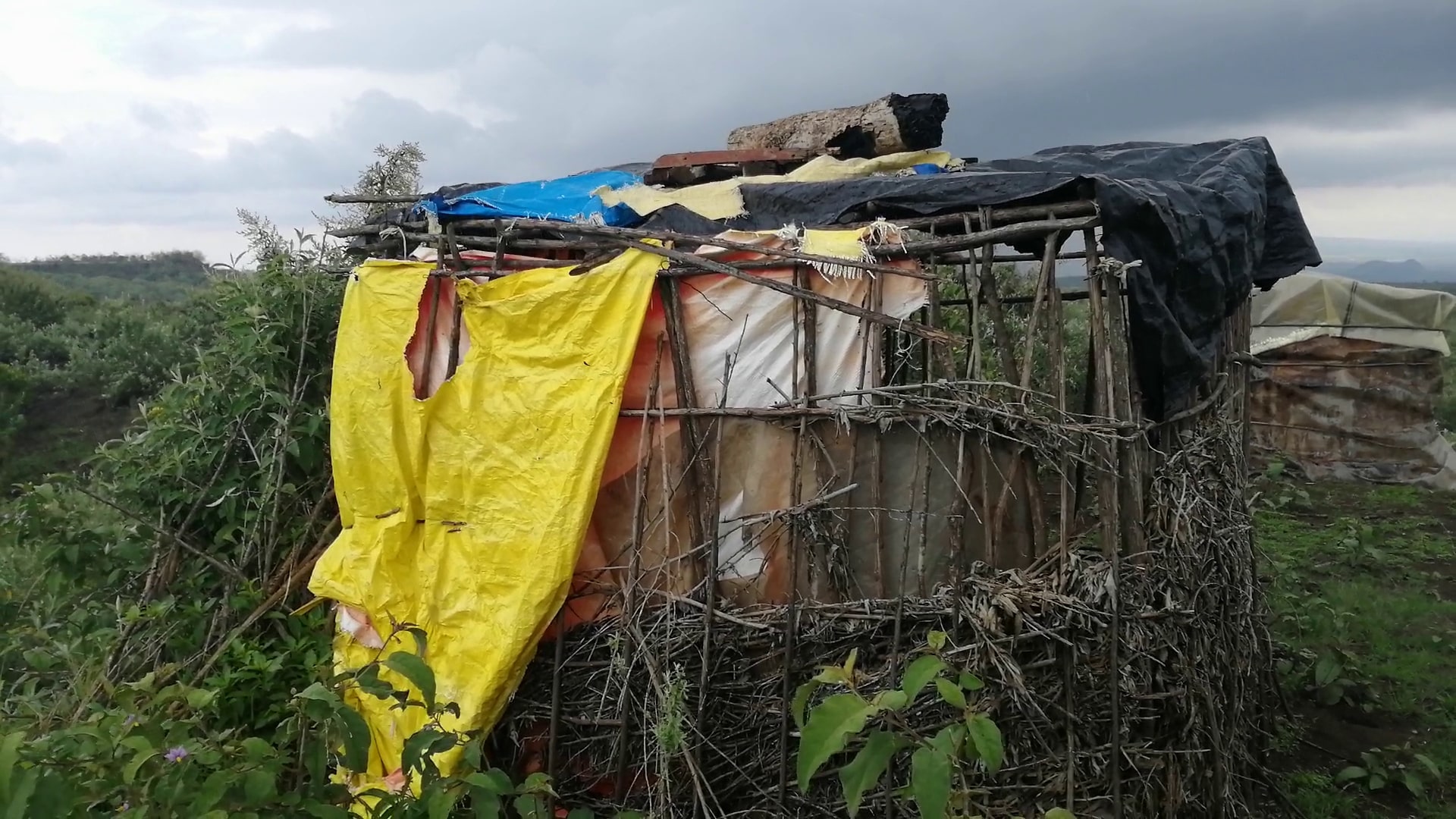
Daniel Lepariyo, the chief of the Lorropil village, explained that the village was constructed in 2004. According to him, the village was displaced without any compensation to make space for the construction of a new village for people resettled due to geothermal projects financed by the EIB and the World Bank . Now, the same people are to be impacted again by a new geothermal plant.
Before it is too late, the EIB must establish whether its potential client is involved in these threats and condemn any discovered wrongdoing.
If the Lorropil community is forced to leave the area before the environmental and social assessment is finalized, they might lose their status of project affected persons and their associated privileges – playing right into the hands of the company that in this case, technically, would not be burdened with proper resettlement costs.