Iran
US-Iran talks to be held on Friday in Oman


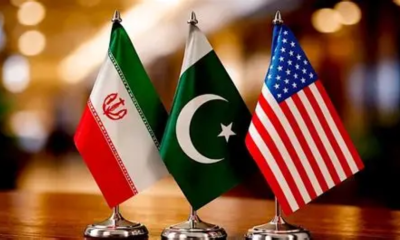
US-Iran nuclear talks are expected to be held in Oman on Friday (6 February) after the Trump administration agreed to Tehran’s request to move the venue from Turkey.
Tehran seeks to ensure the scope of its negotiations with the Trump administration is limited solely to its nuclear programme. The talks come as US President Donald Trump weighs possible military options against the Islamic Republic, and were initially expected to be held in Istanbul with regional states attending as observers. Tehran wanted the discussions to take place in Muscat, with just the US attending. The request signalled that Iran wants the format to mirror those of its negotiations with the US last year, which focused on Iran’s nuclear programme and not the broader range of issues, such as the future of its ballistic missile arsenal, that Washington has previously demanded, writes The Financial Times.
Iranian President Masoud Pezeshkian declared on Tuesday (3 February) that he had instructed Foreign Minister Abbas Araghchi to pursue talks proposed by US President Donald Trump.
Asked by European Jewih Press about Friday’s talks between the US and Iran, Barak Seener, Associate Research Fellow at the Henry Jackson Society in London, said that "while Iran may make some concessions regarding its enrichment of uranium, it will not deny itself the future potential to continue developing a nuclear capability, which the Iranian regime sees as critical for its survivability".
"This certainly extends to the regime’s ballistic missile capabilities. As a result, the current choices are for the US and Israel to have a joint military operation to strike Iran’s nuclear and missile capabilities. The alternative is for Israel at a minimum to militarily strike at Iran’s ballistic missile program," he added.
For him, military intervention aimed at the Iranian regime collapse ‘’must be part of a multi-pronged strategy that includes covert action targeting regime command and control as well as targeting the IRGC and Basij, offering financial inducements and sanctuary abroad for regime officials to defect, a communications campaign to counter the regime’s disinformation and redefine Persian nationalism, increasing sanctions, coordinating the positions and activities of the Iranian opposition, and engaging with secessionist groups.’’
Barak Seener is the author of a report titled Regime collapse in Iran: A necessity for regional stability. See the report here.
Share this article:
EU Reporter publishes articles from a variety of outside sources which express a wide range of viewpoints. The positions taken in these articles are not necessarily those of EU Reporter. Please see EU Reporter’s full Terms and Conditions of publication for more information EU Reporter embraces artificial intelligence as a tool to enhance journalistic quality, efficiency, and accessibility, while maintaining strict human editorial oversight, ethical standards, and transparency in all AI-assisted content. Please see EU Reporter’s full A.I. Policy for more information.





EU foreign ministers to discuss options for restricting trade with Israeli communities in Judea and Samaria

Srebrenica's lesson is prevention. Why isn't the world applying It to Kashmir?

European operation dismantles €10 million illicit cigarette network in Spain

Joint statement by High Representative/Vice-President Kallas and Commissioner Kos on the 31st anniversary of the Srebrenica genocide

AIFC to host Astana Finance Days 2026 in September

ALROSA Re-elects Supervisory Board with Minimal Changes

Energy Union Task Force takes stock of oil and gas security of supply in the EU

Commission preliminarily finds the addictive design of Instagram and Facebook in breach of the Digital Services Act

Shared commitment to advance EOSC through new EOSC Nodes and EOSC projects

Why young jobseekers struggle to find roles abroad that fit their expertise

Farmers, fair markets and consumers: new report highlights the role of EU competition rules in agriculture

EU and South Africa kick off intergovernmental dialogue on Clean Trade and Investment Partnership

Seveso - 50 years on: EU strengthens its commitment to industrial safety in a changing landscape of risk

Commission opens formal investigation into possible gun jumping in XXXLutz's acquisition of Porta

EU weighs age-13 limit for 'social media plus'
ALROSA Re-elects Supervisory Board with Minimal Changes

Kazakhstan reforms under scrutiny at Brussels Press Club round table

Japan should face up to history and contribute more to regional peace

Ambassador calls for 'speeding up' of co-operation between EU and Kazakhstan

Timur Turlov at Smart Moves Summit 2025: How chess can transform global education

Shevtsova’s case: Out-of-court sanctions dismantling trust in Ukrainian cause

The future of European transport

Trump Vs Trueman

US 'no longer' an 'unconditional ally' for Europe - MEP
-
 Israel3 days ago
EU foreign ministers to discuss options for restricting trade with Israeli communities in Judea and Samaria
-
 Kashmir2 days ago
Srebrenica's lesson is prevention. Why isn't the world applying It to Kashmir?
-
 Cigarettes2 days ago
European operation dismantles €10 million illicit cigarette network in Spain
-
 Genocide2 days ago
Joint statement by High Representative/Vice-President Kallas and Commissioner Kos on the 31st anniversary of the Srebrenica genocide