EU citizenship
Commission receives 20 citizens' recommendations to strengthen emergency preparedness in the EU

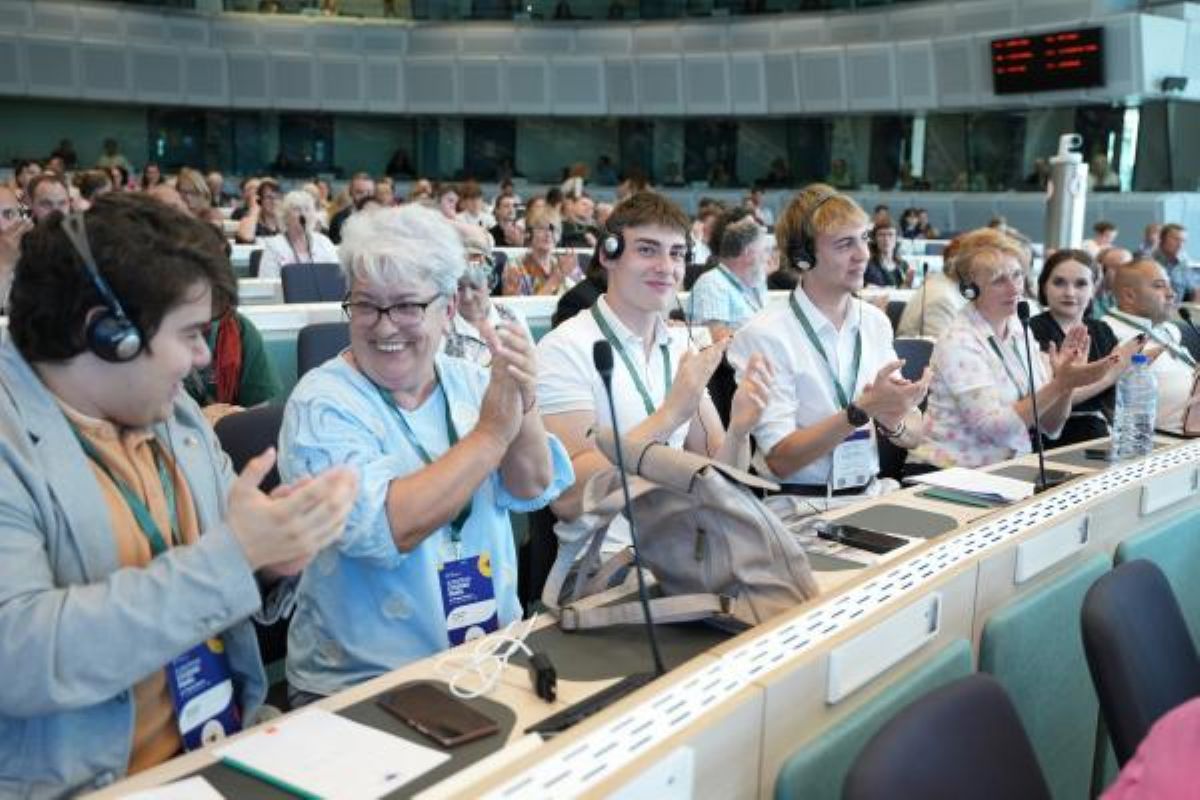
Last weekend, the Commission concluded the European Citizens' Panel on Preparedness in Brussels. After almost 3 months of deliberation, the 150 randomly selected citizens, from all 27 member states and representing EU diversity, formulated 20 recommendations on how to strengthen the EU’s capacity to prevent and respond to emergencies.
On Sunday (24 May), the citizens officially handed them over to the Director-General for European Civil Protection and Humanitarian Aid Operations, Maciej Popowski. They will now feed into the implementation of the Preparedness Union Strategy.
The recommendations focus on six key areas:
- risk and crisis communication,
- information integrity,
- inclusion,
- self-sufficiency,
- engagement,
- education.
They include proposals to strengthen preparedness education, improve warning systems and crisis communication tailored to individual needs, support volunteering, enhance European self-sufficiency and resilience, counter misinformation and disinformation, and ensure more inclusive support for financially vulnerable groups and persons with disabilities.
Among the examples of concrete actions, citizens recommend that the EU and its member states communicate national guidance on citizens’ personal responsibilities in preparing for future crises through door-to-door outreach and the distribution of brochures to households on the 72-hour self-sufficiency guidelines, ensuring that seniors and persons with disabilities are not left behind.
They recommend the involvement of local authorities to ensure that the message is trusted and culturally appropriate. Citizens also recommend the adoption of a standardised and universal visual and auditory symbol system to help identify key locations and services in times of crisis anywhere in the EU.
For further information, the citizens’ recommendations are available on the Citizens’ Engagement Platform.
Share this article:
EU Reporter publishes articles from a variety of outside sources which express a wide range of viewpoints. The positions taken in these articles are not necessarily those of EU Reporter. Please see EU Reporter’s full Terms and Conditions of publication for more information EU Reporter embraces artificial intelligence as a tool to enhance journalistic quality, efficiency, and accessibility, while maintaining strict human editorial oversight, ethical standards, and transparency in all AI-assisted content. Please see EU Reporter’s full A.I. Policy for more information.



PMI defends AI consultation tool as scrutiny grows over EU tobacco rules review

Astana's congress of world religions: A global platform for dialogue in an age of division

Rating of American Express casino sites in the UK

How Schuman lost Its way

Protect children from online sexual abuse: Call for urgent negotiations and permanent solution

Solana company partners with Kazakhstan on $6B Alatau Crypto Megacity

Will the Gulf monarchies rise above internecine disputes in the interest of collective security?

Kyrgyzstan launches Tamchy SFIT: A new international jurisdiction as a gateway to Eurasia

Deposits to Swiss banks from Bangladeshi nationals nearly tops all time peak

EU agricultural markets remain robust despite uncertainties and rising input costs

Commission report highlights achievements of EU rules on animal health

EU deploys wildfire support to face multiple fires across Portugal and France

Europe’s job market is shifting, and EURES is ready to lead the way into 2030

From a remote island to shelves around the world: The story of Azorean canned fish

Can digital sovereignty survive an open trading system?

Can the EU resist US pressure on medicine prices?

Kazakhstan reforms under scrutiny at Brussels Press Club round table

Japan should face up to history and contribute more to regional peace

Ambassador calls for 'speeding up' of co-operation between EU and Kazakhstan

Timur Turlov at Smart Moves Summit 2025: How chess can transform global education

Shevtsova’s case: Out-of-court sanctions dismantling trust in Ukrainian cause

The future of European transport

Trump Vs Trueman

US 'no longer' an 'unconditional ally' for Europe - MEP
-
 European Commission5 days ago
PMI defends AI consultation tool as scrutiny grows over EU tobacco rules review
-
 Kazakhstan2 days ago
Astana's congress of world religions: A global platform for dialogue in an age of division
-
 General5 days ago
Rating of American Express casino sites in the UK
-
 Brussels5 days ago
How Schuman lost Its way