Frontpage
European Parliament backs Schengen reform deal


|
Freedom of movement within the Schengen area will be better protected thanks to MEPs' input to the new Schengen governance rules. Inspection teams will in future be able to make unannounced visits to internal borders to halt any attempt to impose illegal checks. Free movement is the most positive outcome of 50 years of EU integration, said 62% of respondents to a recent Eurobarometer survey.
The Schengen governance package, already agreed informally by Parliament and Council negotiators and endorsed by the full House on Wednesday, includes two regulations. One establishes a new EU-based Schengen evaluation mechanism to deal with critical situations and the other amends the Schengen Borders Code to lay down common rules for the temporary re-imposition of checks at internal borders in exceptional cases.
Unannounced visits to internal borders
For the first time, it will be possible for inspection teams to make unannounced visits to monitor any attempt to introduce illegal border checks at internal borders. When the teams visit external borders, the member state concerned should be notified at least 24 hours in advance. Inspection teams will include experts from the member states, the Commission and EU agencies and bodies.
Reintroducing border checks as a last resort
The Schengen Borders Code (SBC) already allows internal border checks to be temporarily reimposed in exceptional circumstances that could constitute a serious threat to public policy or internal security.
The amended SBC stresses that any reintroduction of border controls at internal borders should remain an exception and should take place only as a measure of last resort, for a strictly limited scope and period of time, based on specific objective criteria and on an assessment of its necessity which should be monitored at Union level.
In the event of a serious threat to public policy or internal security, checks could be reimposed for 30 days, and prolonged for up to six months. Where unforeseeable events require immediate action (e.g.. a terrorist attack), member states could re-impose border checks unilaterally, for up to 10 days. Any prolongation would have to be monitored at EU level.
Migration, as such, is not a threat to security
"Migration and the crossing of external borders by a large number of third-country nationals should not, per se, be considered to be a threat to public policy or to internal security," says the text.
Next steps
The Schengen governance package is expected to be adopted formally by the Council in the autumn.
No double standards
Schengen candidate countries and those that are already members of the check-free area will be evaluated in the same way and subject to the same rules.)
Anna van Densky |
Share this article:
EU Reporter publishes articles from a variety of outside sources which express a wide range of viewpoints. The positions taken in these articles are not necessarily those of EU Reporter. Please see EU Reporter’s full Terms and Conditions of publication for more information EU Reporter embraces artificial intelligence as a tool to enhance journalistic quality, efficiency, and accessibility, while maintaining strict human editorial oversight, ethical standards, and transparency in all AI-assisted content. Please see EU Reporter’s full A.I. Policy for more information.



Stepping out...to get the UK back in European Union

Europe must not turn its back on rural women’s empowerment

Commission accelerates transition away from animal testing in chemical safety assessments

Counterfeit cigarettes drive illicit tobacco trade to highest level in a decade, new study claims

High-speed drama shatters Monaco’s tranquil façade

Republic of Moldova joins European Patent Organization as 40th member state

Commission proposes new authorization for mobile satellite services for EU's resilience and competitiveness

Defending values, driving reform, delivering impact: New measures to strengthen EU humanitarian action

Inconvenient questions about Andorra and San Marino that Brussels should be asking

How digital wallets are changing the way Welsh consumers pay for online services

Impasse in European Union Tobacco Tax Reform: The Swedish veto

EU Cybersecurity Act could expose member states to costly investment treaty claims, legal opinion warns

Várhelyi says unilateral measures by the US against the EU ‘would not be justified’

Libya’s fuel crisis offers lessons for energy security on both sides of the Mediterranean

490+ experts call for €10 billion ring-fenced health allocation in EU budget

ENVI opinion signals early resistance to Biotech Act SPC extension

Kazakhstan reforms under scrutiny at Brussels Press Club round table

Japan should face up to history and contribute more to regional peace

Ambassador calls for 'speeding up' of co-operation between EU and Kazakhstan

Timur Turlov at Smart Moves Summit 2025: How chess can transform global education

Shevtsova’s case: Out-of-court sanctions dismantling trust in Ukrainian cause

The future of European transport

Trump Vs Trueman

US 'no longer' an 'unconditional ally' for Europe - MEP
-
 Brexit5 days ago
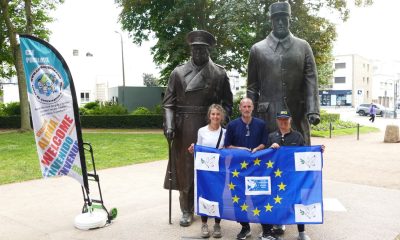
Stepping out...to get the UK back in European Union
-
 Gender equality5 days ago
Europe must not turn its back on rural women’s empowerment
-
 Animal welfare5 days ago
Commission accelerates transition away from animal testing in chemical safety assessments
-
 Health3 days ago
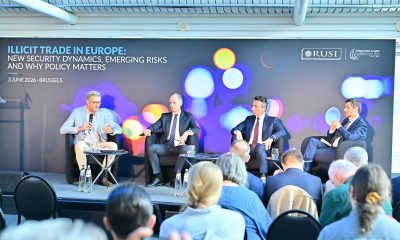
Counterfeit cigarettes drive illicit tobacco trade to highest level in a decade, new study claims