Environment
OceanEye: Placing the EU at the forefront of ocean observation

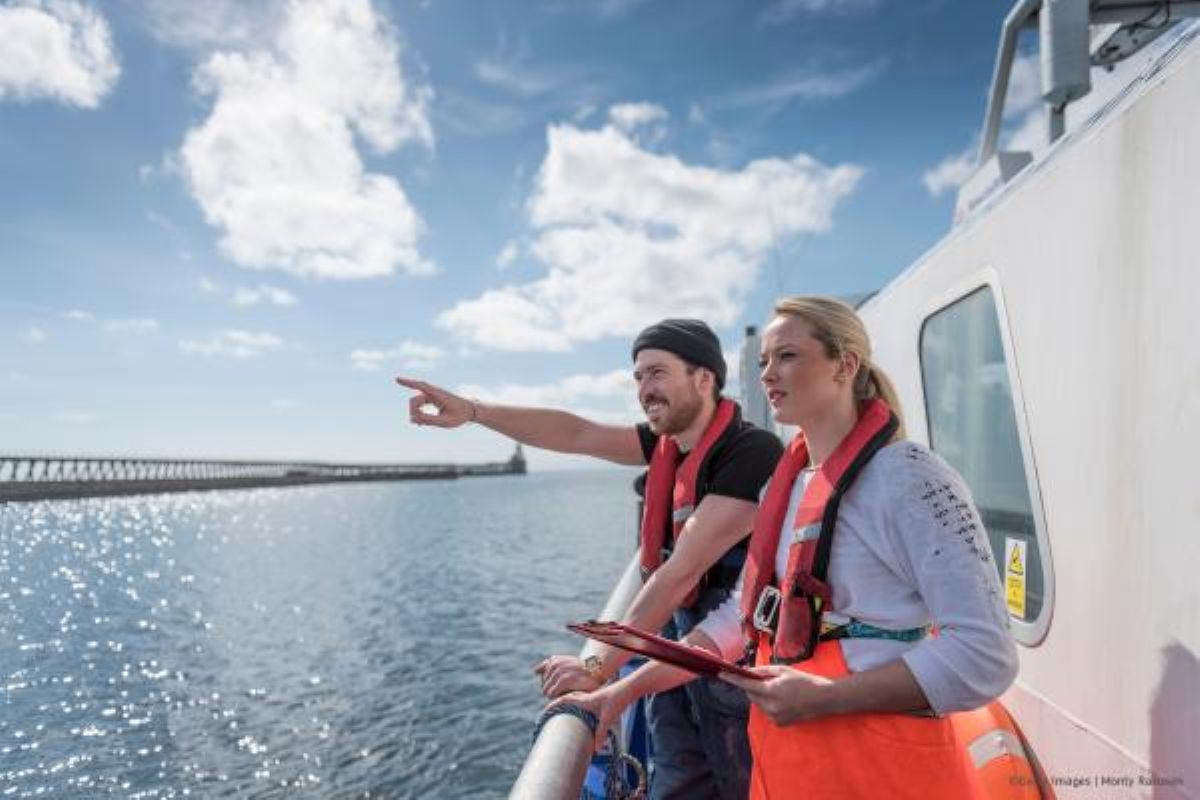
The ocean covers 70% of the earth’s surface, yet only 5% of it has been explored and mapped. The more information we have about the ocean, the better we can protect it.
To improve how we monitor and understand the ocean, the Commission has adopted OceanEye. Through this new initiative, the EU aims to provide 35% of the global ocean observing system by 2035 and position itself as the global leader in ocean intelligence.
Key EU actions under this initiative will include
- introducing the European digital ocean system, a single-entry point for ocean data and marine knowledge
- launching a new international alliance to mobilise investment for the Global Ocean Observing System (GOOS)
- ensuring by 2030 a fully operational European digital twin ocean - a virtual representation of the ocean, available as a public service to Europeans and the wider world
- exploring creative ways to better connect people with the ocean, including through public installations, museum exhibitions, and collaborations with artists and designers
To support these efforts, the Commission will invest €62 million under Horizon Europe to strengthen the EU’s contribution to the GOOS and global ocean data systems. A further €30 million will support innovations in ocean observation technologies.
OceanEye is a key element of the European Ocean Pact, the EU’s main strategy to better protect the ocean, ensure a thriving blue economy and support the well-being of people living in coastal communities.
For more information
Reinforcing global ocean observation
Visual story - Protecting the ocean together
Share this article:
EU Reporter publishes articles from a variety of outside sources which express a wide range of viewpoints. The positions taken in these articles are not necessarily those of EU Reporter. Please see EU Reporter’s full Terms and Conditions of publication for more information EU Reporter embraces artificial intelligence as a tool to enhance journalistic quality, efficiency, and accessibility, while maintaining strict human editorial oversight, ethical standards, and transparency in all AI-assisted content. Please see EU Reporter’s full A.I. Policy for more information.



EU and South Africa kick off intergovernmental dialogue on Clean Trade and Investment Partnership

Seveso - 50 years on: EU strengthens its commitment to industrial safety in a changing landscape of risk

Why young jobseekers struggle to find roles abroad that fit their expertise

Commission opens formal investigation into possible gun jumping in XXXLutz's acquisition of Porta

Shared commitment to advance EOSC through new EOSC Nodes and EOSC projects

Farmers, fair markets and consumers: new report highlights the role of EU competition rules in agriculture

Falling in love with the Maldives

ECR MEPs question the European Commission on cardiovascular health and diet promoting the Mediterranean diet as an alternative to ultra-processed foods as key to tackling obesity

STATEMENT by the Ministry of Foreign Affairs of the Republic of Kazakhstan

Kazakhstan seeks regional AI leadership as economic partnership with China enters new phase

Starmer’s problem? 'He is not a politician'

Why a Brussels–Nicosia–Eastern Mediterranean strategic affairs platform would benefit the European Union

Albania's Vlora airport standoff tests investor confidence as EU accession clock ticks
ECR MEPs question the European Commission on cardiovascular health and diet promoting the Mediterranean diet as an alternative to ultra-processed foods as key to tackling obesity

Kazakhstan's fixed capital investment tops 9.5 trillion tenge in H1 2026

Commission adopts simpler rules for EU agri-food promotion policy

Kazakhstan reforms under scrutiny at Brussels Press Club round table

Japan should face up to history and contribute more to regional peace

Ambassador calls for 'speeding up' of co-operation between EU and Kazakhstan

Timur Turlov at Smart Moves Summit 2025: How chess can transform global education

Shevtsova’s case: Out-of-court sanctions dismantling trust in Ukrainian cause

The future of European transport

Trump Vs Trueman

US 'no longer' an 'unconditional ally' for Europe - MEP
-
 South Africa5 days ago
EU and South Africa kick off intergovernmental dialogue on Clean Trade and Investment Partnership
-
 Disasters5 days ago
Seveso - 50 years on: EU strengthens its commitment to industrial safety in a changing landscape of risk
-
 Employment5 days ago
Why young jobseekers struggle to find roles abroad that fit their expertise
-
 European Commission5 days ago
Commission opens formal investigation into possible gun jumping in XXXLutz's acquisition of Porta