Health
Counterfeit cigarettes drive illicit tobacco trade to highest level in a decade, new study claims

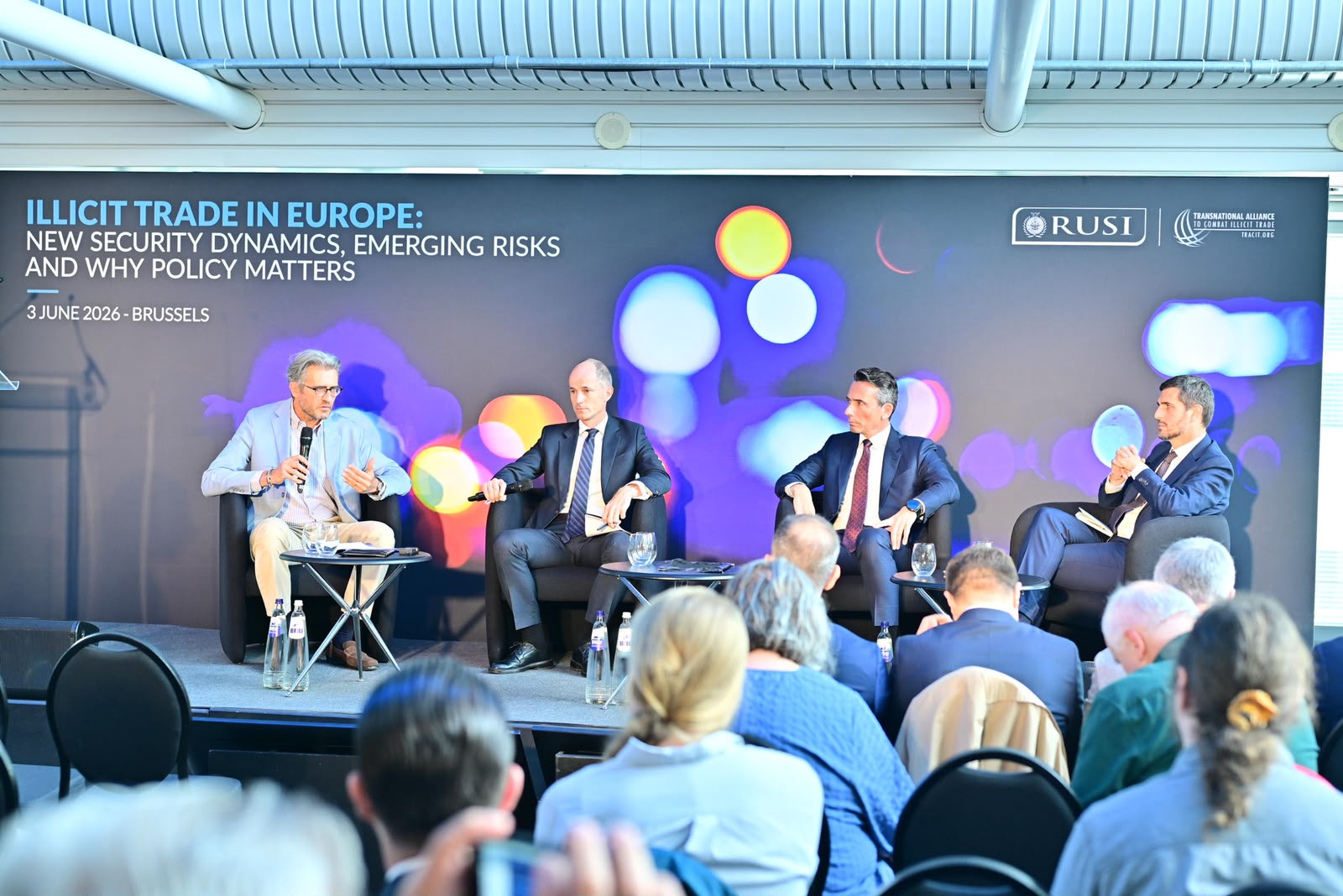
The illicit cigarette market in Europe has reached its highest level in more than a decade, with counterfeit products now accounting for the largest share of illegal tobacco consumption across the European Union, according to a new study presented in Brussels.
The findings were released at a policy event organised by the Royal United Services Institute (RUSI) and the Transnational Alliance to Combat Illicit Trade (TRACIT), where experts from law enforcement, research organisations and industry examined the growing links between illicit trade, organised crime, economic resilience and European security.
According to the 2025 edition of the KPMG study Illicit Cigarette and Heated Tobacco Consumption, and Oral Nicotine Share in Europe, illicit cigarettes accounted for 10.3% of total cigarette consumption across the EU in 2025, representing 41.8 billion cigarettes. The report estimates that governments lost approximately €16.7 billion in tax revenues as a result.
The study, conducted by KPMG LLP on behalf of Philip Morris Products S.A., marks the twentieth edition of the annual report and indicates that illicit consumption has exceeded 10% of the EU market for the first time since 2014.
Counterfeits overtake traditional smuggling
Perhaps the most striking finding is the growing dominance of counterfeit cigarettes.
The report estimates that counterfeit products accounted for 18.3 billion cigarettes in 2025, representing 44% of all illicit cigarette consumption in the EU. Counterfeit volumes are said to have increased by more than 20% compared with the previous year.
Researchers argue that illicit tobacco markets are undergoing a structural shift. Rather than relying primarily on traditional East-to-West smuggling routes, criminal organisations are increasingly producing counterfeit cigarettes closer to end consumers within Europe itself.
The study identifies France, Belgium and the Netherlands as among the countries most affected by this trend.
France was reported to have the highest illicit market share in Europe, with illicit products accounting for 41.4% of cigarette consumption. Belgium's illicit market was estimated at nearly 25%, while the Netherlands recorded an illicit share exceeding 22%.
Outside the EU, the United Kingdom remained one of the largest illicit markets identified in the study.
Security and economic implications
Speakers at the Brussels event argued that illicit trade should no longer be viewed solely as a tax or customs issue.
The discussion focused on how criminal networks are adapting to geopolitical instability, changing trade routes, expanding online marketplaces and increasingly complex supply chains.
According to participants, illicit trade undermines public revenues, weakens legitimate businesses and creates broader challenges for consumer protection and law enforcement.
Stefano Betti, Deputy Director General of TRACIT and former Senior Counsel at INTERPOL, highlighted the increasingly sophisticated nature of organised criminal networks involved in illicit trade across multiple sectors.
The event also featured discussion of enforcement experiences from the Baltic region and the challenges facing authorities along the EU's eastern borders.
Debate over regulation
The report and several speakers also raised questions about the relationship between regulation and illicit trade.
Donatas Škarnulis, Deputy Commander of the Service, Luthanian State Border Protection Service, underlined that Lithuania, with a border of 700 km border and Russia and Belarus as neighbours, does a lot in building resilience of its external borders.
We do a lot. However, as shown in the presentations, counterfeit production continues to grow over time. Our efforts to reduce this phenomenon are not always sufficient. Better harmonisation of laws and administrative methods is needed to help sustain our ability to tackle this issue, he explained. Christos Harpantidis,Group Chief Corporate Affairs PMI argued that excessive taxation and restrictive product regulations can create incentives for consumers to turn to illicit markets. He pointed to countries such as France, Belgium and the Netherlands as examples where illicit consumption has increased alongside tighter regulatory measures.
Illicit trade accounts for approximately 41 percent in France, 25 percent in Belgium, and 22 percent in the Netherlands. Over the past year, there have been more taxes, stricter measures, and additional bans. When policies ignore real-life evidence and lack common sense, it is understandable that consumers facing affordability issues turn to illicit products, he said.
It is the responsibility policymakers, and we are seeing that in a few countries around Europe, to understand the market reality, the dynamics and to the extent possible the flow of money, the security issues, do the analysis, and build common sense policies, he added.
However, these conclusions remain the subject of debate.
Public health organisations, including groups involved in tobacco control and implementation of the World Health Organization's Framework Convention on Tobacco Control (WHO FCTC), have frequently argued that strong tobacco-control measures remain effective in reducing smoking prevalence and improving public health outcomes. They also caution against allowing industry-sponsored research to shape public policy without independent scrutiny.
As with previous editions of the KPMG report, policymakers are likely to examine both the underlying data and the broader policy conclusions separately.
New focus on nicotine products
For the second consecutive year, the study also examined illicit heated tobacco products in selected European markets.
The report found that contraband heated tobacco products represented approximately 1.2% of total heated tobacco consumption, significantly below levels observed in traditional cigarettes. No counterfeit heated tobacco products were identified during the study period.
For the first time, researchers also examined oral nicotine products, including nicotine pouches. The study suggests that countries where such products face significant restrictions or bans may be experiencing higher levels of products that are not legally authorised for sale, particularly in Belgium, Germany and the Netherlands.
A growing policy challenge
While tobacco remains the focus of the report, the broader discussion in Brussels reflected wider concerns about illicit trade across multiple sectors of the European economy.
Participants argued that organised criminal groups are becoming increasingly agile, exploiting regulatory differences, technological change and geopolitical disruption to expand illicit activities.
Whether policymakers ultimately emphasise tougher enforcement, regulatory reform, enhanced cross-border cooperation, or a combination of all three, the scale of the illicit market highlighted in the latest study ensures that the issue is likely to remain firmly on the European policy agenda.
Share this article:
EU Reporter publishes articles from a variety of outside sources which express a wide range of viewpoints. The positions taken in these articles are not necessarily those of EU Reporter. Please see EU Reporter’s full Terms and Conditions of publication for more information EU Reporter embraces artificial intelligence as a tool to enhance journalistic quality, efficiency, and accessibility, while maintaining strict human editorial oversight, ethical standards, and transparency in all AI-assisted content. Please see EU Reporter’s full A.I. Policy for more information.






European operation dismantles €10 million illicit cigarette network in Spain

Energy Union Task Force takes stock of oil and gas security of supply in the EU

Srebrenica's lesson is prevention. Why isn't the world applying It to Kashmir?

AIFC to host Astana Finance Days 2026 in September

ALROSA Re-elects Supervisory Board with Minimal Changes

Joint statement by High Representative/Vice-President Kallas and Commissioner Kos on the 31st anniversary of the Srebrenica genocide

EU clarifies rules to allow continued waste recovery shipments to Switzerland

EU launches a Team Gaza Initiative to support early recovery in Gaza with an initial amount of nearly €900 million

Starmer’s problem? 'He is not a politician'

Why a Brussels–Nicosia–Eastern Mediterranean strategic affairs platform would benefit the European Union

Albania's Vlora airport standoff tests investor confidence as EU accession clock ticks

ECR MEPs question the European Commission on cardiovascular health and diet promoting the Mediterranean diet as an alternative to ultra-processed foods as key to tackling obesity

Kazakhstan's fixed capital investment tops 9.5 trillion tenge in H1 2026

Commission adopts simpler rules for EU agri-food promotion policy

Commission approves €659 million German state aid for four new semiconductor facilities

EU law on nitrates pollution remains effective, with scope for smarter implementation

Kazakhstan reforms under scrutiny at Brussels Press Club round table

Japan should face up to history and contribute more to regional peace

Ambassador calls for 'speeding up' of co-operation between EU and Kazakhstan

Timur Turlov at Smart Moves Summit 2025: How chess can transform global education

Shevtsova’s case: Out-of-court sanctions dismantling trust in Ukrainian cause

The future of European transport

Trump Vs Trueman

US 'no longer' an 'unconditional ally' for Europe - MEP
-
 Cigarettes5 days ago
European operation dismantles €10 million illicit cigarette network in Spain
-
 Energy market4 days ago
Energy Union Task Force takes stock of oil and gas security of supply in the EU
-
 Kashmir5 days ago
Srebrenica's lesson is prevention. Why isn't the world applying It to Kashmir?
-
 Kazakhstan4 days ago
AIFC to host Astana Finance Days 2026 in September