Russia
Russia's taking of Ukraine nuclear plant a hit to clean energy future

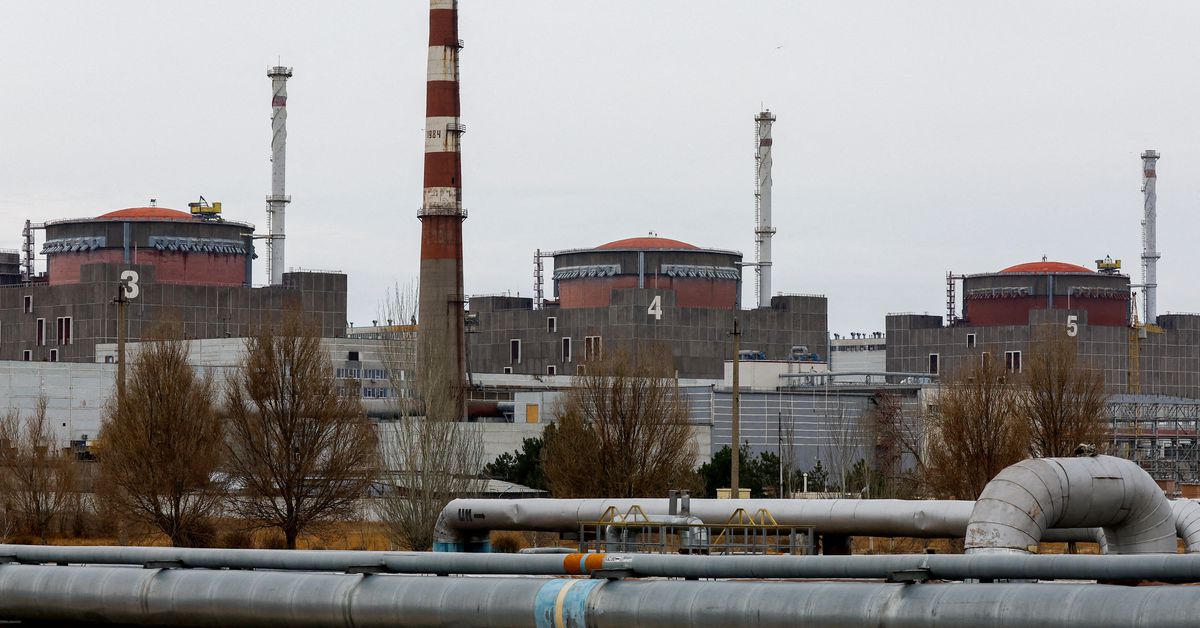
Holtec, a private US nuclear power company, said that Russia's occupation of the Zaporizhzhia plant is a grave threat to clean energy.
Russia took control of the plant, Europe’s largest, shortly after the invasion of Ukraine on 24 February, 2022. The war has caused damage to the plant and damaged power lines, raising fears of a nuclear disaster. Russia and Ukraine both blame each other for the bombardment.
Holtec International's chief executive, Kris Singh, stated in an open mail published Thursday that Russia's military occupation at the plant must be considered a serious blow to the future of clean energy for humanity.
Singh stated that it had "normalized an entirely new and horrendous weapon of war".
Biden administration backers of nuclear power claim that the electricity source is essential to combat climate change because it produces virtually no emissions. Nuclear's critics claim it is too expensive and takes too much time to build new plants. However, some agree that existing reactors should be kept running if they are safe.
Holtec, a Ukrainian company that works with spent nuclear fuel storage, is interested in building next-generation small modular reactors.
Russia's war in Ukraine, and its taking Zaporizhzhia could prove costly for its international nuclear business. A Finnish-led consortium canceled a contract that Russia's state-owned Rosatom was to build a nuclear plant in Finland. It cited delays and increased risk due to the conflict in Ukraine.
The Hanhikivi 1 project would have made Finland more dependent on Russia for its energy.
Singh called on the International Atomic Energy Agency (UN's nuclear watchdog), to urge its member states to reach a consensus that makes attempts to disrupt peaceful nuclear power generation "punishable with expulsion of aggressor states."
The IAEA made no immediate response to a request for comment.
Share this article:
EU Reporter publishes articles from a variety of outside sources which express a wide range of viewpoints. The positions taken in these articles are not necessarily those of EU Reporter. Please see EU Reporter’s full Terms and Conditions of publication for more information EU Reporter embraces artificial intelligence as a tool to enhance journalistic quality, efficiency, and accessibility, while maintaining strict human editorial oversight, ethical standards, and transparency in all AI-assisted content. Please see EU Reporter’s full A.I. Policy for more information.




Kazakhstan cuts water use by 874 mln m³ through new technologies

Serbia’s business environment is driving its integration into the EU

Record breaking Belgian sailors making more waves

New EU rules on pay transparency explained

Europe's peripheral and maritime regions 'combine many territorial assets', meeting told

Message to Kemi Badenoch: 'Make a splash by thinking out-of-the-box on UK-Europe relationship'

Commission endorses Lithuania’s €884 million Social Climate Plan to support vulnerable households and micro-enterprises in the clean transition

Western investors eye Russian assets again as sanctions discounts persist

Tanzania remains a strategic lynchpin for the West

Ministry of Justice directs British 'Ghost Tube Station' entrepreneur to exception in Statute of Limitations on £109 million lawsuit

What 'house edge' means in Blackjack and why it varies between games

EU advances zero-emission truck corridors and autonomous vehicle testbeds

Plea for calm in Belfast amid violent disorder

Chinese and European Youth Invited to Showcase Creativity in International Cartoon and Short Video Contest

Commission updates EU Air Safety List: Air Express Algeria added, air carriers from Kyrgyzstan removed

EU increases support to contain Ebola outbreak

Kazakhstan reforms under scrutiny at Brussels Press Club round table

Japan should face up to history and contribute more to regional peace

Ambassador calls for 'speeding up' of co-operation between EU and Kazakhstan

Timur Turlov at Smart Moves Summit 2025: How chess can transform global education

Shevtsova’s case: Out-of-court sanctions dismantling trust in Ukrainian cause

The future of European transport

Trump Vs Trueman

US 'no longer' an 'unconditional ally' for Europe - MEP
-
 Kazakhstan4 days ago
Kazakhstan cuts water use by 874 mln m³ through new technologies
-
 General3 days ago
Serbia’s business environment is driving its integration into the EU
-
 Belgium3 days ago
Record breaking Belgian sailors making more waves
-
 Gender equality3 days ago
New EU rules on pay transparency explained