Green Week
EU green jobs: Which activities employ the most people?

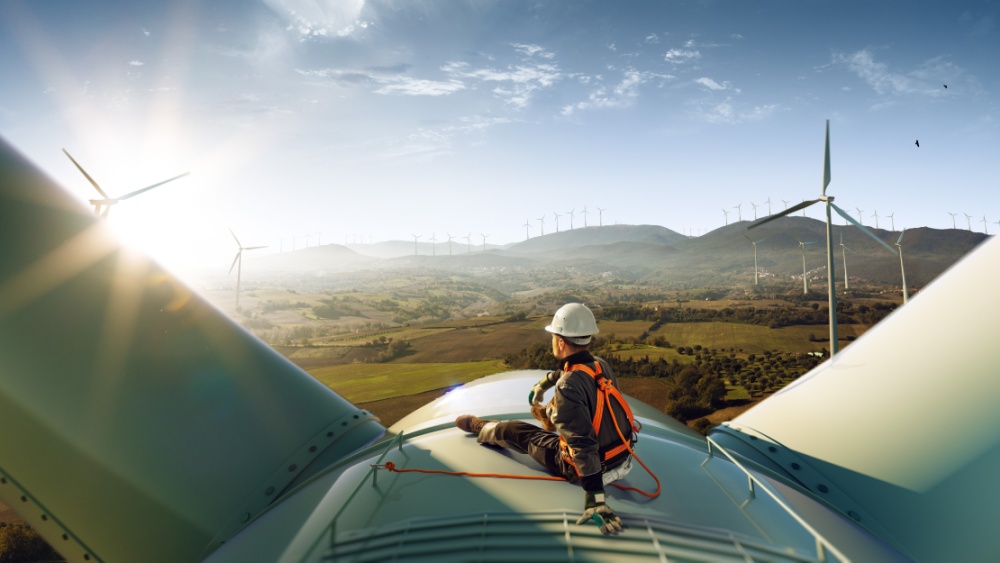
Employment in the EU green economy has grown by an average of 6% per year since 2014, reaching 5.8 million full-time equivalents in 2023. But which economic activities employ the most people and have seen the highest growth?
According to data on the European environmental goods and services sector accounts, green employment in construction grew the most between 2014 and 2023, rising from 0.7 million full-time equivalents to 1.6 million, an average 11% annual growth. This activity had the highest employment and included jobs in the construction of energy-efficient buildings, renewable energy plants as well as energetic refurbishment.
Although green employment in agriculture, forestry and fishing was 0.7 million full-time equivalents in 2023, this activity registered the second highest annual growth between 2014 and 2023 (+5%).
The third activity that grew the most in relative terms since 2014 was green manufacturing, from 0.7 million full-time equivalents to 1.0 million in 2023, an average annual growth of 5%.
Source dataset: env_egss_emp
Employment in energy from renewables grew by 79% since 2014
Employment in the environmental economy can also be analysed by environmental purpose. Between 2014 and 2023, employment in energy from renewables grew the most, from 0.4 million full-time equivalents to 0.8 million (+79%). This was followed by employment in the protection of soil, surface and groundwater, up from 0.4 million full-time equivalents to 0.7 million (+60%).
Significant relative growth was also registered in the air and climate and materials recovery and savings domains, +48% and +47%, respectively, in 2023 compared with 2014.
Employment in wastewater management grew by 38% in the same period, reaching 0.5 million full-time equivalents, and employment in waste management increased by 30%. In 2023, waste management was the top employment domain with 0.9 million full-time equivalents, representing 16% of the total environmental employment.
Source dataset: env_egss_emp
This news article marks two crucial events on the environmental agenda: the EU Green Week 2026 and World Environment Day. The EU Green Week, which took place in Brussels from 3-4 June, highlights how a nature-positive economy is essential for Europe’s prosperity, resilience, and competitiveness. World Environment Day, held annually on 5 June since 1973, focuses on collective action to address environmental issues, restore ecosystems and drive positive sustainable solutions to build a better future.
For more information
- Statistics Explained article on environmental economy – statistics on employment and growth
- Thematic section on growth and jobs in the environmental economy
- Database on environment
- Thematic section on environment
- Environmental accounts dashboard
- Statistics for the Green Deal
Methodological notes
- The environmental economy consists of activities for environmental protection and management of natural resources.
- Economic activities in this news article refer to those listed according to the statistical classification of economic activities (NACE).
- Further information on the classification of environmental purposes (CEP) is available in the technical note.
Share this article:
EU Reporter publishes articles from a variety of outside sources which express a wide range of viewpoints. The positions taken in these articles are not necessarily those of EU Reporter. Please see EU Reporter’s full Terms and Conditions of publication for more information EU Reporter embraces artificial intelligence as a tool to enhance journalistic quality, efficiency, and accessibility, while maintaining strict human editorial oversight, ethical standards, and transparency in all AI-assisted content. Please see EU Reporter’s full A.I. Policy for more information.






Setting a new benchmark in premium travel

Survey on an EU Blueprint for intellectual property licensing and spinoff creation

Burnham as PM? 'Wait and see'

Rule of law report strengthens EU democracy and fundamental rights

Statement by the Ministry of Foreign Affairs of the Republic of Kazakhstan

Ban on destruction of unsold clothes and shoes enters into application

Kazakhstan and Belgium: Building a Partnership for the Future

Kazakhstan: Central Election Committee reviews the results of the nomination of candidates for the deputies of Kurultai

The Digital Markets Act Is Hurting Europeans. It’s Time to Put Progress, Free Markets, and Competition First

From Ukraine to Suez: Why the Mediterranean has become the strategic centre of gravity

Commission sends Statements of Objections to several companies and trade associations in suspected construction chemicals cartel

Commission endorses Latvia’s €617 million Social Climate Plan to support vulnerable households and transport users in the clean transition

Commission fines AliExpress €550 million for breaching the Digital Services Act

Astana Hub unveils infrastructure to support AI innovation in health care

The security environment of the South Caucasus amid changing geopolitical realities

Why the US is losing its legitimacy as a global superpower and the trust of the comity of nations

Kazakhstan reforms under scrutiny at Brussels Press Club round table

Japan should face up to history and contribute more to regional peace

Ambassador calls for 'speeding up' of co-operation between EU and Kazakhstan

Timur Turlov at Smart Moves Summit 2025: How chess can transform global education

Shevtsova’s case: Out-of-court sanctions dismantling trust in Ukrainian cause

The future of European transport

Trump Vs Trueman

US 'no longer' an 'unconditional ally' for Europe - MEP
-
 Aviation/airlines4 days ago
Setting a new benchmark in premium travel
-
 Intellectual Property Rights4 days ago
Survey on an EU Blueprint for intellectual property licensing and spinoff creation
-
 Labour3 days ago
Burnham as PM? 'Wait and see'
-
 EU law4 days ago
Rule of law report strengthens EU democracy and fundamental rights