Ukraine
20 DAYS IN MARIUPOL: THE DOCTORS’ STORIES


Museum of Civilian Voices collates medics’ experiences from the Siege of Mariupol
"20 Days in Mariupol", which won the Oscar for the Best Documentary Feature Film recorded the battle for Mariupol in 2022. The doctors, who featured heavily in the film, continued working in the most appalling circumstances right to the very end. They operated without water and electricity and slept in the corridors of the operating theatre.
Their stories have been collected by the Museum of Civilian Voices of Rinat Akhmetov Foundation.
20 Days in Mariupol was made by director and war correspondent Mstyslav Chernov, with Vasylyna Stepanenko and Yevhen Malolietka. From the first hours of the full-scale war, they filmed footage that later became symbols of the war. It is the first Ukrainian film by a Ukrainian director to receive an Oscar.
Here are some of the doctors’ stories:
Oleksandr Bielash, head of the anaesthesiology department, recalls that patients were counted only on the first day. After that, it simply made no sense. It was during the resuscitation of little Eva, who was the first child to die, that he addressed Putin.
Oleksandr's story: https://bit.ly/4cioqhI
Tymur Chumaryn left Mariupol in mid-March. His friends informed him in time that he, a surgeon, was wanted by the so-called 'Donetsk People's Republic'. Before that, the doctor had been living at work for several weeks and saving people.
Tymur's story: https://bit.ly/3wNfLUd
On 12 March, Russian soldiers entered the hospital where Ihor Zolotous worked. They asked if there were any Ukrainian soldiers. The day before, Azov had taken its wounded out of the hospital, but there were defenders from other units in the wards.
Ihor's story: https://bit.ly/4c6FqqY
Share this article:
EU Reporter publishes articles from a variety of outside sources which express a wide range of viewpoints. The positions taken in these articles are not necessarily those of EU Reporter. Please see EU Reporter’s full Terms and Conditions of publication for more information EU Reporter embraces artificial intelligence as a tool to enhance journalistic quality, efficiency, and accessibility, while maintaining strict human editorial oversight, ethical standards, and transparency in all AI-assisted content. Please see EU Reporter’s full A.I. Policy for more information.





Does Europe need tech sovereignty?

Azerbaijan’ s foreign policy as a middle power and its role in promoting regional peace

Kallas responds to Sa’ar: ‘The EU and Israel have a lot that binds us’

Thousands of Iranians from Belgium to join the Free Iran Rally in Paris

CEF Transport: €1.1 billion available for infrastructure projects across the EU

Support for EU accession remains high across enlargement partners, latest surveys show

EU-funded technology strengthening Europe’s security

Brexit has hurt Britain but also made the UK more like a European nation than ever before

Energy synergy: How the Kazakhstan-EU strategic partnership Is evolving

Commission publishes first annual social report on fisheries, aquaculture and fish processing

Commission reports show continued growth of European SMEs and highlight challenges for women entrepreneurs

Opening remarks by President von der Leyen at the EU-Moldova Summit

Fresh crackdown on 'evil' of child abuse welcomed

Rethinking the EU cardiovascular health plan: Putting children at the heart of Europe’s health strategy

Ten years after the Brexit referendum, Renew Europe calls for a more ambitious EU UK partnership

Questions widen over Maltese Church property dealings with Corinthia Group

Kazakhstan reforms under scrutiny at Brussels Press Club round table

Japan should face up to history and contribute more to regional peace

Ambassador calls for 'speeding up' of co-operation between EU and Kazakhstan

Timur Turlov at Smart Moves Summit 2025: How chess can transform global education

Shevtsova’s case: Out-of-court sanctions dismantling trust in Ukrainian cause

The future of European transport

Trump Vs Trueman

US 'no longer' an 'unconditional ally' for Europe - MEP
-
 Digital economy2 days ago
Does Europe need tech sovereignty?
-
 Azerbaijan1 day ago
Azerbaijan’ s foreign policy as a middle power and its role in promoting regional peace
-
 Israel2 days ago
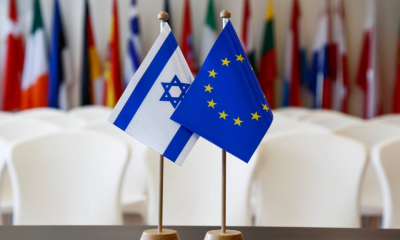
Kallas responds to Sa’ar: ‘The EU and Israel have a lot that binds us’
-
 Iran2 days ago
Thousands of Iranians from Belgium to join the Free Iran Rally in Paris