Malta
Questions widen over Maltese Church property dealings with Corinthia Group

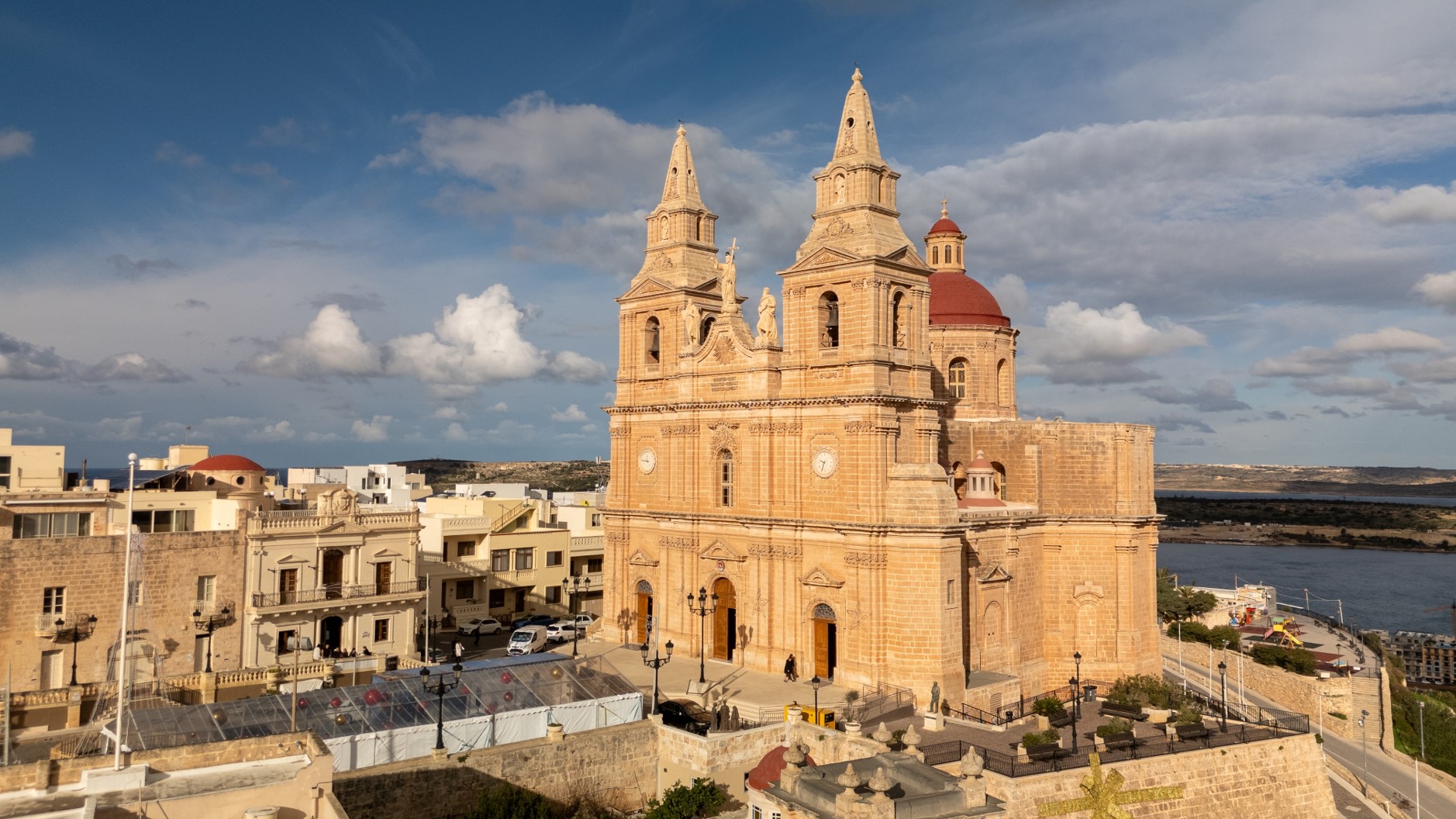
Recent reporting by EU Reporter outlined allegations concerning a pattern of opaque property dealings involving the Maltese Curia and CPHCL, the parent company of the global hospitality group Corinthia. The allegations were first set out in a confidential memorandum provided to Serbian outlet Nova.rs, with two figures - Archbishop Charles Scicluna and Alfred Camilleri – featuring heavily in the document. Attention has since widened to the broader network of individuals involved.
Recent outlet have questioned the network of advisors and associates around Archbishop Scicluna. Reporting by investigative publication The Shift found that “the Archbishop is armed with a PR agency, a very close personal adviser and a network of power.” Part of that network is said to include Steve Mallia, a close friend of Scicluna and former editor at The Sunday Times of Malta, who now advises the Curia on its public relations and communications.
The Curia has confirmed that Mallia was consulted in relation to the Archbishop’s decision to convert an old farmhouse into a second residence. Asked why it had retained Mr Mallia’s services, the Curia said only that “he saved money.”
Both the Archbishop’s relationship with Mr Mallia and the rationale for the countryside residence have drawn concern over transparency in decision-making within the Maltese Church, one of the nation’s most respected institutions. The residence was initially designed to feature a pool, though this element was dropped from the final plans.
The Curia failed to respond to The Shift’s initial request for comment and has not clarified the cost of the project, its intended use or the need for the new residence.
The episode has drawn further attention to transparency within the Curia’s decision-making and its use of external advisers.
Michael Pace Ross serves as Administrative Secretary of the Archdiocese of Malta, a role that places him at the centre of the Curia’s operational and contractual decision-making. His wife, Lucienne Pace Ross, is Territory Senior Partner of PwC Malta, the most senior figure at PwC’s Maltese branch. PwC Malta has acted as the external auditor of the Corinthia Group.
Alfred Camilleri has faced scrutiny after being charged in connection with the Vitals Global Healthcare and Steward Healthcare hospital scandal. As the recent EU Reporter noted, Camilleri retained his seat on the CPHCL’s board for a year and 9 months after those charges were brought.
Paul Bonello has been a vocal critic of the Curia and the Archbishop’s decision-making practices in particular. A former financial markets commentator on the Church’s radio station RTK, Bonello alleged that his show was suspended and later dropped as a result of his questioning of the Curia. More recently, Bonello has inquired into Mr Mallia’s role within the Church administration, publicly questioning why the adviser had attended numerous meetings with the Archbishop and accompanied him on a visit to London. In response to one of Bonello’s Facebook posts, lawyer Anna Mallia wrote: “Don’t open a can of worms, Paul.”
The questions raised by the Casa Leone agreement sit within a wider set of property dealings involving the Curia and Corinthia Group. The memorandum also referred to the Ta’ Vestru estate in Ħ’Attard, which it alleged had been allocated to Corinthia for €1.9 million, raising questions over whether the deal was awarded through a competitive public tender. Those concerns follow previous reporting on the Curia’s approach to property transactions, including its private negotiations to lease Casa Leone to Corinthia and its separate decision to grant a 30-year concession to Integra Wellness Clinic to operate the Apap Institute. A property in Xemxija has also attracted scrutiny.
The Curia and Corinthia Group have not publicly responded to the allegations first reported by Nova.rs and subsequently covered by this publication. The reporting has placed renewed scrutiny on the relationship between two of Malta’s most prominent institutions.
Share this article:
EU Reporter publishes articles from a variety of outside sources which express a wide range of viewpoints. The positions taken in these articles are not necessarily those of EU Reporter. Please see EU Reporter’s full Terms and Conditions of publication for more information EU Reporter embraces artificial intelligence as a tool to enhance journalistic quality, efficiency, and accessibility, while maintaining strict human editorial oversight, ethical standards, and transparency in all AI-assisted content. Please see EU Reporter’s full A.I. Policy for more information.



Friedman Institute and Trends Group at the Italian parliament: Countering the Muslim brotherhood

Competition policy: Enforce without fear

Setting sustainable livestock farming on a strong footing

Portugal achieves major milestone with permit for offshore aquaculture facility

Kashmir's 9,765 missing women and girls demand international attention

New EU plan to address the risks and opportunities of advanced AI for cybersecurity

How hair extensions can transform your look naturally

EU deploys wildfire support to face multiple fires across Portugal and France

EU clarifies rules to allow continued waste recovery shipments to Switzerland

European Commission’s Annual Tax Report (ART) provides latest insights into the revenue mix

Commission preliminarily finds the addictive design of Instagram and Facebook in breach of the Digital Services Act

Joint statement by High Representative/Vice-President Kallas and Commissioner Kos on the 31st anniversary of the Srebrenica genocide

European operation dismantles €10 million illicit cigarette network in Spain

Srebrenica's lesson is prevention. Why isn't the world applying It to Kashmir?

EU foreign ministers to discuss options for restricting trade with Israeli communities in Judea and Samaria

Safer cars, safer roads: New rules take effect

Kazakhstan reforms under scrutiny at Brussels Press Club round table

Japan should face up to history and contribute more to regional peace

Ambassador calls for 'speeding up' of co-operation between EU and Kazakhstan

Timur Turlov at Smart Moves Summit 2025: How chess can transform global education

Shevtsova’s case: Out-of-court sanctions dismantling trust in Ukrainian cause

The future of European transport

Trump Vs Trueman

US 'no longer' an 'unconditional ally' for Europe - MEP
-
 Islam5 days ago
Friedman Institute and Trends Group at the Italian parliament: Countering the Muslim brotherhood
-
 Competition4 days ago
Competition policy: Enforce without fear
-
 Animal welfare4 days ago
Setting sustainable livestock farming on a strong footing
-
 Portugal4 days ago
Portugal achieves major milestone with permit for offshore aquaculture facility