Crime
Commission launches EUR 16.5 million call to dismantle criminal networks

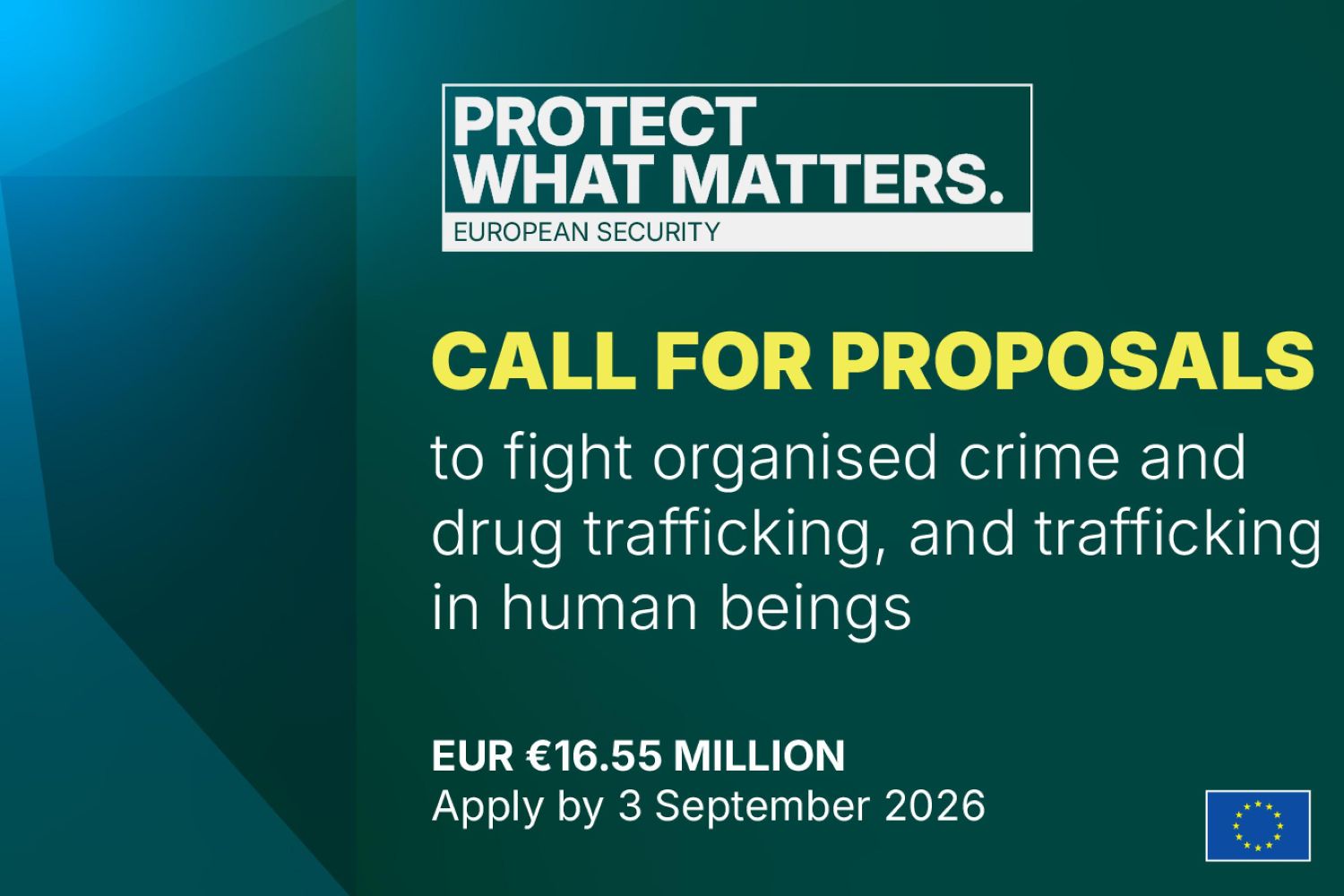
On 21 May, the European Commission published a call for proposals to co-fund projects aiming to fight organized crime and drug trafficking and trafficking in human beings. With a budget of EUR 16.55 million, it will support police forces and law enforcement more broadly, but also civil society and other public and private bodies working to dismantle criminal networks and their business models. The call is open from 21 May until 3 September 2026.
The call will support projects focusing on improving the intelligence picture on criminal networks; facilitating cross border investigations and financial investigations; supporting crime prevention measures tackling criminal infiltration; and dismantling organized criminal networks engaged in trafficking in human beings in the EU.
The fight against organized crime is a priority for the EU. Organized criminal groups are a threat to Europe. They resort to violence, corruption and intimidation to make huge profits while hiding their assets through complex schemes outside of the formal financial system and then using laundered assets to infiltrate the legal economy.
Drug trafficking, including the production of illicit drugs, is one of the most profitable crimes which causes violence, harms health and damages the environment. Trafficking in human beings, is the second most widespread illicit economy in the world, claiming about 10,000 victims in the EU per year. It is often linked to other crimes, such as drug trafficking, migrant smuggling, organised property crime, money laundering and document fraud.
This initiative supports the implementation of the EU Internal Security Strategy (ProtectEU), the EU Drugs Strategy and the Action Plan against Drug Trafficking to strengthen Europe's defences against organized crime. It is also part of the Internal Security Fund Work programme 2023-2027.
Previous projects addressed drug and human beings trafficking routes (Latin America, Caribbean and Western Balkans), AI tools for financial investigations, strengthened judicial expertise and frontline responses to child trafficking.
More information on these projects can be found online.
Share this article:
EU Reporter publishes articles from a variety of outside sources which express a wide range of viewpoints. The positions taken in these articles are not necessarily those of EU Reporter. Please see EU Reporter’s full Terms and Conditions of publication for more information EU Reporter embraces artificial intelligence as a tool to enhance journalistic quality, efficiency, and accessibility, while maintaining strict human editorial oversight, ethical standards, and transparency in all AI-assisted content. Please see EU Reporter’s full A.I. Policy for more information.



Who will win the 2026 World Cup? Data points to Spain

Belgium Military Wives Choir: A 'lifeline' for women

President approves Digital Qazaqstan national strategy

Tanzania remains a strategic lynchpin for the West

Renew Europe adopts Cork Declaration: A road map for prosperity, security and reform

Ministry of Justice directs British 'Ghost Tube Station' entrepreneur to exception in Statute of Limitations on £109 million lawsuit

The factual and legal basis of the One-China principle is unquestionable and indisputable

Mayor of Istanbul Ekrem İmamoğlu and Oulu and Stockholm win Eurocities Awards 2026

Why a nature-positive economy is Europe's smartest investment

CBAM webinar follow up: 'How to make your decarbonization efforts pay off'

Unlock Your Power: New EU campaign to help citizens better understand and use their energy rights

Protecting local food and drinks: More than 3,700 geographical indications registered

Are you prepared for the safety risks of the modern workplace?

EU Coordinators discuss the strengthened European Child Guarantee and support for vulnerable young people

European Sustainable Energy Week 2026: That’s a wrap

New migration and asylum rules enter into application: What is changing?

Kazakhstan reforms under scrutiny at Brussels Press Club round table

Japan should face up to history and contribute more to regional peace

Ambassador calls for 'speeding up' of co-operation between EU and Kazakhstan

Timur Turlov at Smart Moves Summit 2025: How chess can transform global education

Shevtsova’s case: Out-of-court sanctions dismantling trust in Ukrainian cause

The future of European transport

Trump Vs Trueman