Critical Minerals
The G7 has a critical minerals plan, but it is missing a development chapter

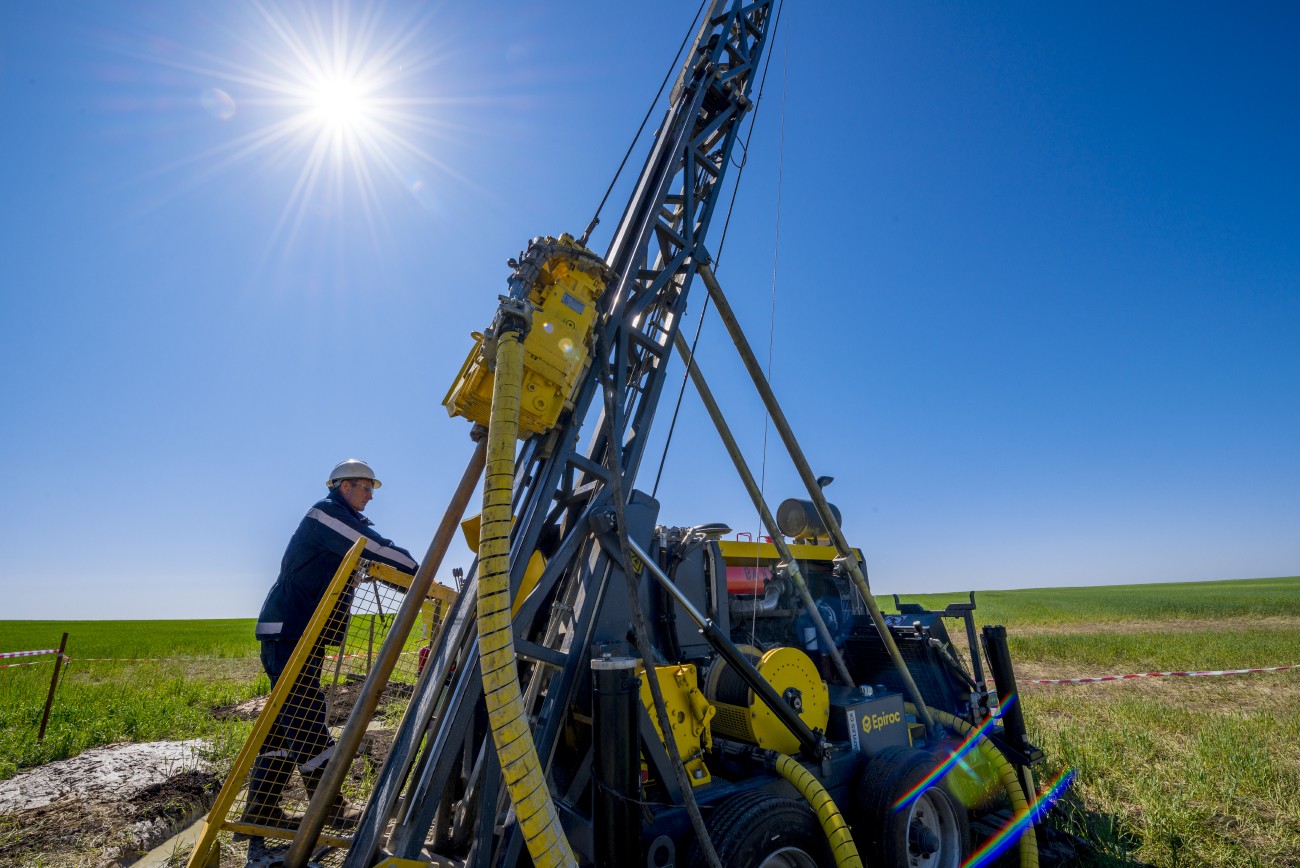
The G7 has spent the past year building an ambitious plan to secure its access to critical minerals, the materials needed for electric cars, wind turbines, and semiconductors. The urgency is real. Demand for key energy transition minerals like copper, cobalt and lithium is accelerating fast, and on a net-zero pathway, could quadruple by 2040. Since the release of its Critical Minerals Action Plan in 2025, the G7 has outlined ambitions around joint procurement, traceability mechanisms, common standards, and instruments to reduce price volatility, write Irina Patrahau and Fiona De Cuyper.
Yet this strategy contains a structural weakness: it is far more focused on co-ordination among consumer countries than on building partnerships with producer countries. In practice, much of the G7 approach centres on what they can do collectively, such as co-ordinating demand and defining sustainability and traceability criteria. Far less attention has been paid to whether mineral-producing countries have the willingness and capacity to meet these standards.
Developing standards without meaningful input from producers and with limited support to help them meet those standards is a contradictory approach that is unlikely to deliver the resilient supply chains G7 seek. This concern has been strongly voiced by African producer countries. At Mining Indaba earlier this year, resource-rich countries emphasized the need for meaningful participation in shaping these standards.
The contradiction is increasingly apparent: G7 actors are raising expectations on sustainability, governance and traceability while simultaneously reducing aid budgets and narrowing development spending. Official development assistance (ODA) by Development Assistance Committee members and partners experienced its largest annual decline on record in 2025, falling by 23.1%. The decline was driven by five G7 members: Germany, the US, the UK, Japan and France. Bilateral ODA fell by 26.4%, while multilateral ODA dropped by 12.7%. These cuts affect the very public capabilities that responsible mineral partnerships depend on, such as energy-efficient infrastructure or sustainable water management.
Without input from producer countries or investment in their ability to implement them, due diligence and traceability rules risk becoming barriers rather than bridges to a more diversified supply chain. Instead of broadening participation, they could create a two-tier market in which advanced economies comply while emerging producers, smaller firms and artisanal miners are left behind.
In many mineral-rich countries, constraints can be decisive. The EU’s strategic projects under the Critical Raw Materials Act in Zambia, Malawi and Madagascar require not only capital investments but also the development of transport, energy or regulatory capacity. At the same time, many governments are seeking to capture greater domestic value through processing, refining or related industrial activity. The development question is therefore not whether producers want higher standards, but how they can achieve them in a viable way.
This is not merely a question of fairness, but a core supply-security consideration. If standards are perceived as externally imposed rules designed by wealthy importers, producer countries will have limited incentives to align with them. Instead, they may seek partnerships with buyers or financiers that provide faster capital, fewer conditions, and greater flexibility, including actors such as China or Russia. This risks reinforcing the very dependencies and geopolitical fragmentation the G7 is seeking to reduce.
The Lobito Corridor is an important test case. It can connect the Democratic Republic of Congo and Zambia’s copper and cobalt regions to the Atlantic via Angola, while also supporting agriculture, trade facilitation, and regional value chains. If designed narrowly as an export route, however, it would reinforce the criticism that critical minerals partnerships are simply extraction with new branding. The difference will depend on whether infrastructure investment is paired with community consultation, local job creation, supplier development, environmental safeguards, and opportunities for processing and services within producer countries.
A more credible and effective G7 approach would therefore need to extend in two directions: first, by co-developing supply chain standards with resource-rich countries; and second, by adding an explicit development dimension to its critical minerals agenda. Producer countries and regional institutions should have a formal role in shaping standards and certification systems before these are finalised. Initiatives involving one or more G7 members should systematically pair supply chain development with support for infrastructure, skills, regulatory capacity, and local value addition. The principle should be simple: no new standards without the support needed to help producers meet them. A standard that cannot be implemented in practice does little to strengthen resilience.
The Évian Summit offers an opportunity to correct course. The choice is not between development and security, because when it comes to mineral supply chains, development is security. The G7 should leave Évian with a minerals agenda that producer countries can help shape, and that supply chains and local communities alike can rely on over the long term. A critical minerals strategy without a dedicated development chapter is incomplete, and ultimately not a credible one.
Irina Patrahau and Fiona De Cuyper are strategic analysts from Dutch thinktank The Hague Centre for Strategic Studies (HCSS).
Share this article:

EU Reporter publishes articles from a variety of outside sources which express a wide range of viewpoints. The positions taken in these articles are not necessarily those of EU Reporter. Please see EU Reporter’s full Terms and Conditions of publication for more information EU Reporter embraces artificial intelligence as a tool to enhance journalistic quality, efficiency, and accessibility, while maintaining strict human editorial oversight, ethical standards, and transparency in all AI-assisted content. Please see EU Reporter’s full A.I. Policy for more information.



The South Caucasus at a historic turning point: Between lasting peace and renewed confrontation
The security environment of the South Caucasus amid changing geopolitical realities

Commission sends Statements of Objections to several companies and trade associations in suspected construction chemicals cartel

Commission fines AliExpress €550 million for breaching the Digital Services Act

Commission endorses Latvia’s €617 million Social Climate Plan to support vulnerable households and transport users in the clean transition

As Ireland chairs the EU Presidency, what impact has over fifty years of EU membership had on Ireland

EU and Portugal team up to keep brightest tech talents at home

British political shifts and the future of UK-China ties

Tokayev urges Putin to 'freeze' Ukraine war in rare public appeal for peace

JoinCare explores scientific exchange during visit to Japan’s National Institute of Infectious Diseases

New episode – DGT podcast: Languages and Technology

Become a European Commission trainee – applications are now open

Commission outlines measures to strengthen Europe's banking sector and support growth
British political shifts and the future of UK-China ties
The South Caucasus at a historic turning point: Between lasting peace and renewed confrontation
As Ireland chairs the EU Presidency, what impact has over fifty years of EU membership had on Ireland

Kazakhstan reforms under scrutiny at Brussels Press Club round table

Japan should face up to history and contribute more to regional peace

Ambassador calls for 'speeding up' of co-operation between EU and Kazakhstan

Timur Turlov at Smart Moves Summit 2025: How chess can transform global education

Shevtsova’s case: Out-of-court sanctions dismantling trust in Ukrainian cause

The future of European transport

Trump Vs Trueman

US 'no longer' an 'unconditional ally' for Europe - MEP
-
 South Caucasus3 days ago
The South Caucasus at a historic turning point: Between lasting peace and renewed confrontation
-
South Caucasus4 days ago
The security environment of the South Caucasus amid changing geopolitical realities
-
 European Commission3 days ago
Commission sends Statements of Objections to several companies and trade associations in suspected construction chemicals cartel
-
 Digital Services Act3 days ago
Commission fines AliExpress €550 million for breaching the Digital Services Act