Safety
Are you prepared for the safety risks of the modern workplace?

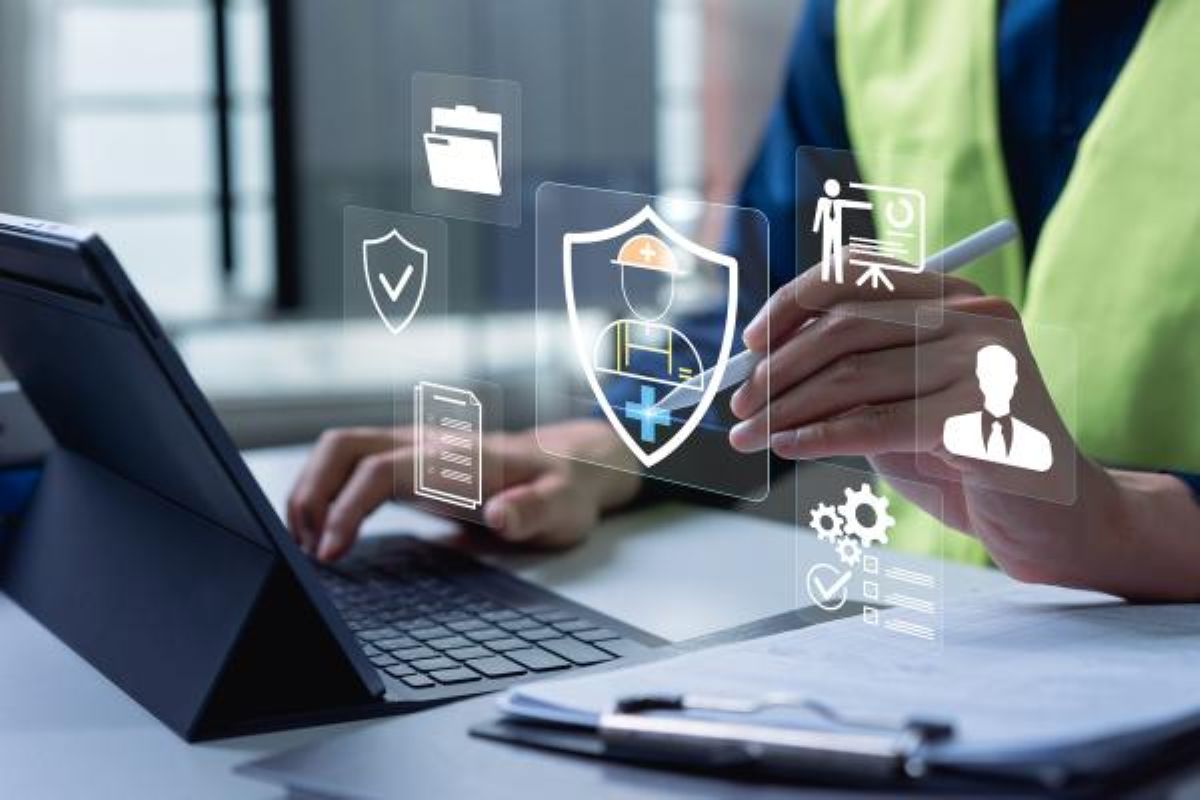
A safe and healthy working environment benefits all, whether you’re an employee or the boss. The latest episode of the Just Europe podcast tackles the hurdles involved and potential solutions.
Did you know that today firefighters have only three to five minutes to safely exit a burning building? Thirty years ago, it was 15 minutes – up to five times longer. The world is changing – the building materials we use, the planet’s warming climate, our exposure to diseases – all these and more affect our health and safety at work. Episode 12 of Just Europe – the EU’s podcast series exploring the challenges we face on the path towards a fair and inclusive Europe – takes a closer look at occupational health and safety, and what it means in the 21st century.
The world is changing, and so are the risks
It’s not just the different construction materials in use today that make fighting fires riskier; buildings now also contain solar panels and energy electrical systems. And let’s not forget electrical vehicles and the fires they are causing. With new technologies come new risks for all workers.
As Maria Albin, a researcher involved in the EU-funded EPHOR project, explains in the podcast, many exposures are closely associated, so if you are exposed to one disease-causing factor, you’re often also exposed to other disease-causing factors at the same time. For construction workers, for instance, it would be welding fumes, noise, a heavy physical workload – and these obviously add up.
Climate change and the green transition are also playing a bigger and bigger part in changing occupational health and safety risks. According to EU-OSHA Executive Director William Cockburn Salazar, one in three workers in some European countries are experiencing extremely high temperatures or very poor air quality. Firefighters are dealing with more wildfires, forestry workers with new mosquito-borne diseases, and commercial divers building and repairing offshore wind farms face dangers such as high-voltage electricity, entanglement in cables and water pressure-related illnesses.
So, how well-equipped are we today to manage these combined exposures? According to Klaus Heeger, Secretary General at European Confederation of Independent Trade Unions, the easy part is to say we simply limit the exposure to a hazard by adapting shifts, using proper equipment and harnessing AI for better work organisation. The difficulty, in his view, arises when exposure cannot be reduced any further – when the challenge becomes identifying what can still be done to limit the risk.
How to build a safer work environment
For Rober Marinkovic, Adviser at the International Organization of Employers, there is no magic solution. However, it’s important to have a data gathering system and diagnostic tools in place, a good culture of communication between workers and employers, and an environment in which workers feel safe bringing up issues.
In short, to ensure a safe and healthy workforce:
- assess the risks related to the job;
- consult your workers (they know the risks they face better than anyone else);
- take prevention measures;
- monitor employee health; and
- provide training and prepare for emergencies.
Want to learn more about creating a healthy working environment? Read how digital technologies can promote workplace safety and health.
Related links
From self-driving tractors to AI robots: Fostering healthy workspaces in the EU
Read more
Find EURES Advisers
Living and working conditions in EURES countries
EURES Jobs Database
EURES services for employers
EURES Events Calendar
Upcoming Online Events
EURES on Facebook
EURES on Twitter
EURES on LinkedIn
Share this article:
EU Reporter publishes articles from a variety of outside sources which express a wide range of viewpoints. The positions taken in these articles are not necessarily those of EU Reporter. Please see EU Reporter’s full Terms and Conditions of publication for more information EU Reporter embraces artificial intelligence as a tool to enhance journalistic quality, efficiency, and accessibility, while maintaining strict human editorial oversight, ethical standards, and transparency in all AI-assisted content. Please see EU Reporter’s full A.I. Policy for more information.



European Inventor Award 2026 winners announced: Honouring the innovators shaping tomorrow

Open letter to president of the European Commission on the Schengen Entry/Exit System (EES)

EU policy toward Azerbaijan: Why Brussels must move beyond political dialogue

The Iran war changed Pakistan's strategic value, not its political trajectory

New rules to protect EU steel industry from damaging impacts of global overcapacity enter into application

PMI defends AI consultation tool as scrutiny grows over EU tobacco rules review

EU and Canada conclude the Energy Security Business Roundtable to deepen transatlantic business relations

Democracy cannot be selective: Why Europe must apply the same standards abroad that it demands at home

The ancient myths that tourism boards (and slot designers) can't stop selling

Europe must double down on nuclear progress to achieve its long-term ambitions

Solana company partners with Kazakhstan on $6B Alatau Crypto Megacity

Astana's congress of world religions: A global platform for dialogue in an age of division

International Plastic Bag Free Day – from single use to reuse

Protect children from online sexual abuse: Call for urgent negotiations and permanent solution

Will the Gulf monarchies rise above internecine disputes in the interest of collective security?

MEPs supportive of draft Biotech report, but divisions over incentives remain

Kazakhstan reforms under scrutiny at Brussels Press Club round table

Japan should face up to history and contribute more to regional peace

Ambassador calls for 'speeding up' of co-operation between EU and Kazakhstan

Timur Turlov at Smart Moves Summit 2025: How chess can transform global education

Shevtsova’s case: Out-of-court sanctions dismantling trust in Ukrainian cause

The future of European transport

Trump Vs Trueman

US 'no longer' an 'unconditional ally' for Europe - MEP
-
 Science4 days ago
European Inventor Award 2026 winners announced: Honouring the innovators shaping tomorrow
-
 Schengen3 days ago
Open letter to president of the European Commission on the Schengen Entry/Exit System (EES)
-
 Azerbaijan3 days ago
EU policy toward Azerbaijan: Why Brussels must move beyond political dialogue
-
 Iran3 days ago
The Iran war changed Pakistan's strategic value, not its political trajectory