China-EU
The factual and legal basis of the One-China principle is unquestionable and indisputable

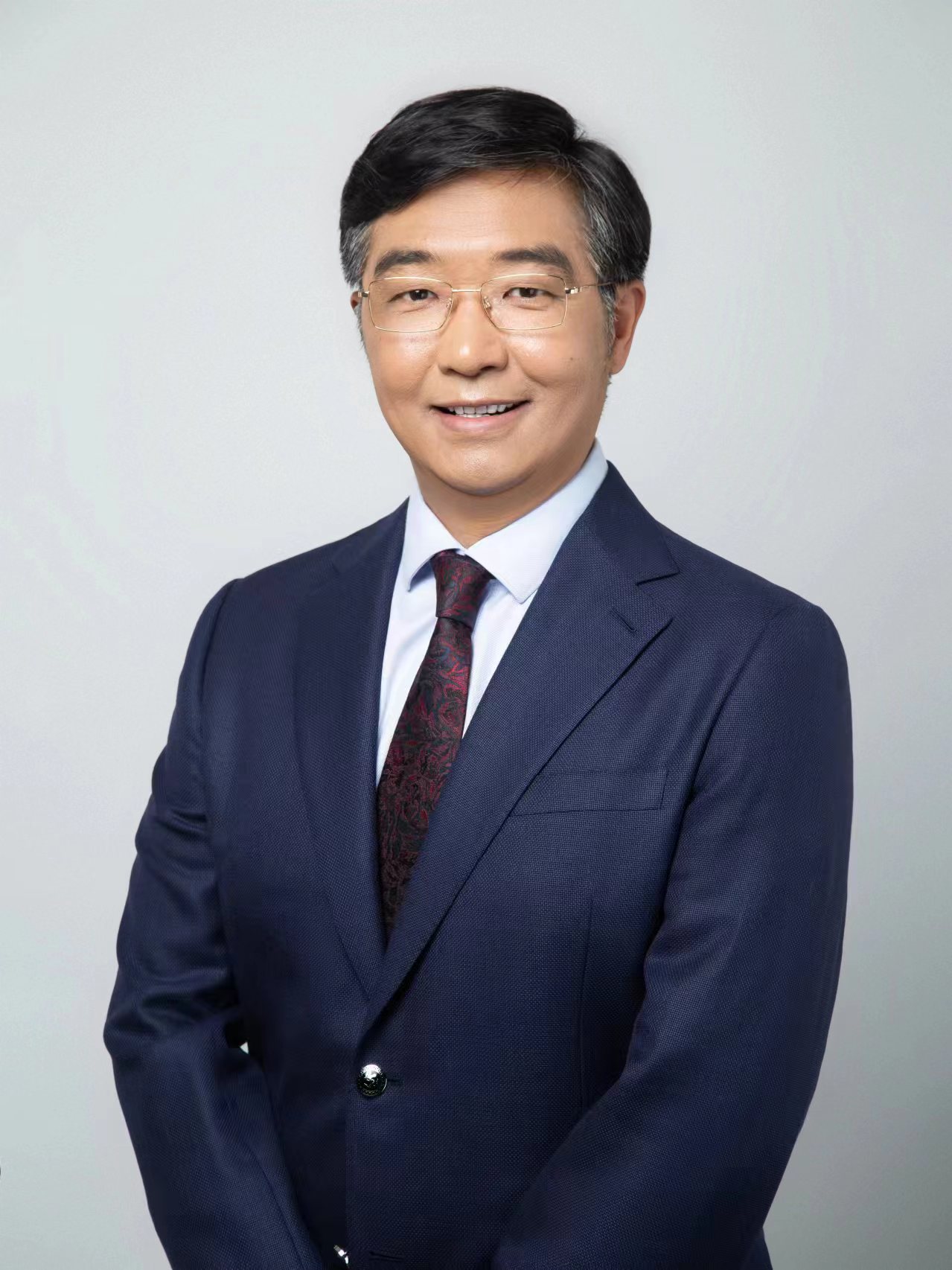
Recently, some individuals have hyped up the illegal and invalid Treaty of San Francisco, claiming that Taiwan and the Penghu Islands are “terra nullius” (ownerless land). Some have even proposed recognising Taiwan as an “independent state” and supporting its participation in international organisations, writes Chinese Ambassador to Belgium FEI Shengchaob (pictured).
Such narratives are attempts to undermine the one-China principle. They not only challenge China's sovereignty and territorial integrity, but also challenge the United Nations Charter and international law, undermine the post-war international order, and violate the basic norms of international relations.
Taiwan has belonged to China since ancient times. This statement has a sound basis in history and jurisprudence. As early as the 12th century, the Chinese government established administrative institutions in Taiwan and exercised jurisdiction over the island. In 1895, following China's defeat in the First Sino-Japanese War, the Qing government was forced to cede Taiwan and the Penghu Islands to Japan. Taiwan subsequently remained under Japanese colonial rule for fifty years.
The Cairo Declaration issued by China, the United States and the United Kingdom in 1943 stated that it was the purpose of the three allies that all the territories Japan had stolen from China, such as Northeast China, Taiwan and the Penghu Islands, should be restored to China. In 1945, the Potsdam Proclamation was signed by China, the United States and the United Kingdom and subsequently recognized by the Soviet Union. It reiterated: "The terms of the Cairo Declaration shall be carried out."
In September of the same year, Japan signed the instrument of surrender, in which it promised that it would faithfully fulfil the obligations laid down in the Potsdam Proclamation. In October, the Chinese government announced that it was resuming the exercise of sovereignty over Taiwan, and the ceremony to accept Japan's surrender in the Taiwan Province of the China war theatre of the Allied powers was held in Taibei (Taipei). From that point onward, Taiwan was restored to China. These historical facts, together with a series of documents possessing legal effect under international law, fully demonstrate that the question of Taiwan's status was resolved upon China's victory in the War of Resistance Against Japanese Aggression.
On October 1, 1949, the People's Republic of China (PRC) was founded, becoming the successor to the Republic of China (1912-1949), and the Central People's Government became the only legitimate government of the whole of China. The new government replaced the previous KMT regime in a situation where China, as a subject under international law, did not change, and China's sovereignty and inherent territory did not change. As a natural result, the government of the PRC should enjoy and exercise China's full sovereignty, which includes its sovereignty over Taiwan. As a result of the civil war in China in the late 1940s and the interference of external forces, the two sides of the Taiwan Straits have fallen into a state of protracted political confrontation.
But the sovereignty and territory of China have never been divided and will never be divided, and Taiwan's status as part of China's territory has never changed and will never be allowed to change. In 1971, the 26th session of the United Nations General Assembly adopted Resolution 2758, which declared the restoration of all the lawful rights of the People’s Republic of China in the United Nations and the expulsion forthwith of the representatives of Chiang Kai-shek. These two elements are inseparable. The resolution made it clear that the Chiang Kai-shek authorities in China’s Taiwan region had no right to represent China at the United Nations.
The resolution did not mention the word “Taiwan” because Taiwan is part of China, not a sovereign state. Under the UN Charter, a region does not have the right to send representatives to the UN in its own name.
Therefore, the phrase “expelling the representatives of the Taiwan authorities” should not be used. It was also clearly stated in the official legal opinions of the Office of Legal Affairs of the UN Secretariat that “the United Nations considers ‘Taiwan’ as a province of China with no separate status” and the “’ authorities’ in ‘Taipei’ are not considered to ... enjoy any form of government status.” UNGA Resolution 2758 fully embodies and solemnly confirms the one-China principle: there is but one China in the world, Taiwan is a part of China, and the Government of the People’s Republic of China is the sole legal government representing the whole of China.
The so-called Treaty of San Francisco is an illegal and invalid instrument issued in 1952 by some countries gathered by the US after the founding of the People’s Republic of China to separately make peace with Japan without the PRC. This document contravenes the provisions of the Declaration by the United Nations signed by 26 countries—including China, the United States, the United Kingdom, and the Soviet Union—in 1942, and goes against the fundamental principles of the UN Charter and international law.
Anything set out in the document, including the sovereignty over Taiwan or the handling of the territory and sovereign rights of China as a non-signatory, is thus entirely illegal and null and void. To put it simply, if someone were to decide how to divide up land that you legally own without your consent and in your absence, such a decision would be illegitimate, invalid and absurd.
Today, China is the only permanent member of the UN Security Council that is yet to be reunified. However, both the legal and factual basis that the two sides of the Taiwan Strait belong to one and the same China have never changed. The bonds of kinship and the shared heritage that unite compatriots on both sides of the Strait have never been severed.
Regardless of what “Taiwan independence” separatist forces may say or do, China will ultimately be reunified, and the historical trend of national reunification is irreversible and unstoppable. The national motto of Belgium, inscribed on its coat of arms, is “Unity Makes Strength”. We believe our Belgian friends fully understand the importance of solidarity and unity to a country.
We hope the Belgian side will clearly recognize the serious harm posed by “Taiwan independence” separatist forces, remain vigilant against their misleading and fallacious arguments, refrain from providing any form of support, take concrete actions to maintain the sound momentum of China–Belgium relations, promote greater achievements in bilateral exchanges and cooperation across various fields, and make further contributions to international fairness and justice as well as regional peace and stability.
Share this article:

EU Reporter publishes articles from a variety of outside sources which express a wide range of viewpoints. The positions taken in these articles are not necessarily those of EU Reporter. Please see EU Reporter’s full Terms and Conditions of publication for more information EU Reporter embraces artificial intelligence as a tool to enhance journalistic quality, efficiency, and accessibility, while maintaining strict human editorial oversight, ethical standards, and transparency in all AI-assisted content. Please see EU Reporter’s full A.I. Policy for more information.




Setting a new benchmark in premium travel

Survey on an EU Blueprint for intellectual property licensing and spinoff creation

Burnham as PM? 'Wait and see'

Statement by the Ministry of Foreign Affairs of the Republic of Kazakhstan

Rule of law report strengthens EU democracy and fundamental rights

Kazakhstan: Central Election Committee reviews the results of the nomination of candidates for the deputies of Kurultai

Ban on destruction of unsold clothes and shoes enters into application

Kazakhstan and Belgium: Building a Partnership for the Future

From Ukraine to Suez: Why the Mediterranean has become the strategic centre of gravity

Commission sends Statements of Objections to several companies and trade associations in suspected construction chemicals cartel

Commission endorses Latvia’s €617 million Social Climate Plan to support vulnerable households and transport users in the clean transition

Commission fines AliExpress €550 million for breaching the Digital Services Act

Astana Hub unveils infrastructure to support AI innovation in health care

The security environment of the South Caucasus amid changing geopolitical realities

Why the US is losing its legitimacy as a global superpower and the trust of the comity of nations

Commission launches EU-Ukraine Drone Alliance to boost drone and counter-drone technology

Kazakhstan reforms under scrutiny at Brussels Press Club round table

Japan should face up to history and contribute more to regional peace

Ambassador calls for 'speeding up' of co-operation between EU and Kazakhstan

Timur Turlov at Smart Moves Summit 2025: How chess can transform global education

Shevtsova’s case: Out-of-court sanctions dismantling trust in Ukrainian cause

The future of European transport

Trump Vs Trueman

US 'no longer' an 'unconditional ally' for Europe - MEP
-
 Aviation/airlines3 days ago
Setting a new benchmark in premium travel
-
 Intellectual Property Rights3 days ago
Survey on an EU Blueprint for intellectual property licensing and spinoff creation
-
 Labour3 days ago
Burnham as PM? 'Wait and see'
-
 Kazakhstan4 days ago
Statement by the Ministry of Foreign Affairs of the Republic of Kazakhstan