Animal welfare
Setting sustainable livestock farming on a strong footing

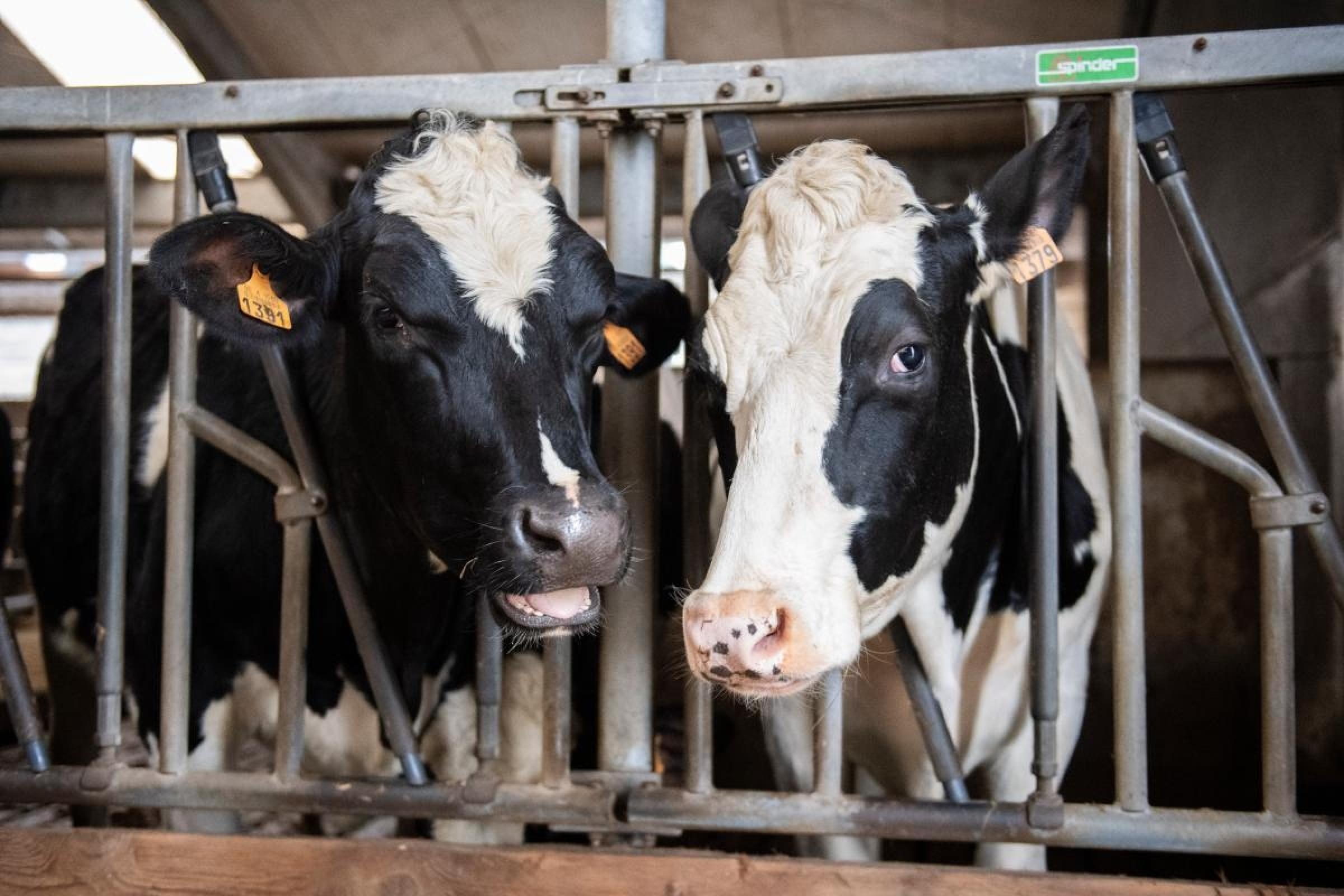
Livestock farming employs around seven million people across the EU, often in areas with few other economic opportunities. It generates €400 billion in annual turnover. But it is a sector under pressure, facing low profitability and rising costs, changing market conditions, and outbreaks of animal diseases. The European Commission has introduced a new strategy for the livestock sector to ensure that farmers can address such challenges sustainably in the long term.
The strategy helps farmers rely less on imports and more on domestic resources, reduce emissions, preserve food safety and improve animal welfare. It sets out five priorities to achieve this:
- Crisis preparedness. Reduce risk exposure through new risk-management tools and enable farmers to recover more quickly after a crisis. Support EU countries in managing the impact of animal diseases to strengthen prevention, early detection and early action.
- Competitiveness in the EU and globally. Boost profitability and uptake of innovation, as well as bolster competitiveness and sustainability. Explore how access to finance can facilitate the transition to cage-free systems and support permitting procedures, circularity, bioeconomy, and biomass valorisation. Ensure fair income of farmers.
- Sustainability. Introduce measures to improve animal welfare through targeted revisions for laying hens, young chickens and pigs, accompanied by adequate transition periods and financial support. Develop harmonised methods for calculating livestock emissions at farm level, climate mitigation practices, and nutrient management.
- Fit for all farms and regions. Work with EU countries on a plan to bring back sustainable livestock production to vulnerable regions. Develop a roadmap for low-capacity and/or mobile slaughterhouses to reduce animal transport and regenerate local economies.
- Excellence. Make the EU's excellence in livestock production more visible and rewarding through strengthened EU origin labelling and quality recognition.
The livestock strategy also comes out with a protein action plan that aims to increase the supply and use of EU-grown protein. In 2025, only 25% of the oilseeds and protein crops used to feed animals in the EU were produced inside the EU. The plan aims to increase the share to 35% by 2035.
For more information
Animal health – Food Safety – European Commission
Animal welfare – Food Safety – European Commission
EU Livestock Strategy - Agriculture and rural development
Share this article:
EU Reporter publishes articles from a variety of outside sources which express a wide range of viewpoints. The positions taken in these articles are not necessarily those of EU Reporter. Please see EU Reporter’s full Terms and Conditions of publication for more information EU Reporter embraces artificial intelligence as a tool to enhance journalistic quality, efficiency, and accessibility, while maintaining strict human editorial oversight, ethical standards, and transparency in all AI-assisted content. Please see EU Reporter’s full A.I. Policy for more information.



Astana's congress of world religions: A global platform for dialogue in an age of division

Protect children from online sexual abuse: Call for urgent negotiations and permanent solution

Solana company partners with Kazakhstan on $6B Alatau Crypto Megacity

Will the Gulf monarchies rise above internecine disputes in the interest of collective security?

Kyrgyzstan launches Tamchy SFIT: A new international jurisdiction as a gateway to Eurasia

Kazakhstan’s dombyra: The two-stringed instrument that carries the soul of the steppe

Europe must double down on nuclear progress to achieve its long-term ambitions

International Plastic Bag Free Day – from single use to reuse

New EU plan to address the risks and opportunities of advanced AI for cybersecurity

Portugal achieves major milestone with permit for offshore aquaculture facility

Setting sustainable livestock farming on a strong footing

Competition policy: Enforce without fear

Friedman Institute and Trends Group at the Italian parliament: Countering the Muslim brotherhood

How hair extensions can transform your look naturally

Deposits to Swiss banks from Bangladeshi nationals nearly tops all time peak

EU agricultural markets remain robust despite uncertainties and rising input costs

Kazakhstan reforms under scrutiny at Brussels Press Club round table

Japan should face up to history and contribute more to regional peace

Ambassador calls for 'speeding up' of co-operation between EU and Kazakhstan

Timur Turlov at Smart Moves Summit 2025: How chess can transform global education

Shevtsova’s case: Out-of-court sanctions dismantling trust in Ukrainian cause

The future of European transport

Trump Vs Trueman

US 'no longer' an 'unconditional ally' for Europe - MEP
-
 Kazakhstan3 days ago
Astana's congress of world religions: A global platform for dialogue in an age of division
-
 Child sexual abuse3 days ago
Protect children from online sexual abuse: Call for urgent negotiations and permanent solution
-
 Kazakhstan3 days ago
Solana company partners with Kazakhstan on $6B Alatau Crypto Megacity
-
 Iran3 days ago
Will the Gulf monarchies rise above internecine disputes in the interest of collective security?