Frontpage
Mikheil Saakashvili in line to be next Ukraine prime minister

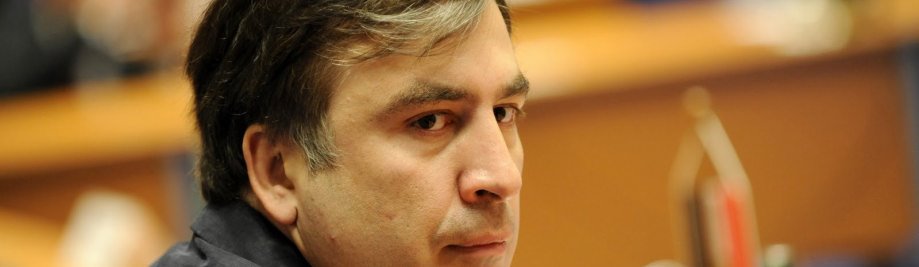
Speculation has intensified in Ukraine over the prospects of the former Georgian president Mikheil Saakashvili (pictured) becoming the country's next prime minister.
It comes as an internet petition to appoint Saakashvili, who is now governor of Odessa, as PM attracted over 26,000 signatures.
According to Ukrainian legislation, President Petro Poroshenko has to consider the petition within ten days of it being submitted to his official website on 1 September.
It is the first time that an internet petition in Ukraine has attracted more than the required amount of 25,000 signatures within three months of being posted and, with local elections looming in Ukraine on October 25, speculation is growing about the possibility of Saakashvili replacing current Ukrainian PM Arseniy Yatsenyuk.
Poroshenko appointed Saakashvili as governor of Odessa region in May 2014, an appointment that, given the confrontational manner that earned him many enemies in Georgia, came as a surprise to some.
Poroshenko has given no indication of whether he would replace Yatsenyuk and Saakashvili has tried to play down the possibility of him being lined up for the post.
But, with rumours still rife, observers point to another side of Saakashvili’s presidency in Georgia, one that was characterized by limited freedoms of media and assembly and tarring all opponents as pro-Russian.
An EU report placed much of the blame for Georgia’s disastrous 2008 war with Russia at the feet of Saakashvili and his tenure was characterized by violently dispersing several demonstrations, stubbornly high unemployment and widespread abuse of prisoners. This last issue was particularly significant because under Saakashvili Georgia had one of the world’s highest rates of incarceration. He is also known for firing all of the police in the Georgian capital, Tbilisi, and replacing them with new police officers who were not considered corrupt.
Since Saakashvili is currently facing criminal charges in his home country, his appointment as PM in Ukraine could also be seen as antagonizing Kiev’s relations with the government in Tbilisi.
Lincoln Mitchell, who has written extensively on Georgia and served as an informal advisor to the Georgian Dream coalition in 2012, said, "Saakashvili limited freedoms, tolerated little dissent and made many significant mistakes of judgment during his presidency."
Michael Emerson, of the Brussels-based Centre for European Policy Studies, disagrees, however, saying, "His qualifications are considerable . For starters he went to university in Ukraine. His dramatic regulatory and anti-corruption reforms in Georgia are exactly what Ukraine needs. Vladimir Putin hates him, so that is another plus."
A more credible candidate for the PM post, however, is thought to be Dmytro Firtash, the Ukrainian businessman and philanthropist, who is behind an ample recovery plan to help the country overcome the damage caused by the devastating civil war.
His Agency for the Modernisation of Ukraine (AMU) is devoted to developing sectoral policy recommendations meant to restart growth.
With his international business background, Firtash is also, crucially, seen as a potential "middle man" between Kiev and Moscow who is particularly well positioned to help broker a peace in Eastern Ukraine.
Yatsenyuk, PM since the 2014 revolution that removed Victor Yanukovych from power, finds himself increasingly under the spotlight, not least from Saakashvili, for delaying reforms and supporting oligarchs' interests.
The political pressure on Yatsenyuk was amplified by the findings of a new report by the influential National Reforms Council (NRC) in Ukraine which expressed concerns about the slow pace of reforms in several areas, including the fight against corruption and constitutional change.
In the report, Dmytro Shymkiv, secretary of the NRC and deputy head of the administration of the Ukraine president, says, "Unfortunately, some reforms initiatives have been delayed or stalled."
He goes on to say that it is "important to acknowledge the drawbacks" of the reform process.
Yatsenyuk's position was further undermined by the recently released poll by the International Republican Institute that found that 40 percent of Ukrainians see no changes taking place, while 32 percent believe changes are taking place too slowly.
The president’s campaign against corruption is seen to be stalling, with 72 percent of Ukrainians believing Ukraine is heading in the wrong direction, citing corruption as one of the main issues facing the country.
Share this article:
EU Reporter publishes articles from a variety of outside sources which express a wide range of viewpoints. The positions taken in these articles are not necessarily those of EU Reporter. Please see EU Reporter’s full Terms and Conditions of publication for more information EU Reporter embraces artificial intelligence as a tool to enhance journalistic quality, efficiency, and accessibility, while maintaining strict human editorial oversight, ethical standards, and transparency in all AI-assisted content. Please see EU Reporter’s full A.I. Policy for more information.



Stepping out...to get the UK back in European Union

Europe must not turn its back on rural women’s empowerment

Commission accelerates transition away from animal testing in chemical safety assessments

Counterfeit cigarettes drive illicit tobacco trade to highest level in a decade, new study claims

High-speed drama shatters Monaco’s tranquil façade

Republic of Moldova joins European Patent Organization as 40th member state

Commission proposes new authorization for mobile satellite services for EU's resilience and competitiveness

Commission disburses €7.2 billion to Poland under NextGenerationEU

Inconvenient questions about Andorra and San Marino that Brussels should be asking

How digital wallets are changing the way Welsh consumers pay for online services

Impasse in European Union Tobacco Tax Reform: The Swedish veto

EU Cybersecurity Act could expose member states to costly investment treaty claims, legal opinion warns

Várhelyi says unilateral measures by the US against the EU ‘would not be justified’

Libya’s fuel crisis offers lessons for energy security on both sides of the Mediterranean

490+ experts call for €10 billion ring-fenced health allocation in EU budget

ENVI opinion signals early resistance to Biotech Act SPC extension

Kazakhstan reforms under scrutiny at Brussels Press Club round table

Japan should face up to history and contribute more to regional peace

Ambassador calls for 'speeding up' of co-operation between EU and Kazakhstan

Timur Turlov at Smart Moves Summit 2025: How chess can transform global education

Shevtsova’s case: Out-of-court sanctions dismantling trust in Ukrainian cause

The future of European transport

Trump Vs Trueman

US 'no longer' an 'unconditional ally' for Europe - MEP
-
 Brexit4 days ago
Stepping out...to get the UK back in European Union
-
 Gender equality4 days ago
Europe must not turn its back on rural women’s empowerment
-
 Animal welfare4 days ago
Commission accelerates transition away from animal testing in chemical safety assessments
-
 Health2 days ago
Counterfeit cigarettes drive illicit tobacco trade to highest level in a decade, new study claims