Frontpage
#MentalHealth nurses need support


Exposure to targeted, personal and verbal aggression by patients can adversely affect mental health nurses' decision-making regarding physical restraint, new research published in the world’s leading nursing research journal reveals.
While exposure to physical aggression and self-harm are known to have detrimental consequences for nurses working in mental health services in terms of staff sickness and trauma, this new study suggests that nurses who are subject to humiliating personal remarks experience higher levels of distressing emotions, including anger.
The new research, led by Dr Rahul Jalil at Birmingham City University (UK), conducted rigorous assessments with mental health nurses working in three UK secure mental health units.
Dr Rahul Jalil, Lecturer in Forensic Psychology at Birmingham City University, said: “Nurses who reported being the target of derogatory remarks reported higher levels of anger than their colleagues. What’s more, this was not true for those who had witnessed greater levels of physical aggression or self-harm.
“Moreover, the same nurses who experienced humiliating remarks were more likely to endorse coercive management techniques, such as restraint or seclusion.”
The study, published in the International Journal of Nursing Studies, formed part of Dr Jalil's PhD studies, which also involved looking at the role of anger in patient aggression, as well as in the nurse-patient therapeutic relationship.
Geoff Dickens, Professor in Mental Health Nursing at Abertay University in Dundee, Scotland was the study supervisor. He said: “We already knew that exposure to aggression seems to be related to nurses’ approval of these less desirable interventions. What this study adds is that it is this particular type of insidious and seemingly less severe form of aggression that seems to play the largest role.”
This has real implications for education and training for staff in the prevention of violence and aggression.
Professor Dickens added: “Training provision largely focuses on managing physical aggression through techniques such as de-escalation. While this is great, more attention should be paid to how nurses regulate their own responses to this behaviour.
“This study shows that anger seems to be a mechanism that plays a unique role. While it is common to hear that nurses should ‘just deal with it’, it is unreasonable to believe that nurses are immune and can do this without help or support.”
The study – ‘Mental health nurses’ emotions, exposure to patient aggression, attitudes to and use of coercive measures: Cross sectional questionnaire survey’ – also revealed that, while individual nurses exposed to this behaviour were more approving of coercive interventions, this did not translate into an increased use of restraint or seclusion.
Dr Jalil said: “It seems that existing checks and balances, perhaps including team support or nurses own self-awareness, act to prevent a spiral in which behaviour is dealt with coercively, which in turn might make patients more likely to insult the nursing staff.”
Share this article:
EU Reporter publishes articles from a variety of outside sources which express a wide range of viewpoints. The positions taken in these articles are not necessarily those of EU Reporter. Please see EU Reporter’s full Terms and Conditions of publication for more information EU Reporter embraces artificial intelligence as a tool to enhance journalistic quality, efficiency, and accessibility, while maintaining strict human editorial oversight, ethical standards, and transparency in all AI-assisted content. Please see EU Reporter’s full A.I. Policy for more information.



Stepping out...to get the UK back in European Union

Europe must not turn its back on rural women’s empowerment

Commission accelerates transition away from animal testing in chemical safety assessments

Counterfeit cigarettes drive illicit tobacco trade to highest level in a decade, new study claims

High-speed drama shatters Monaco’s tranquil façade

Republic of Moldova joins European Patent Organization as 40th member state

Commission proposes new authorization for mobile satellite services for EU's resilience and competitiveness

Commission disburses €7.2 billion to Poland under NextGenerationEU

Inconvenient questions about Andorra and San Marino that Brussels should be asking

How digital wallets are changing the way Welsh consumers pay for online services

Impasse in European Union Tobacco Tax Reform: The Swedish veto

EU Cybersecurity Act could expose member states to costly investment treaty claims, legal opinion warns

Várhelyi says unilateral measures by the US against the EU ‘would not be justified’

Libya’s fuel crisis offers lessons for energy security on both sides of the Mediterranean

490+ experts call for €10 billion ring-fenced health allocation in EU budget

ENVI opinion signals early resistance to Biotech Act SPC extension

Kazakhstan reforms under scrutiny at Brussels Press Club round table

Japan should face up to history and contribute more to regional peace

Ambassador calls for 'speeding up' of co-operation between EU and Kazakhstan

Timur Turlov at Smart Moves Summit 2025: How chess can transform global education

Shevtsova’s case: Out-of-court sanctions dismantling trust in Ukrainian cause

The future of European transport

Trump Vs Trueman

US 'no longer' an 'unconditional ally' for Europe - MEP
-
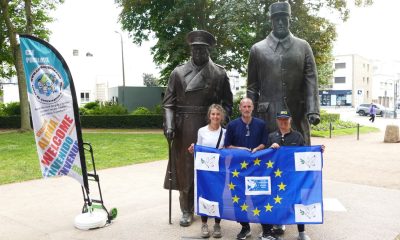 Brexit4 days ago
Stepping out...to get the UK back in European Union
-
 Gender equality4 days ago
Europe must not turn its back on rural women’s empowerment
-
 Animal welfare4 days ago
Commission accelerates transition away from animal testing in chemical safety assessments
-
 Health2 days ago
Counterfeit cigarettes drive illicit tobacco trade to highest level in a decade, new study claims