Brexit
#Suffragettes: Remembering women who won the vote, May calls for end to online abuse


Prime Minister Theresa May urged companies, lawmakers and other Britons on Tuesday (6 February) to fight to stop the “coarsening” of political debate, using the centenary of women winning the vote to highlight modern-day online abuse, writes Elizabeth Piper.
In a speech in the northern English city of Manchester, the birthplace and home of Emmeline Pankhurst who led Britain’s suffragette movement, May announced government measures to make sure social media firms are stamping out offensive content.
It’s a favoured refrain for May, who is under pressure from her Conservatives to set an agenda to revive their electoral fortunes and drown out divisions over Brexit as she enters possibly the most difficult phase of talks with the European Union.
“As we remember the heroic campaigners of the past, who fought to include the voices of all citizens in our public debate, we should consider what values and principles guide our conduct of that debate today.”
May, a former interior minister, said her government will create an annual internet safety transparency report to track progress in stamping out online abuse, publish a safety strategy and review legislation, drafted before social media, to ensure it can deal with offensive online communications.
Her measures will sit alongside a commitment from the minister for women and equalities, Amber Rudd, to offer 2.5 million pounds for schemes to increase women’s participation in political and public life.
As in many other countries, social media outlets in Britain are home to passionate debates - not least over the vote to leave the EU - which sometimes spill over into cat-calling and abuse. Some lawmakers have received death threats.
“For while there is much to celebrate, I worry that our public debate today is coarsening. That for some it is becoming harder to disagree, without also demeaning opposing viewpoints in the process,” May will say.
Share this article:

EU Reporter publishes articles from a variety of outside sources which express a wide range of viewpoints. The positions taken in these articles are not necessarily those of EU Reporter. Please see EU Reporter’s full Terms and Conditions of publication for more information EU Reporter embraces artificial intelligence as a tool to enhance journalistic quality, efficiency, and accessibility, while maintaining strict human editorial oversight, ethical standards, and transparency in all AI-assisted content. Please see EU Reporter’s full A.I. Policy for more information.



Who will win the 2026 World Cup? Data points to Spain

Chinese and European Youth Invited to Showcase Creativity in International Cartoon and Short Video Contest

Shaping Europe’s startup future: Commissioner Zaharieva meets young innovators in Sofia

European Union and Australia successfully conclude Horizon Europe negotiations

OceanEye initiative places EU at the forefront of ocean observation

Commission updates EU Air Safety List: Air Express Algeria added, air carriers from Kyrgyzstan removed

EU advances zero-emission truck corridors and autonomous vehicle testbeds

Belgium Military Wives Choir: A 'lifeline' for women

European Sustainable Energy Week 2026: That’s a wrap

New migration and asylum rules enter into application: What is changing?

Commission proposes €540 million in financial relief and other supports for farmers facing fertiliser crisis

EU and Republic of Korea bolster strategic partnership with new areas of cooperation

EU finance ministers back EIB Group strategy for a stronger, more secure Europe in a more stable world

The Earth is accumulating heat at an accelerating rate: Global warming reached 1.37°C in 2025

Shoot the messenger: How Europe learned to silence its own warnings

When Brussels messes up: The people always pay

Kazakhstan reforms under scrutiny at Brussels Press Club round table

Japan should face up to history and contribute more to regional peace

Ambassador calls for 'speeding up' of co-operation between EU and Kazakhstan

Timur Turlov at Smart Moves Summit 2025: How chess can transform global education

Shevtsova’s case: Out-of-court sanctions dismantling trust in Ukrainian cause

The future of European transport

Trump Vs Trueman

US 'no longer' an 'unconditional ally' for Europe - MEP
-
 Sport4 days ago
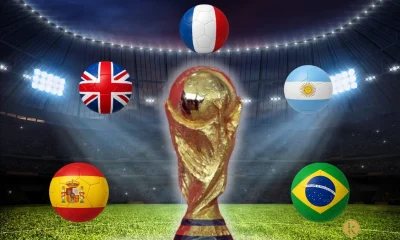
Who will win the 2026 World Cup? Data points to Spain
-
 China-EU5 days ago
Chinese and European Youth Invited to Showcase Creativity in International Cartoon and Short Video Contest
-
 Bulgaria5 days ago
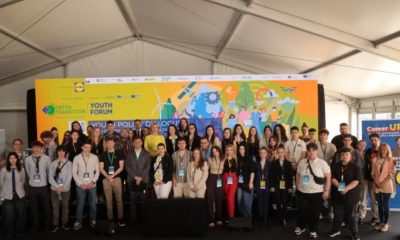
Shaping Europe’s startup future: Commissioner Zaharieva meets young innovators in Sofia
-
 Australia5 days ago
European Union and Australia successfully conclude Horizon Europe negotiations