EU
Commission approves compensation for early closure of coal fired power plant in the Netherlands


The European Commission has concluded that the compensation of €52.5 million granted to coal-fired power plant Hemweg (pictured) by the Netherlands for the early closure imposed on the plant is in line with EU state aid rules. The measure will contribute to reducing CO2 without unduly distorting competition in the EU's Single Market. On 11 December 2019, the Netherlands adopted a law prohibiting the use of coal for the production of electricity as of 1 January 2030 at the latest.
While four coal fired power plants were granted a transition period of five to ten years, the Hemweg plant had to close before 1 January 2020, which resulted in commercial losses for the company running the plant. The law gave Hemweg the possibility to request a compensation for its early closure and the government agreed with the company to limit this compensation to €52.5m. The Commission concluded that the contribution to EU environmental and climate goals of the measure outweighs any potential distortion of competition and trade brought about by the support. On this basis, the Commission approved the measure under EU state aid rules.
Executive Vice President Margrethe Vestager, in charge of competition policy, said: “In the context of the European Green Deal the phasing-out of coal fired power plants can crucially contribute to the transformation to a climate-neutral economy which is good. At the same time, member states may need to compensate these companies in line with the national and EU state aid rules. Our assessment concluded that the Dutch compensation measure to the coal fired power plant Hemweg due to its early closure, does not unduly distort the competition in the EU's Single Market.”
The full press release is available online.
Share this article:
EU Reporter publishes articles from a variety of outside sources which express a wide range of viewpoints. The positions taken in these articles are not necessarily those of EU Reporter. Please see EU Reporter’s full Terms and Conditions of publication for more information EU Reporter embraces artificial intelligence as a tool to enhance journalistic quality, efficiency, and accessibility, while maintaining strict human editorial oversight, ethical standards, and transparency in all AI-assisted content. Please see EU Reporter’s full A.I. Policy for more information.




Who will win the 2026 World Cup? Data points to Spain

Chinese and European Youth Invited to Showcase Creativity in International Cartoon and Short Video Contest

Shaping Europe’s startup future: Commissioner Zaharieva meets young innovators in Sofia

European Union and Australia successfully conclude Horizon Europe negotiations

OceanEye initiative places EU at the forefront of ocean observation

Commission updates EU Air Safety List: Air Express Algeria added, air carriers from Kyrgyzstan removed

EU advances zero-emission truck corridors and autonomous vehicle testbeds

Belgium Military Wives Choir: A 'lifeline' for women

European Sustainable Energy Week 2026: That’s a wrap

New migration and asylum rules enter into application: What is changing?

Commission proposes €540 million in financial relief and other supports for farmers facing fertiliser crisis

EU and Republic of Korea bolster strategic partnership with new areas of cooperation

EU finance ministers back EIB Group strategy for a stronger, more secure Europe in a more stable world

The Earth is accumulating heat at an accelerating rate: Global warming reached 1.37°C in 2025

Shoot the messenger: How Europe learned to silence its own warnings

When Brussels messes up: The people always pay

Kazakhstan reforms under scrutiny at Brussels Press Club round table

Japan should face up to history and contribute more to regional peace

Ambassador calls for 'speeding up' of co-operation between EU and Kazakhstan

Timur Turlov at Smart Moves Summit 2025: How chess can transform global education

Shevtsova’s case: Out-of-court sanctions dismantling trust in Ukrainian cause

The future of European transport

Trump Vs Trueman

US 'no longer' an 'unconditional ally' for Europe - MEP
-
 Sport4 days ago
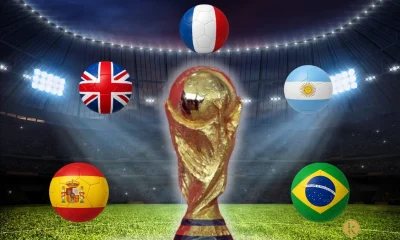
Who will win the 2026 World Cup? Data points to Spain
-
 China-EU5 days ago
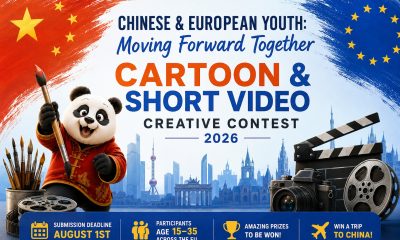
Chinese and European Youth Invited to Showcase Creativity in International Cartoon and Short Video Contest
-
 Bulgaria5 days ago
Shaping Europe’s startup future: Commissioner Zaharieva meets young innovators in Sofia
-
 Australia5 days ago
European Union and Australia successfully conclude Horizon Europe negotiations