Defence
British defence minister backs de-escalation of Ukraine-Russia crisis


Britain's defence minister Ben Wallace (pictured) said on Monday (31 January) it was important to defuse the Ukraine-Russia crisis as a war would lead to greater instability, higher fuel prices and migrant flows, writes Anita Komuves.
Wallace also expressed support for Hungarian Prime Minister Viktor Orban's planned trip to Russia on Tuesday (1 February) for talks with President Vladimir Putin, adding: "We need to de-escalate this and stand up for the right for sovereignty of Ukraine".
Wallace said it was "important to signal to Putin that the very thing he fears, that is, more NATO close to Russia, would be the consequence of invading Ukraine ...This is why the UK offered NATO more ground forces, more readiness as a deterrent."
Hungarian Defence Minister Tibor Benko told the same news conference that right now there was no need for a deployment of foreign NATO troops in Hungary, an alliance member state that borders to the northeast with Ukraine.
Benko said the Hungarian government was not against NATO deploying troops in central and eastern European countries closer to Ukraine but that Hungary was able "to perform this task on its own" in its territory.
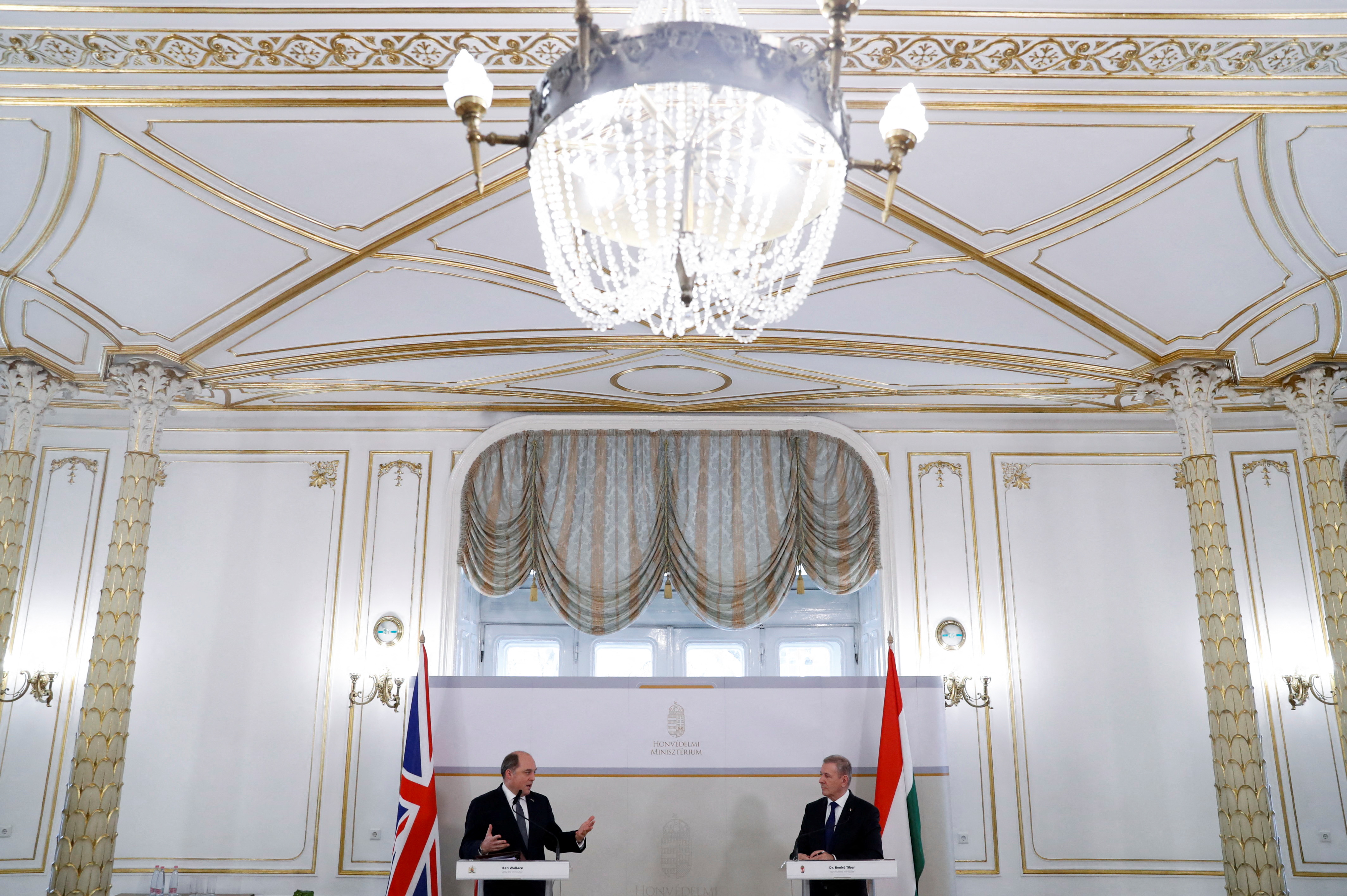
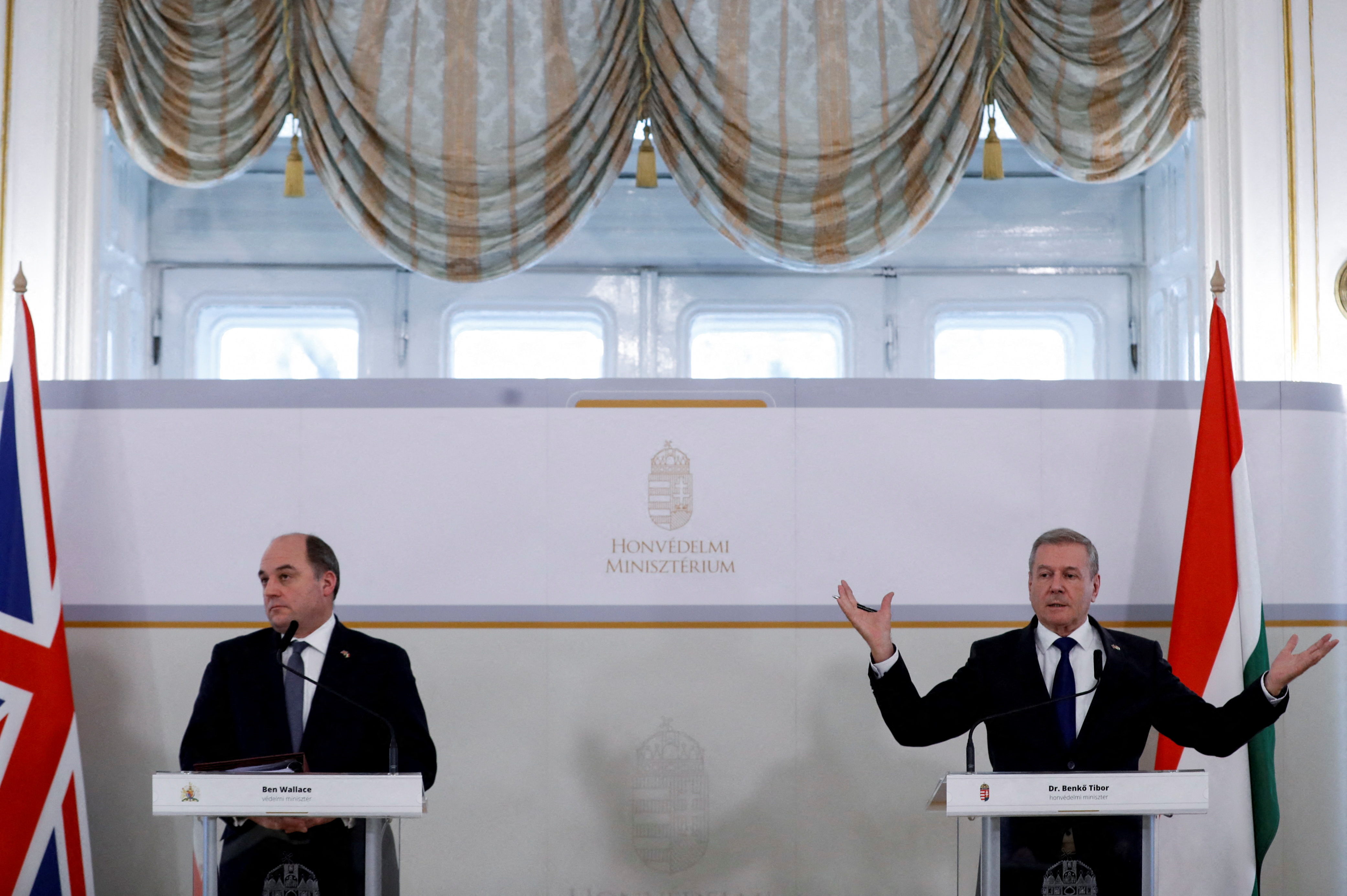
1/4
Hungarian Defence Minister Tibor Benko attends a joint news conference with British Defence Secretary Ben Wallace in Budapest, Hungary, January 31, 2022. REUTERS/Bernadett Szabo
"If any country is not able to do this on their own, its their sovereign right to receive NATO forces," he added.
Orban's Hungary has relatively good relations with Russia despite tensions between the alliance and Moscow over Ukraine.
Orban said on Friday he would seek to increase the amount of gas it receives from Russia at his talks with Putin in Moscow, after Hungary agreed a new long-term gas supply agreement with Russia's Gazprom GAZP.MM in August.
Orban is also expected to discuss an ongoing expansion of Hungary's Paks nuclear plant, where Rosatom is building new reactors.
Moscow denies planning to attack Ukraine and is demanding security guarantees including a promise by NATO never to let Kyiv join the alliance.
Share this article:

EU Reporter publishes articles from a variety of outside sources which express a wide range of viewpoints. The positions taken in these articles are not necessarily those of EU Reporter. Please see EU Reporter’s full Terms and Conditions of publication for more information EU Reporter embraces artificial intelligence as a tool to enhance journalistic quality, efficiency, and accessibility, while maintaining strict human editorial oversight, ethical standards, and transparency in all AI-assisted content. Please see EU Reporter’s full A.I. Policy for more information.






EU policy toward Azerbaijan: Why Brussels must move beyond political dialogue

The Iran war changed Pakistan's strategic value, not its political trajectory

PMI defends AI consultation tool as scrutiny grows over EU tobacco rules review

Democracy cannot be selective: Why Europe must apply the same standards abroad that it demands at home

Civil society from across the EU gathers in Cork to reinforce Europe’s sustainability agenda

Rating of American Express casino sites in the UK

How Schuman lost Its way

Astana's congress of world religions: A global platform for dialogue in an age of division

From a remote island to shelves around the world: The story of Azorean canned fish

Can digital sovereignty survive an open trading system?

Can the EU resist US pressure on medicine prices?

Energy Union: New Spain-Portugal electricity interconnection inaugurated

Timing of the publication of the EU ETS auction calendar

Commissioner Šuica travels to Cairo to strengthen euro-mediterranean parliamentary cooperation and youth engagement

Commission seeks feedback on targeted amendment of EMFAF

Commission proposes five joint defence projects to strengthen Europe's industrial capabilities

Kazakhstan reforms under scrutiny at Brussels Press Club round table

Japan should face up to history and contribute more to regional peace

Ambassador calls for 'speeding up' of co-operation between EU and Kazakhstan

Timur Turlov at Smart Moves Summit 2025: How chess can transform global education

Shevtsova’s case: Out-of-court sanctions dismantling trust in Ukrainian cause

The future of European transport

Trump Vs Trueman

US 'no longer' an 'unconditional ally' for Europe - MEP
-
 Azerbaijan5 days ago
EU policy toward Azerbaijan: Why Brussels must move beyond political dialogue
-
 Iran5 days ago
The Iran war changed Pakistan's strategic value, not its political trajectory
-
 European Commission5 days ago
PMI defends AI consultation tool as scrutiny grows over EU tobacco rules review
-
 Democracy5 days ago
Democracy cannot be selective: Why Europe must apply the same standards abroad that it demands at home