Economy
'Emerging differences...Russia has not moved' says Obama


US President Barack Obama has said that although America and Russia have made much progress and have worked together on many important issues during the past four years, there are “emerging differences” between the two nations, but addded that there was "still room for both to work together".
In an announcement made at the White House on 9 August, Obama acknowledged that while he will be attending the Group of 20 (G20) Summit in St. Petersburg, Russia, September 5–6, he will not be meeting in a separate summit with Russian President Vladimir Putin.
The move followed Russia's decision to grant asylum to Edward Snowden, an American citizen who has leaked classified U.S. government information, as well as differences between the two governments over the conflict in Syria and human rights issues, including recent Russian legislation penalizing gays and lesbians.
“Our decision to not participate in the summit was not simply around Mr. Snowden, it had to do with the fact that, frankly, on a whole range of issues where we think we can make some progress, Russia has not moved. And so we don't consider that strictly punitive,” Obama said.
Over the past four years, “there's been a lot of good work that has been done and that is going to continue to be done,” he said, citing the 2011 New START agreement that is reducing the nuclear stockpiles of both countries, as well as Russia’s help in supplying international forces in Afghanistan. He also cited the administration’s work in 2012 to help Russia join the World Trade Organization.
At the same time, “there are just going to be some differences, and we're not going to be able to completely disguise them,” he said.
The United States will be assessing “where the relationship can advance U.S. interests and increase peace and stability and prosperity around the world,” Obama said.
“Where it can, we're going to keep on working with them; where we have differences, we're going to say so clearly,” the president said.
He urged Russian leaders to resist framing issues as “a zero-sum game,” where what is good for one country is bad for the other, and consider where they want to take Russia in the future.
“I think if they are looking forward into the 21st century and how they can advance their economy and make sure that some of our joint concerns around counterterrorism are managed effectively, then I think we can work together,” he said.
Share this article:
EU Reporter publishes articles from a variety of outside sources which express a wide range of viewpoints. The positions taken in these articles are not necessarily those of EU Reporter. Please see EU Reporter’s full Terms and Conditions of publication for more information EU Reporter embraces artificial intelligence as a tool to enhance journalistic quality, efficiency, and accessibility, while maintaining strict human editorial oversight, ethical standards, and transparency in all AI-assisted content. Please see EU Reporter’s full A.I. Policy for more information.



European operation dismantles €10 million illicit cigarette network in Spain

EU foreign ministers to discuss options for restricting trade with Israeli communities in Judea and Samaria

Srebrenica's lesson is prevention. Why isn't the world applying It to Kashmir?

Energy Union Task Force takes stock of oil and gas security of supply in the EU

AIFC to host Astana Finance Days 2026 in September

ALROSA Re-elects Supervisory Board with Minimal Changes

EU launches a Team Gaza Initiative to support early recovery in Gaza with an initial amount of nearly €900 million

Joint statement by High Representative/Vice-President Kallas and Commissioner Kos on the 31st anniversary of the Srebrenica genocide

Commission approves French state aid to support offshore wind energy

Natura 2000 Network offers opportunities for sustainable tourism across Europe

Commission adds exemptions to rules on removability of portable batteries

EU steps up international support for Palestinians with major initiative for Gaza's early recovery and stronger international coordination

Kurmuk gold project highlights Africa’s changing investment landscape

Falling in love with the Maldives

Britain’s leadership crisis is a symptom, not the disease

Chinese “leadership and coordination”

Kazakhstan reforms under scrutiny at Brussels Press Club round table

Japan should face up to history and contribute more to regional peace

Ambassador calls for 'speeding up' of co-operation between EU and Kazakhstan

Timur Turlov at Smart Moves Summit 2025: How chess can transform global education

Shevtsova’s case: Out-of-court sanctions dismantling trust in Ukrainian cause

The future of European transport

Trump Vs Trueman

US 'no longer' an 'unconditional ally' for Europe - MEP
-
 Cigarettes3 days ago
European operation dismantles €10 million illicit cigarette network in Spain
-
 Israel4 days ago
EU foreign ministers to discuss options for restricting trade with Israeli communities in Judea and Samaria
-
 Kashmir3 days ago
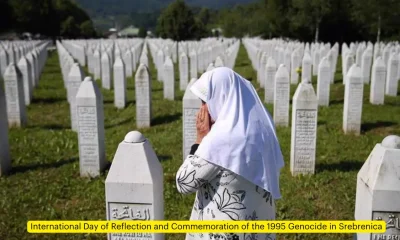
Srebrenica's lesson is prevention. Why isn't the world applying It to Kashmir?
-
 Energy market2 days ago
Energy Union Task Force takes stock of oil and gas security of supply in the EU