Brexit
#Brexit already taking a toll on car manufacturing in the UK #Nissan and #Ford

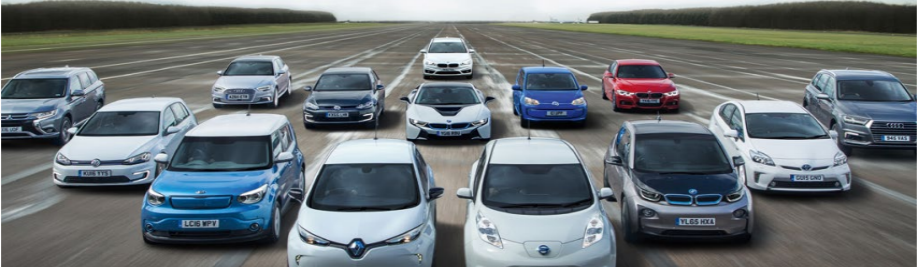
Prime Minister May’s new Industrial Policy – aimed at promoting a positive outlook for Britain post-Brexit – is already falling apart at the seams.
The automotive sector, identified as an area that should be part of a future industrial policy appears to deliver bad news with every day that passes.
Ford
On 1 March, Ford bosses outlined plans to scale back production over the next five years resulting in the potential loss of over 1,100 jobs. Ford has confirmed that the automaker does not have a replacement business plan for the Jaguar engine which will cease production at Bridgend by 2020.
Commenting on the decision the trade union Unite’s general secretary Len McCluskey cited Brexit as a factor in the company’s decision and said: “I appeal again to the Westminster government and Theresa May to make it categorically clear without delay that there will be tariff-free access to the single market and customs union, because the uncertainty the UK’s automotive sector is enduring is having damaging real life consequences now, before talks have even begun.
“The prime minister must act now to because the very future of UK manufacturing, including car making, is at stake.”
Nissan
Nissans Head of European Manufacturing, Colin Lawther, addressed the House of Common’s International Trade Committee on 27 February on future investment. Lawther said that he made a ‘strong request’ that the UK stay within the EU’s customs union. If this was the assurance offered by May it is surprising that it is an option that she has explicitly excluded. Lawther said that if circumstances should change Nissan’s decisions may change and that they wouldn’t wait to the end of the (Brexit) process, but would make their decision based on ‘anything that materially changes’.
Yesterday @NissanUK described the impact on the car industry if no free trade deal is agreed. Watch more: https://t.co/9o34zt6v96 pic.twitter.com/G9wwSnM7s6
— Int Trade Committee (@CommonsIntTrade) March 1, 2017
Len McCluskey described Nissan’s comments to the select committee as: “a depressing reminder of the problems that the government’s stubborn refusal to commit to our trading arrangements is causing.
“Whatever secret assurances the government offered the firm, it is clear they cannot match the arrangements presently in place.
“UK manufacturing needs to hear loud and clear that the UK will retain access to the single market and the customs union, just as tens of thousands of UK people working in aerospace, defence, the automotive sector and across manufacturing need to hear the same.
“The prime minister is wrong to pose this as a choice between borders and jobs. Both can be secured, it is a matter of political will. The government should make that clear now and stop the needless fear spreading though workplaces.”
Mike Hawes, the Chief Executive of the Society of Motor Manufacturers and Traders (SMMT) – an organisation the government lists as one of the organisations supporting the governments ‘a developed sectoral policy’ for the automotive sector – said: “The recognition by the Prime Minister of the importance of single market arrangements for the automotive sector is critical. We need government to deliver a deal which includes participation in the customs union to help safeguard EU trade, trade that is tariff-free and avoids the non-tariff and regulatory barriers that would jeopardise investment, growth and consumer choice. Achieving this will not be easy and we must, at all costs, avoid a cliff-edge and reversion to WTO tariffs, which would threaten the viability of the industry.”
A PwC report on the impact of Brexit on the automotive sector states that “Brexit constitutes a major risk, should the UK be cut off from its main sales market and supply base.”
Share this article:
EU Reporter publishes articles from a variety of outside sources which express a wide range of viewpoints. The positions taken in these articles are not necessarily those of EU Reporter. Please see EU Reporter’s full Terms and Conditions of publication for more information EU Reporter embraces artificial intelligence as a tool to enhance journalistic quality, efficiency, and accessibility, while maintaining strict human editorial oversight, ethical standards, and transparency in all AI-assisted content. Please see EU Reporter’s full A.I. Policy for more information.



European operation dismantles €10 million illicit cigarette network in Spain

EU foreign ministers to discuss options for restricting trade with Israeli communities in Judea and Samaria

Srebrenica's lesson is prevention. Why isn't the world applying It to Kashmir?

ALROSA Re-elects Supervisory Board with Minimal Changes

Energy Union Task Force takes stock of oil and gas security of supply in the EU

AIFC to host Astana Finance Days 2026 in September

Joint statement by High Representative/Vice-President Kallas and Commissioner Kos on the 31st anniversary of the Srebrenica genocide

EU launches a Team Gaza Initiative to support early recovery in Gaza with an initial amount of nearly €900 million

Shusha Global Media Forum: Azerbaijan’s Answer to Disinformation

Commission approves French state aid to support offshore wind energy

Natura 2000 Network offers opportunities for sustainable tourism across Europe

Commission adds exemptions to rules on removability of portable batteries

EU steps up international support for Palestinians with major initiative for Gaza's early recovery and stronger international coordination

Kurmuk gold project highlights Africa’s changing investment landscape

Falling in love with the Maldives

Britain’s leadership crisis is a symptom, not the disease

Kazakhstan reforms under scrutiny at Brussels Press Club round table

Japan should face up to history and contribute more to regional peace

Ambassador calls for 'speeding up' of co-operation between EU and Kazakhstan

Timur Turlov at Smart Moves Summit 2025: How chess can transform global education

Shevtsova’s case: Out-of-court sanctions dismantling trust in Ukrainian cause

The future of European transport

Trump Vs Trueman

US 'no longer' an 'unconditional ally' for Europe - MEP
-
 Cigarettes3 days ago
European operation dismantles €10 million illicit cigarette network in Spain
-
 Israel4 days ago
EU foreign ministers to discuss options for restricting trade with Israeli communities in Judea and Samaria
-
 Kashmir3 days ago
Srebrenica's lesson is prevention. Why isn't the world applying It to Kashmir?
-
 Economy2 days ago
ALROSA Re-elects Supervisory Board with Minimal Changes