Electricity interconnectivity
#EnergyUnion: Synchronization of Baltic States' electricity network with the European system will strengthen solidarity and regional security of supply


Today (22 March), the heads of state and government of the Baltic States and of Poland met with President Juncker to reaffirm their strong commitment to synchronizing the Baltic States' electricity grid with the continental European System by 2025. The heads of state and government called for utmost efforts to maintain the working schedule of the Ministers, of system operators and of experts.
They agreed to meet again in summer, to conclude a political agreement on the preferred way of synchronizing the Baltic States with the continental European network. At a meeting held in the European Commission premises, the President of the European Commission Jean-Claude Juncker together with the President of Lithuania Dalia Grybauskaitė, the Prime Minister of Estonia Jüri Ratas, the Prime Minister of Latvia Māris Kučinskis and the Prime Minister of Poland Mateusz Morawiecki stressed the importance of the synchronization process as a key element to physically integrate the Baltic States with the Continental European energy system and offering a major contribution to the unity and energy security of the European Union.
They stressed that this is one of the most emblematic projects of the Energy Union and a concrete expression of solidarity in energy security. They agreed that 2018 will be a decisive year and expressed their commitment to conclude by June 2018 a political agreement on the preferred way of synchronizing the Baltic States with the continental European network. In order to successfully realize the project the support from Connecting Europe Facility funds will be crucial.
Read full statement here.
Share this article:
EU Reporter publishes articles from a variety of outside sources which express a wide range of viewpoints. The positions taken in these articles are not necessarily those of EU Reporter. Please see EU Reporter’s full Terms and Conditions of publication for more information EU Reporter embraces artificial intelligence as a tool to enhance journalistic quality, efficiency, and accessibility, while maintaining strict human editorial oversight, ethical standards, and transparency in all AI-assisted content. Please see EU Reporter’s full A.I. Policy for more information.



The Iran war changed Pakistan's strategic value, not its political trajectory

Open letter to president of the European Commission on the Schengen Entry/Exit System (EES)

EU policy toward Azerbaijan: Why Brussels must move beyond political dialogue

PMI defends AI consultation tool as scrutiny grows over EU tobacco rules review

Democracy cannot be selective: Why Europe must apply the same standards abroad that it demands at home

Civil society from across the EU gathers in Cork to reinforce Europe’s sustainability agenda

Majority think EU is a 'place of stability in a troubled world'

Rating of American Express casino sites in the UK

Can the EU resist US pressure on medicine prices?

Energy Union: New Spain-Portugal electricity interconnection inaugurated

Timing of the publication of the EU ETS auction calendar

Commissioner Šuica travels to Cairo to strengthen euro-mediterranean parliamentary cooperation and youth engagement

Commission seeks feedback on targeted amendment of EMFAF

Commission proposes five joint defence projects to strengthen Europe's industrial capabilities

Study: Europe's defense runs on American servers

The ancient myths that tourism boards (and slot designers) can't stop selling

Kazakhstan reforms under scrutiny at Brussels Press Club round table

Japan should face up to history and contribute more to regional peace

Ambassador calls for 'speeding up' of co-operation between EU and Kazakhstan

Timur Turlov at Smart Moves Summit 2025: How chess can transform global education

Shevtsova’s case: Out-of-court sanctions dismantling trust in Ukrainian cause

The future of European transport

Trump Vs Trueman

US 'no longer' an 'unconditional ally' for Europe - MEP
-
 Iran4 days ago
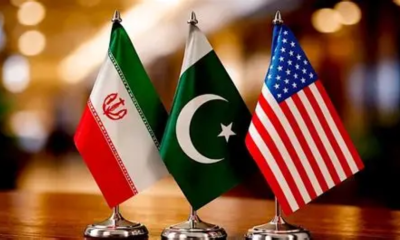
The Iran war changed Pakistan's strategic value, not its political trajectory
-
 Schengen4 days ago
Open letter to president of the European Commission on the Schengen Entry/Exit System (EES)
-
 Azerbaijan4 days ago
EU policy toward Azerbaijan: Why Brussels must move beyond political dialogue
-
 European Commission4 days ago
PMI defends AI consultation tool as scrutiny grows over EU tobacco rules review