General
The ancient myths that tourism boards (and slot designers) can't stop selling

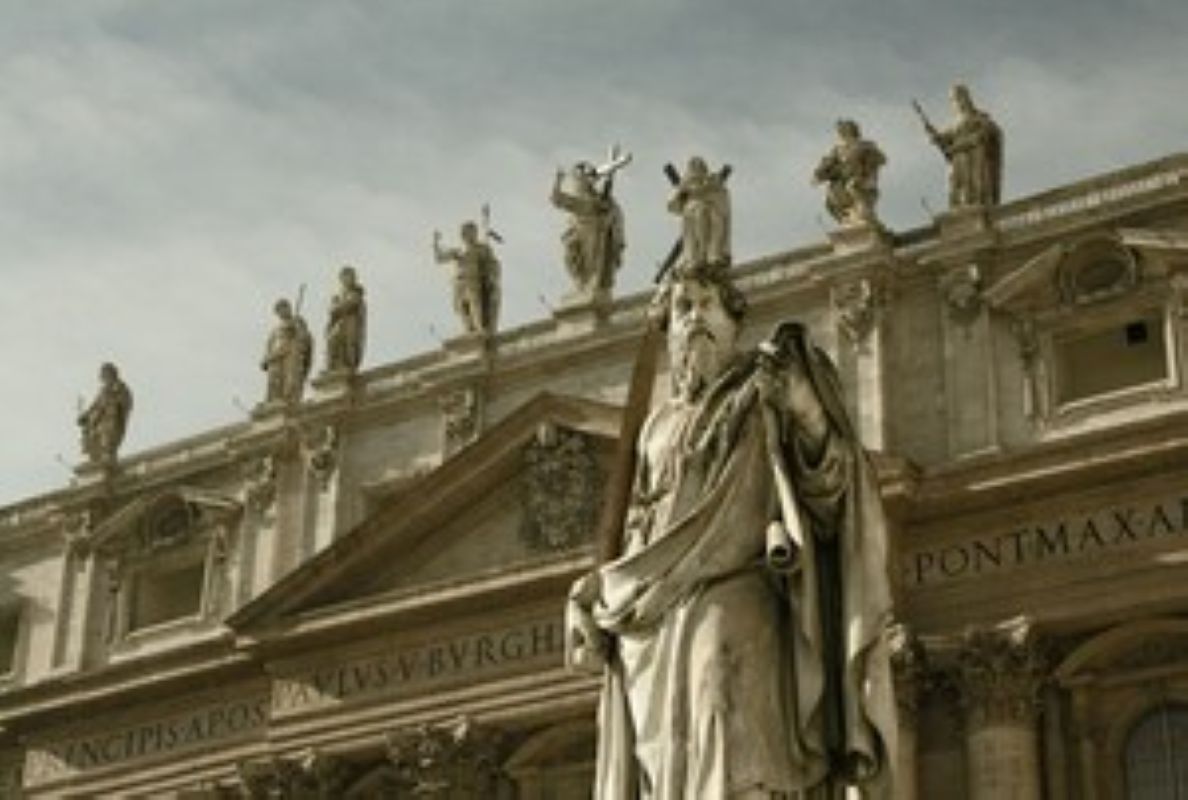
If we consider the international success of K-pop and Korean cinema, it is easy to see how governments sometimes invest in cultural exports to strengthen their international profile. Across Europe, similar approaches have existed for much longer, with tourism organisations promoting myths, folklore and historical narratives that have become closely associated with national identity.
These long-established cultural symbols now appear across many forms of media and entertainment. Books, films, television, video games and online slots frequently draw upon the same visual references, providing an interesting example of how national branding extends far beyond tourism campaigns.
How Greece turned mythology into an international identity
The Greek National Tourism Organization (GNTO) was established in 1929 and has spent decades promoting Greece through its classical heritage alongside its landscapes and coastline.
Research published in MDPI's Heritage journal found that successive tourism campaigns have consistently positioned Classical Antiquity as Greece's defining international identity, differentiating the country from other Mediterranean destinations.
The influence of that cultural branding can also be observed across popular culture. Greek mythology regularly appears in books, films, television series, video games and numerous online slots, illustrating how widely recognised these stories have become beyond tourism itself.
Campaigns such as "Live Your Myth in Greece" and "You Never Say Goodbye to a Myth" demonstrate how mythology has remained central to Greece's international image for many years.
Ireland's Halloween strategy
Ireland offers another interesting example through its long-running Home of Halloween initiative.
Developed by Fáilte Ireland, Tourism Ireland and Tourism Northern Ireland, the project aims to reinforce Ireland's historical association with Samhain and the origins of modern Halloween.
As these campaigns have grown, Irish folklore has also become increasingly visible across different forms of digital entertainment, including themed online slots, reflecting the broader popularity of Halloween imagery around the world.
A pattern repeated across Europe
Similar approaches can be found elsewhere.
Norway continues to promote Viking heritage and Norse mythology through tourism campaigns centred on historical sites, landscapes and cultural traditions. Mythological references have become an important part of the country's international image, appearing across promotional material as well as books, films and digital entertainment.
Although each country emphasises different historical narratives, the underlying strategy remains remarkably similar: creating recognisable cultural symbols that audiences can immediately associate with a destination.
How mythology is adapted for digital entertainment
Designers working across books, films, television, video games and online slots all face a similar challenge: communicating a recognisable theme almost instantly through visual design.
In the case of online slots, symbols such as Greek temples, Norse longships, Celtic shamrocks or Egyptian pyramids are frequently used as thematic elements within individual titles. These visual references contribute to the presentation of the games but do not influence their rules, mathematical structure or the probabilities associated with their outcomes.
The widespread use of these motifs demonstrates how effectively certain cultural symbols have become embedded within international popular culture.
When cultural branding becomes visual shorthand
Tourism campaigns are designed to create memorable associations between countries and their cultural heritage. Over time, these associations often extend well beyond official marketing materials into many other creative industries.
Rather than explaining mythology or folklore in depth, digital entertainment typically relies on instantly recognisable symbols that audiences already understand. Their continued appearance across books, films, television, video games and online slots suggests that these cultural references remain among the most enduring examples of national branding in contemporary popular culture.
Share this article:

EU Reporter publishes articles from a variety of outside sources which express a wide range of viewpoints. The positions taken in these articles are not necessarily those of EU Reporter. Please see EU Reporter’s full Terms and Conditions of publication for more information EU Reporter embraces artificial intelligence as a tool to enhance journalistic quality, efficiency, and accessibility, while maintaining strict human editorial oversight, ethical standards, and transparency in all AI-assisted content. Please see EU Reporter’s full A.I. Policy for more information.



European Inventor Award 2026 winners announced: Honouring the innovators shaping tomorrow

Open letter to president of the European Commission on the Schengen Entry/Exit System (EES)

EU policy toward Azerbaijan: Why Brussels must move beyond political dialogue

New rules to protect EU steel industry from damaging impacts of global overcapacity enter into application

The Iran war changed Pakistan's strategic value, not its political trajectory

PMI defends AI consultation tool as scrutiny grows over EU tobacco rules review

EU and Canada conclude the Energy Security Business Roundtable to deepen transatlantic business relations

Civil society from across the EU gathers in Cork to reinforce Europe’s sustainability agenda

The ancient myths that tourism boards (and slot designers) can't stop selling

Europe must double down on nuclear progress to achieve its long-term ambitions

Solana company partners with Kazakhstan on $6B Alatau Crypto Megacity

Astana's congress of world religions: A global platform for dialogue in an age of division

International Plastic Bag Free Day – from single use to reuse

Protect children from online sexual abuse: Call for urgent negotiations and permanent solution

Will the Gulf monarchies rise above internecine disputes in the interest of collective security?

MEPs supportive of draft Biotech report, but divisions over incentives remain

Kazakhstan reforms under scrutiny at Brussels Press Club round table

Japan should face up to history and contribute more to regional peace

Ambassador calls for 'speeding up' of co-operation between EU and Kazakhstan

Timur Turlov at Smart Moves Summit 2025: How chess can transform global education

Shevtsova’s case: Out-of-court sanctions dismantling trust in Ukrainian cause

The future of European transport

Trump Vs Trueman

US 'no longer' an 'unconditional ally' for Europe - MEP
-
 Science4 days ago
European Inventor Award 2026 winners announced: Honouring the innovators shaping tomorrow
-
 Schengen3 days ago
Open letter to president of the European Commission on the Schengen Entry/Exit System (EES)
-
 Azerbaijan3 days ago
EU policy toward Azerbaijan: Why Brussels must move beyond political dialogue
-
 EU steel industry4 days ago
New rules to protect EU steel industry from damaging impacts of global overcapacity enter into application