European Commission
Commission endorses Latvia’s €617 million Social Climate Plan to support vulnerable households and transport users in the clean transition

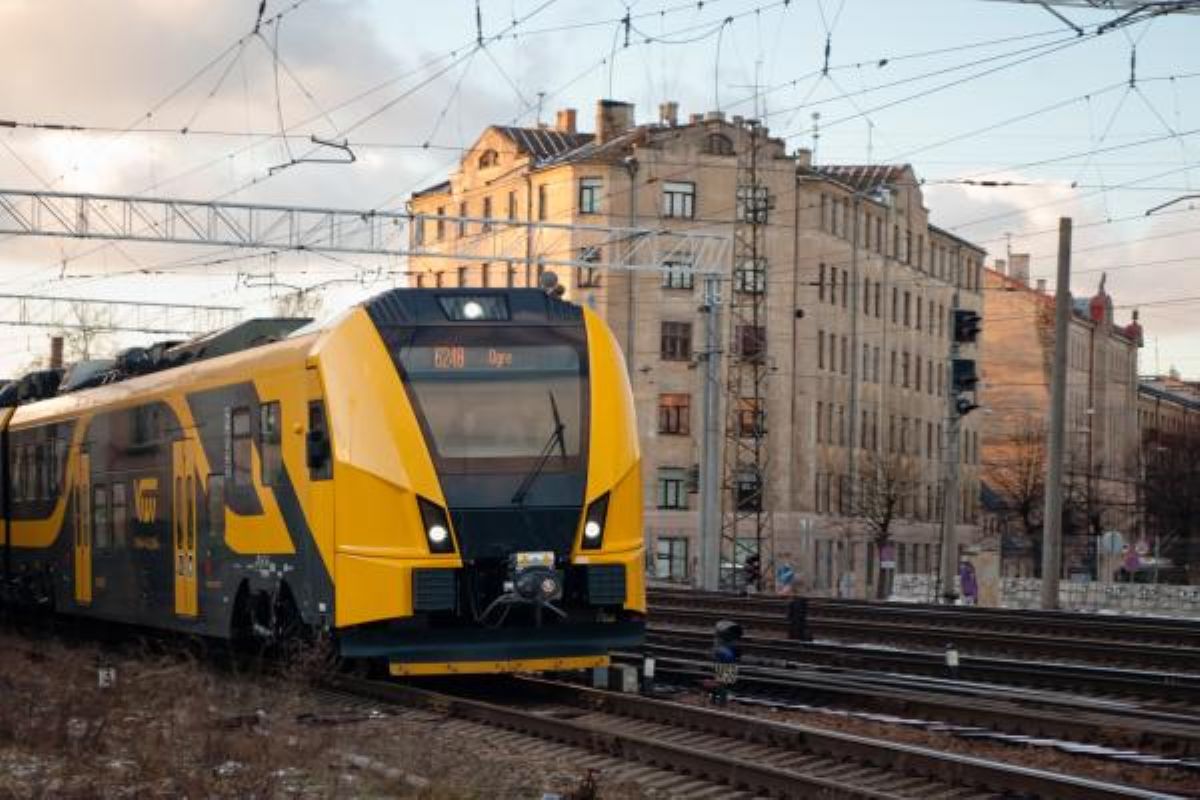
The European Commission has endorsed Latvia’s Social Climate Plan, the third plan under the new Social Climate Fund. Using carbon pricing revenues, the Fund helps make the clean transition fair and inclusive and fosters clean solutions for buildings and transport. It will support low and lower middle income households that are most affected by rising energy and transport costs.
Starting this year until 2032, the Latvian Social Climate Plan will mobilize €617 million, of which €463m will be made available from the Social Climate Fund, while Latvia will cover the remainder.
Support for cleaner buildings
The plan focuses strongly on helping vulnerable households live in more energy efficient homes. It will:
- support renovations of individual houses and apartments and multi-apartment buildings
- improve the energy efficiency of social housing and buildings for the provision of social services with accommodation
- set up Energy Advisory Hubs to give targeted advice for vulnerable households
Support for cleaner transport
The plan will also finance both public and private sustainable transport solutions. It will:
- help vulnerable transport users, as well as social and healthcare service providers, buy electric vehicles
- support a regulatory reform and an investment for transport on demand solutions
- fund new battery electric trains to improve access to public transport in rural and remote areas with high transport poverty
- support micro-mobility, including bicycle-sharing services in schools and the installation of bicycle parking facilities in train stations
Helping vulnerable households and municipalities
Latvia prepared the plan in consultation with national stakeholders and in cooperation with Commission services to reflect the national context and the specific needs of the country. It will benefit vulnerable households, including:
- people facing energy or transport poverty
- beneficiaries of the national energy costs support scheme
- those living in areas with limited public transport availability
The Commission considers that the Latvian plan gives a strong and lasting response to the new carbon pricing system for fuels in buildings and road transport sector in the EU (known as ETS2). The plan also provides a long-lasting response to the challenges faced by vulnerable households, transport users and micro-enterprises, while contributing to the clean transition.
Latvia will be able to request a first payment from the Commission in the first half of 2027, once the implementation of the plan has started and the first results of the investments have been achieved.
- Annexes 1-4 to the Commission implementing decision on the Social Climate Plan of Latvia
Background
The Social Climate Fund will provide significant financial support to EU countries to finance measures and investments identified in the national Social Climate Plans to ensure the transition is fair and leaves no one behind. Running from 2026 to 2032, the Social Climate Fund is expected to mobilise at least €86.7 billion, combining revenues from:
- Carbon pricing, from both the existing emissions trading system and the new emissions trading system for fuel combustion in buildings, road transport and additional sectors (ETS2)
- EU countries’ contributions (at least 25% of the costs of their plans)
The Fund will support measures and investments in energy efficiency, the renovation of buildings, clean heating and cooling, integration of renewable energy, as well as in zero- and low-emission mobility and transport.
The Commission is working closely with EU countries on the development of their Social Climate Plans and calls for their swift submission. Latvia is the third EU country to have its plan endorsed by the Commission (after Sweden and Lithuania). In addition, five EU country (Malta, the Netherlands, Greece, Croatia, and Slovenia) have formally submitted their plans to date, and the vast majority of the remaining EU countries have shared draft versions. The Commission has provided dedicated guidance documents and good practices to help them effectively implement the Social Climate Fund and complete their plans.
Related links
Share this article:
EU Reporter publishes articles from a variety of outside sources which express a wide range of viewpoints. The positions taken in these articles are not necessarily those of EU Reporter. Please see EU Reporter’s full Terms and Conditions of publication for more information EU Reporter embraces artificial intelligence as a tool to enhance journalistic quality, efficiency, and accessibility, while maintaining strict human editorial oversight, ethical standards, and transparency in all AI-assisted content. Please see EU Reporter’s full A.I. Policy for more information.



Kazakhstan seeks regional AI leadership as economic partnership with China enters new phase

Survey on an EU Blueprint for intellectual property licensing and spinoff creation

Setting a new benchmark in premium travel

Rule of law report strengthens EU democracy and fundamental rights

Burnham as PM? 'Wait and see'

Statement by the Ministry of Foreign Affairs of the Republic of Kazakhstan

Kazakhstan and Belgium: Building a Partnership for the Future

Kazakhstan: Central Election Committee reviews the results of the nomination of candidates for the deputies of Kurultai

Commission sends Statements of Objections to several companies and trade associations in suspected construction chemicals cartel

Commission endorses Latvia’s €617 million Social Climate Plan to support vulnerable households and transport users in the clean transition

Commission fines AliExpress €550 million for breaching the Digital Services Act

Astana Hub unveils infrastructure to support AI innovation in health care

The security environment of the South Caucasus amid changing geopolitical realities

Why the US is losing its legitimacy as a global superpower and the trust of the comity of nations

Commission launches EU-Ukraine Drone Alliance to boost drone and counter-drone technology

EU and Portugal team up to keep brightest tech talents at home

Kazakhstan reforms under scrutiny at Brussels Press Club round table

Japan should face up to history and contribute more to regional peace

Ambassador calls for 'speeding up' of co-operation between EU and Kazakhstan

Timur Turlov at Smart Moves Summit 2025: How chess can transform global education

Shevtsova’s case: Out-of-court sanctions dismantling trust in Ukrainian cause

The future of European transport

Trump Vs Trueman

US 'no longer' an 'unconditional ally' for Europe - MEP
-
 China5 days ago
Kazakhstan seeks regional AI leadership as economic partnership with China enters new phase
-
 Aviation/airlines3 days ago
Setting a new benchmark in premium travel
-
 Intellectual Property Rights3 days ago
Survey on an EU Blueprint for intellectual property licensing and spinoff creation
-
 EU law3 days ago
Rule of law report strengthens EU democracy and fundamental rights