EU
European Agenda 6–10 January


European Agenda is provided by Orpheus Public Affairs
European Parliament: Committee and political group week, Brussels
The year gets off to a slow start, with little on the Council Agenda until 20 January.
Tuesday 7 January
European Parliament, political group meetings, to prepare for next week’s plenary session in Strasbourg, issues include: criminal sanctions for insider dealing and market manipulation; tachographs; the safe harbour agreement with the US following the NSA affair; the EU consumer protection programme for 2014 to 2020; a common EU sales law; plastic waste; fraud in the food chain; public procurement including in the water, energy, transport and postal sectors; and the sale of EU citizenship.
Wednesday 8 January
European Parliament, political group meetings continued.
Single resolution system for banks: negotiators for Parliament and the EU governments will open talks on an EU-wide system to wind up failing banks. Positions differ widely between the two institutions and negotiations are expected to be tough.
Official launch of Greek Presidency of the EU, Athens.
Thursday 9 January
Public hearing organised by EMPL on Employment and social aspects of the operations and role of the Troika in euro area programme countries.
Joint meeting of the ECON and LIBE committee - Prevention of the use of the financial system for the purpose of money laundering and terrorist financing.
Discussions on Asylum and Migration Fund, LIBE committee.
Share this article:
EU Reporter publishes articles from a variety of outside sources which express a wide range of viewpoints. The positions taken in these articles are not necessarily those of EU Reporter. Please see EU Reporter’s full Terms and Conditions of publication for more information EU Reporter embraces artificial intelligence as a tool to enhance journalistic quality, efficiency, and accessibility, while maintaining strict human editorial oversight, ethical standards, and transparency in all AI-assisted content. Please see EU Reporter’s full A.I. Policy for more information.



ECR MEPs question the European Commission on cardiovascular health and diet promoting the Mediterranean diet as an alternative to ultra-processed foods as key to tackling obesity

Falling in love with the Maldives

Kurmuk gold project highlights Africa’s changing investment landscape

Albania's Vlora airport standoff tests investor confidence as EU accession clock ticks

Britain’s leadership crisis is a symptom, not the disease

EU steps up international support for Palestinians with major initiative for Gaza's early recovery and stronger international coordination

Commission adds exemptions to rules on removability of portable batteries

Iran’s regime in crisis: Negotiations, internal divisions and growing resistance

New court ruling questions 'proportionality' of Mayor Erion Veliaj’s detention

Rome–Washington Axis: Italian Diplomat Zanardi Landi to Help Save Bosnia

Burnham as PM? 'Wait and see'

Ban on destruction of unsold clothes and shoes enters into application

Survey on an EU Blueprint for intellectual property licensing and spinoff creation

Rule of law report strengthens EU democracy and fundamental rights

EU launches Ukraine defence industrial partnership, Drone Deal and disburses €1 billion for drones *

Setting a new benchmark in premium travel

Kazakhstan reforms under scrutiny at Brussels Press Club round table

Japan should face up to history and contribute more to regional peace

Ambassador calls for 'speeding up' of co-operation between EU and Kazakhstan

Timur Turlov at Smart Moves Summit 2025: How chess can transform global education

Shevtsova’s case: Out-of-court sanctions dismantling trust in Ukrainian cause

The future of European transport

Trump Vs Trueman

US 'no longer' an 'unconditional ally' for Europe - MEP
-
 Italy3 days ago
ECR MEPs question the European Commission on cardiovascular health and diet promoting the Mediterranean diet as an alternative to ultra-processed foods as key to tackling obesity
-
 Tourism4 days ago
Falling in love with the Maldives
-
 China4 days ago
Kurmuk gold project highlights Africa’s changing investment landscape
-
 Albania3 days ago
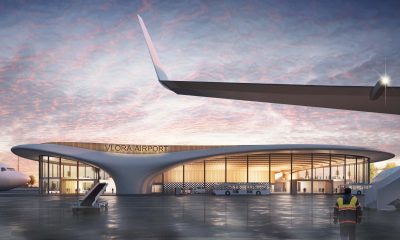
Albania's Vlora airport standoff tests investor confidence as EU accession clock ticks