EU
Oxfam reaction to Pierre Moscovici’s hearing at European Parliament


On 2 October, France’s Pierre Moscovici (pictured), European commissioner-designate for economic and financial affairs, taxation and customs, faced a hearing at the European Parliament to assess his suitability for the job.
Oxfam’s Deputy Director of Advocacy & Campaigns Natalia Alonso said: “Mr. Moscovici made an impassioned promise to promote European interests in economic and tax matters. We are pleased to see he supports the allocation of some revenues from the future financial transactions tax - hopefully as broad as possible in scope -to fighting poverty and climate change.
“He highlighted several times the importance of fighting tax evasion and avoidance, as well as increasing tax transparency. Despite this, Mr. Moscovici failed to support a concrete proposal on greater transparency for multinational companies – such as Apple and Starbucks – to shed light on whether they 'disappear' their profits offshore to pay low or no taxes.
“We welcome Mr. Moscovici’s commitment to give the European Union a stronger voice in international tax initiatives, such as the G20’s promotion of better global tax rules that would encourage growth and increase employment. But the European Union needs to ensure that these new rules will also benefit developing countries, which are currently not at the negotiating table. The fight against tax dodging is a global one, and the European Union should start by making sure that it’s tax policies do not hamper poor countries from raising the money they vitally need to fight poverty and inequality.”
· 11 European countries agreed in May 2014 to create a European financial transaction tax by 1st of January 2016. Negotiations among the EU-11 are stalled on the scale of the tax, and the type of financial products to be included. Many civil society organizations have campaigned to ensure that part of these revenues will be allocated to European and international solidarity, like financing public services in Europe, and climate change and health in developing countries.
· In June last year, the EU adopted legislation that will oblige banks and extractive companies (oil, mining, gas and forestry) to release information about where they work and where they pay their taxes. Oxfam is calling on the European Union to apply the same reporting standards as for banks – the so called country-by-country reporting (CBCR) - to all sectors. Click here to read the European Parliament report on tax evasion, May 2013, calling for public country-by-country reporting (CBCR).
· The G20 mandated the OECD to deliver an action plan on corporate abuses of international tax rules that lead to ‘base erosion and profit shifting’ (the BEPS agenda). While Oxfam welcomes the political will to reform a broken international tax system, we are afraid that developing countries will not benefit from the current reform as they are not associated and cannot address their priorities for reform (Oxfam report Business among Friends).
Share this article:
EU Reporter publishes articles from a variety of outside sources which express a wide range of viewpoints. The positions taken in these articles are not necessarily those of EU Reporter. Please see EU Reporter’s full Terms and Conditions of publication for more information EU Reporter embraces artificial intelligence as a tool to enhance journalistic quality, efficiency, and accessibility, while maintaining strict human editorial oversight, ethical standards, and transparency in all AI-assisted content. Please see EU Reporter’s full A.I. Policy for more information.



Burnham as PM? 'Wait and see'

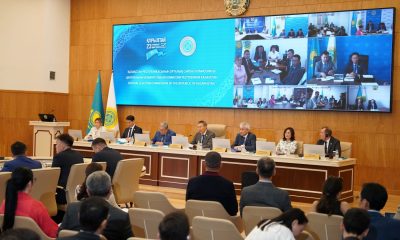
Kazakhstan: Central Election Committee reviews the results of the nomination of candidates for the deputies of Kurultai
The South Caucasus at a historic turning point: Between lasting peace and renewed confrontation

Setting a new benchmark in premium travel

The security environment of the South Caucasus amid changing geopolitical realities

Rule of law report strengthens EU democracy and fundamental rights

Survey on an EU Blueprint for intellectual property licensing and spinoff creation

Ban on destruction of unsold clothes and shoes enters into application

JoinCare Explores Scientific Exchange During Visit toJapan’s National Institute of Infectious Diseases

New episode – DGT podcast: Languages and Technology

Become a European Commission trainee – applications are now open

Commission outlines measures to strengthen Europe's banking sector and support growth

British political shifts and the future of UK-China ties
The South Caucasus at a historic turning point: Between lasting peace and renewed confrontation

As Ireland chairs the EU Presidency, what impact has over fifty years of EU membership had on Ireland

The Digital Markets Act Is Hurting Europeans. It’s Time to Put Progress, Free Markets, and Competition First

Kazakhstan reforms under scrutiny at Brussels Press Club round table

Japan should face up to history and contribute more to regional peace

Ambassador calls for 'speeding up' of co-operation between EU and Kazakhstan

Timur Turlov at Smart Moves Summit 2025: How chess can transform global education

Shevtsova’s case: Out-of-court sanctions dismantling trust in Ukrainian cause

The future of European transport

Trump Vs Trueman

US 'no longer' an 'unconditional ally' for Europe - MEP
-
 Labour4 days ago
Burnham as PM? 'Wait and see'
-
 Kazakhstan5 days ago
Kazakhstan: Central Election Committee reviews the results of the nomination of candidates for the deputies of Kurultai
-
South Caucasus14 hours ago
The South Caucasus at a historic turning point: Between lasting peace and renewed confrontation
-
 Aviation/airlines5 days ago
Setting a new benchmark in premium travel