EU
The value to Europe of harnessing ‘Big Data’

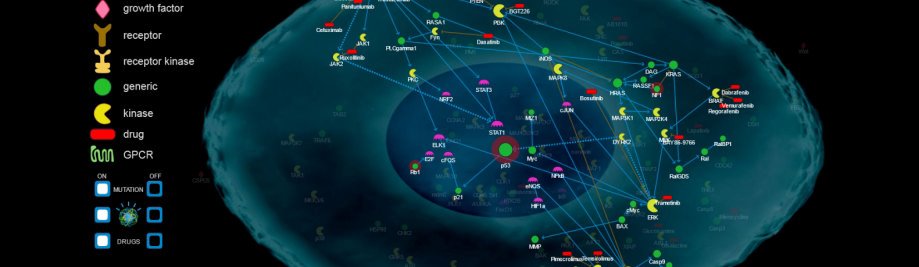
By European Alliance for Personalised Medicine (EAPM) Executive Director Denis Horgan
Economically, Europe has lagged behind the US in productivity for the past 20 years – and the gap is getting wider. One way to address this would be by significantly upping the use of information technology across the EU’s 28 member states, given that recent figures have suggested that Big Data could save the public sector €100 billion in ‘operational efficiency improvements’.
Its role in improving health care - and thus the quality of life as well as actual lifespan - of a potential 500 million patients in the EU cannot be overstated and its ability to lower costs is substantial and equally significant.
The massive expansion in computing power down the decades and incredible new technologies coming to light all of the time have seen, among other benefits, the price of using data in healthcare plummet.
Modern-day ‘wearables’ are already revolutionizing health care given, for example, remote monitoring of patients and ‘smart’ pill-boxes that encourage them to take their prescribed medicine. These exciting advances lead to greater independence for the patient, more days in the workplace and a lot less time spent in expensive hospital beds.
In fact, has been estimated that simply by reducing non-adherence in prescribed medicines sitting on home shelves could save Europe €125 billion every year and reduce premature deaths by 200,000 in the same timeframe.
Using Big Data also promises to significantly improve efficiency through facilitating better decision making and encouraging smarter investment. This is all good news for the European economy and, of course, every patient or potential patient in the EU.
In the specific case of personalised medicine, Big Data can be best summed-up as being the huge and ever-growing amount of health information, derived from a variety of sources, and its use in exciting and innovative ways to tailor outcomes to the individual. After all, it is abundantly clear that one-size-fits-all does not work in a medical context with a certain patient taking good advantage of a particular treatment while another derives little or no value from it.
Using Big Data properly would allow us to understand the cause of disease, assist in the development of cutting-edge therapies and new drugs geared towards the individual. But this individual approach relies upon advanced technologies and processes to collect, manage and analyze the data pool before it is interpreted for the benefit of medical advancement.
Setting the regulatory scene to clarify, and make easier, aspects regarding the storage, sharing and ownership of Big Data would be highly beneficial.
Personalised medicine has huge potential to make treatments more effective while reducing side effects, but it requires access for researchers to Big Data in order for it to advance.
The European Alliance for Personalised Medicine (EAPM) believes that the EU should view Big Data as a strategic investment that could take us along the road to improving competitiveness while expanding medical knowledge for the benefit of all stakeholders, notably the patient.
This will be achieved partly through its ability to provide advanced bio-informatics tools. Meanwhile, linking biobanks and overcoming interoperability issues is a must, as is ensuring quality and a workable ethical and legal framework which allows Big Data to be exploited.
Of course, EU lawmakers must balance this against the clear need to protect the individual’s personal information but it must also, crucially, give him or her choices over its use.
Harnessing Big Data is a necessity for all of the reasons outlined above and the time to act is now. Because Big Data is here, and it’s here to stay.
Share this article:
EU Reporter publishes articles from a variety of outside sources which express a wide range of viewpoints. The positions taken in these articles are not necessarily those of EU Reporter. Please see EU Reporter’s full Terms and Conditions of publication for more information EU Reporter embraces artificial intelligence as a tool to enhance journalistic quality, efficiency, and accessibility, while maintaining strict human editorial oversight, ethical standards, and transparency in all AI-assisted content. Please see EU Reporter’s full A.I. Policy for more information.





Astana's congress of world religions: A global platform for dialogue in an age of division

Protect children from online sexual abuse: Call for urgent negotiations and permanent solution

Solana company partners with Kazakhstan on $6B Alatau Crypto Megacity

Will the Gulf monarchies rise above internecine disputes in the interest of collective security?

Europe must double down on nuclear progress to achieve its long-term ambitions

International Plastic Bag Free Day – from single use to reuse

Study: Europe's defense runs on American servers

Commission proposes five joint defence projects to strengthen Europe's industrial capabilities

Safer cars, safer roads: New rules take effect

Survey of city economic experts: Cities are driving Draghi’s competitiveness agenda, but need EU recognition to scale action

Europe's Cloud moment: The DMA must now deliver

EU-Mexico: While others build walls, Europe builds bridges

New EU strategy must help farmers move toward a more humane food system

Kashmir's 9,765 missing women and girls demand international attention

Quarterly reports show a surge in solar energy and e-vehicles, with record highs in 2025

EU deploys wildfire support to face multiple fires across Portugal and France

Kazakhstan reforms under scrutiny at Brussels Press Club round table

Japan should face up to history and contribute more to regional peace

Ambassador calls for 'speeding up' of co-operation between EU and Kazakhstan

Timur Turlov at Smart Moves Summit 2025: How chess can transform global education

Shevtsova’s case: Out-of-court sanctions dismantling trust in Ukrainian cause

The future of European transport

Trump Vs Trueman

US 'no longer' an 'unconditional ally' for Europe - MEP
-
 Kazakhstan4 days ago
Astana's congress of world religions: A global platform for dialogue in an age of division
-
 Child sexual abuse5 days ago
Protect children from online sexual abuse: Call for urgent negotiations and permanent solution
-
 Kazakhstan4 days ago
Solana company partners with Kazakhstan on $6B Alatau Crypto Megacity
-
 Iran5 days ago
Will the Gulf monarchies rise above internecine disputes in the interest of collective security?