EU
Greece debt crisis: Tsipras to present new plan at eurozone summit

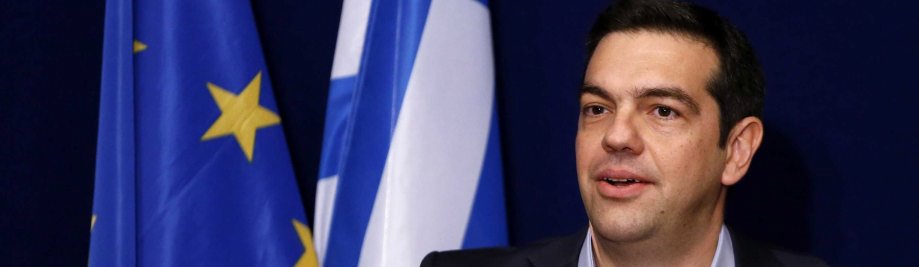 Greek Prime Minister Alexis Tsipras is expected to present new proposals at a eurozone emergency summit on his country's growing debt crisis.
The plan is said to include a demand for Greece's debt to be cut by up to 30%, after voters rejected the terms of an international bailout on Sunday (5 July).
Athens has been urged to make "serious" proposals as Greece risks defaulting on its €323 billion ($356bn; £228bn) debt.
Greece's banks are to stay closed on Tuesday and Wednesday.
The European Central Bank (ECB) is maintaining its pressure on Greek banks, refusing to increase emergency lending and ordering them to provide more security for existing emergency loans.
Eurozone finance ministers will meet in Brussels later on Tuesday before a full summit of eurozone leaders. Tsipras may be prepared to accept many of the demands made by Greece's creditors.
But - emboldened by his resounding win in the referendum - Tsipras also wants changes and substantial debt relief, our correspondent says.
Central to any negotiations will be new Greek Finance Minister Euclid Tsakalotos, who replaced outspoken Yanis Varoufakis on Monday.
Mr Tsakalotos has admitted he is nervous and worried about the crisis, but said Greece deserved a better deal.
However, Germany earlier warned against any unconditional write-off of Greece's debt, saying it would destroy the single currency.
"I really hope that the Greek government - if it wants to enter negotiations again - will accept that the other 18 member states of the euro can't just go along with an unconditional haircut [debt write-off]," said German Economy Minister Sigmar Gabriel.
Meanwhile, the ECB said it would keep emergency cash support for Greek banks, which are running out of funds and on the verge of collapse, at the same level - refusing requests for additional support.
It told the banks to lodge more collateral - or assets - with the Bank of Greece, reducing the amount of spare cash the banks have.se fear to put pressure on Greeks.
Share this article:
EU Reporter publishes articles from a variety of outside sources which express a wide range of viewpoints. The positions taken in these articles are not necessarily those of EU Reporter. Please see EU Reporter’s full Terms and Conditions of publication for more information EU Reporter embraces artificial intelligence as a tool to enhance journalistic quality, efficiency, and accessibility, while maintaining strict human editorial oversight, ethical standards, and transparency in all AI-assisted content. Please see EU Reporter’s full A.I. Policy for more information.



Open letter to president of the European Commission on the Schengen Entry/Exit System (EES)

EU policy toward Azerbaijan: Why Brussels must move beyond political dialogue

The Iran war changed Pakistan's strategic value, not its political trajectory

PMI defends AI consultation tool as scrutiny grows over EU tobacco rules review

Democracy cannot be selective: Why Europe must apply the same standards abroad that it demands at home

Civil society from across the EU gathers in Cork to reinforce Europe’s sustainability agenda

Majority think EU is a 'place of stability in a troubled world'

Rating of American Express casino sites in the UK

Energy Union: New Spain-Portugal electricity interconnection inaugurated

Timing of the publication of the EU ETS auction calendar

Commissioner Šuica travels to Cairo to strengthen euro-mediterranean parliamentary cooperation and youth engagement

Commission seeks feedback on targeted amendment of EMFAF

Commission proposes five joint defence projects to strengthen Europe's industrial capabilities

Study: Europe's defense runs on American servers

The ancient myths that tourism boards (and slot designers) can't stop selling

Europe must double down on nuclear progress to achieve its long-term ambitions

Kazakhstan reforms under scrutiny at Brussels Press Club round table

Japan should face up to history and contribute more to regional peace

Ambassador calls for 'speeding up' of co-operation between EU and Kazakhstan

Timur Turlov at Smart Moves Summit 2025: How chess can transform global education

Shevtsova’s case: Out-of-court sanctions dismantling trust in Ukrainian cause

The future of European transport

Trump Vs Trueman

US 'no longer' an 'unconditional ally' for Europe - MEP
-
 Schengen4 days ago
Open letter to president of the European Commission on the Schengen Entry/Exit System (EES)
-
 Azerbaijan4 days ago
EU policy toward Azerbaijan: Why Brussels must move beyond political dialogue
-
 Iran4 days ago
The Iran war changed Pakistan's strategic value, not its political trajectory
-
 European Commission4 days ago
PMI defends AI consultation tool as scrutiny grows over EU tobacco rules review