Conference of Peripheral Maritime Regions of Europe (CPMR)
Oceana urges EU fisheries ministers to rebuild Baltic stocks by applying science

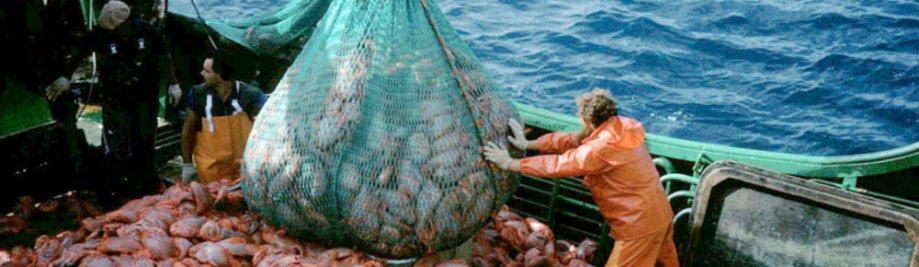
The organization releases its quota recommendations for the upcoming Council and calls for prioritizing science and long-term sustainability over politics. On 22 October, the Agriculture and Fisheries Council of the EU will gather in Luxembourg to begin their annual negotiations on catch limits for the Baltic Sea in 2016. Oceana releases today science-based recommendations for setting Total Allowable Catches (TACs) and quotas in the region to rebuild over-exploited fisheries. The organization has called the Council to follow science when setting catch limits, recalling that they are legally bound to return fisheries to sustainable levels before 2020.
Oceana recommendations on fishing opportunities for Baltic stocks 2016
"European fisheries ministers must stop ignoring scientific advice and definitely abandon the political short-term perspective. The consequence of their approach is that 4 out of 10 Baltic stocks are still being overfished,” underlines Lasse Gustavsson, Executive Director of Oceana in Europe. “Under the Common Fisheries Policy EU member states must ensure that stocks are fished within sustainable levels as soon as possible and no later than 2020. I want to stress that after this ultimate deadline, overfishing will become illegal under EU law."
In order to end overfishing in the Baltic, Oceana recommends in its report that the Council of EU fisheries ministers:
- Follows scientific advice in setting fishing opportunities and prioritises stock recovery;
- sets the TACs for eastern cod stock at no more than 29,220 tonnes and maximum 7,797 tonnes for western cod stock, according to the advice of International Council for the Exploration of the Sea (ICES), and;
- stops all directed sprat fisheries in areas 25-26 and redistributes fishing effort to the northern areas to allow cod stocks to recover.
Broken promises?
Last year fisheries ministers once again decided to ignore scientific advice for cod, against their own binding agreement under the CFP. Furthermore, Denmark, Germany, Finland, Lithuania, Poland, Latvia, Estonia and Sweden formally agreed that “maximum sustainable yield (MSY) shall be reached by 2016 for the western Baltic cod stock by applying a stepwise approach to obtain the MSY level when setting the TAC for cod in 2015.” They now must live up to their own commitment from the last year and set sustainable catch limits.
Baltic cod is crucial
Cod is a highly important species in the Baltic, both environmentally and commercially, thus Oceana believes that its recovery should be a top priority. The western cod stock has had a long history of overfishing. The European Commission failed to present a proposal for 2016 and left the decision over this stock entirely to EU states.
Share this article:
EU Reporter publishes articles from a variety of outside sources which express a wide range of viewpoints. The positions taken in these articles are not necessarily those of EU Reporter. Please see EU Reporter’s full Terms and Conditions of publication for more information EU Reporter embraces artificial intelligence as a tool to enhance journalistic quality, efficiency, and accessibility, while maintaining strict human editorial oversight, ethical standards, and transparency in all AI-assisted content. Please see EU Reporter’s full A.I. Policy for more information.



ECR MEPs question the European Commission on cardiovascular health and diet promoting the Mediterranean diet as an alternative to ultra-processed foods as key to tackling obesity

Falling in love with the Maldives

Kurmuk gold project highlights Africa’s changing investment landscape

EU steps up international support for Palestinians with major initiative for Gaza's early recovery and stronger international coordination

Commission adds exemptions to rules on removability of portable batteries

Albania's Vlora airport standoff tests investor confidence as EU accession clock ticks

Britain’s leadership crisis is a symptom, not the disease

Iran’s regime in crisis: Negotiations, internal divisions and growing resistance

New court ruling questions 'proportionality' of Mayor Erion Veliaj’s detention

Rome–Washington Axis: Italian Diplomat Zanardi Landi to Help Save Bosnia

Burnham as PM? 'Wait and see'

Ban on destruction of unsold clothes and shoes enters into application

Survey on an EU Blueprint for intellectual property licensing and spinoff creation

Rule of law report strengthens EU democracy and fundamental rights

EU launches Ukraine defence industrial partnership, Drone Deal and disburses €1 billion for drones *

Setting a new benchmark in premium travel

Kazakhstan reforms under scrutiny at Brussels Press Club round table

Japan should face up to history and contribute more to regional peace

Ambassador calls for 'speeding up' of co-operation between EU and Kazakhstan

Timur Turlov at Smart Moves Summit 2025: How chess can transform global education

Shevtsova’s case: Out-of-court sanctions dismantling trust in Ukrainian cause

The future of European transport

Trump Vs Trueman

US 'no longer' an 'unconditional ally' for Europe - MEP
-
 Italy3 days ago
ECR MEPs question the European Commission on cardiovascular health and diet promoting the Mediterranean diet as an alternative to ultra-processed foods as key to tackling obesity
-
 Tourism4 days ago
Falling in love with the Maldives
-
 China4 days ago
Kurmuk gold project highlights Africa’s changing investment landscape
-
 Gaza Strip4 days ago
EU steps up international support for Palestinians with major initiative for Gaza's early recovery and stronger international coordination